
Ministry of Education announces measures against smart glasses cheating at college entrance exam
Authorities to pursue criminal referrals; exam ban to expand from one year to three
One dedicated inspector to be assigned to each test site for this year's exam
Radio-wave detectors under review for possible rollout at next year's exam
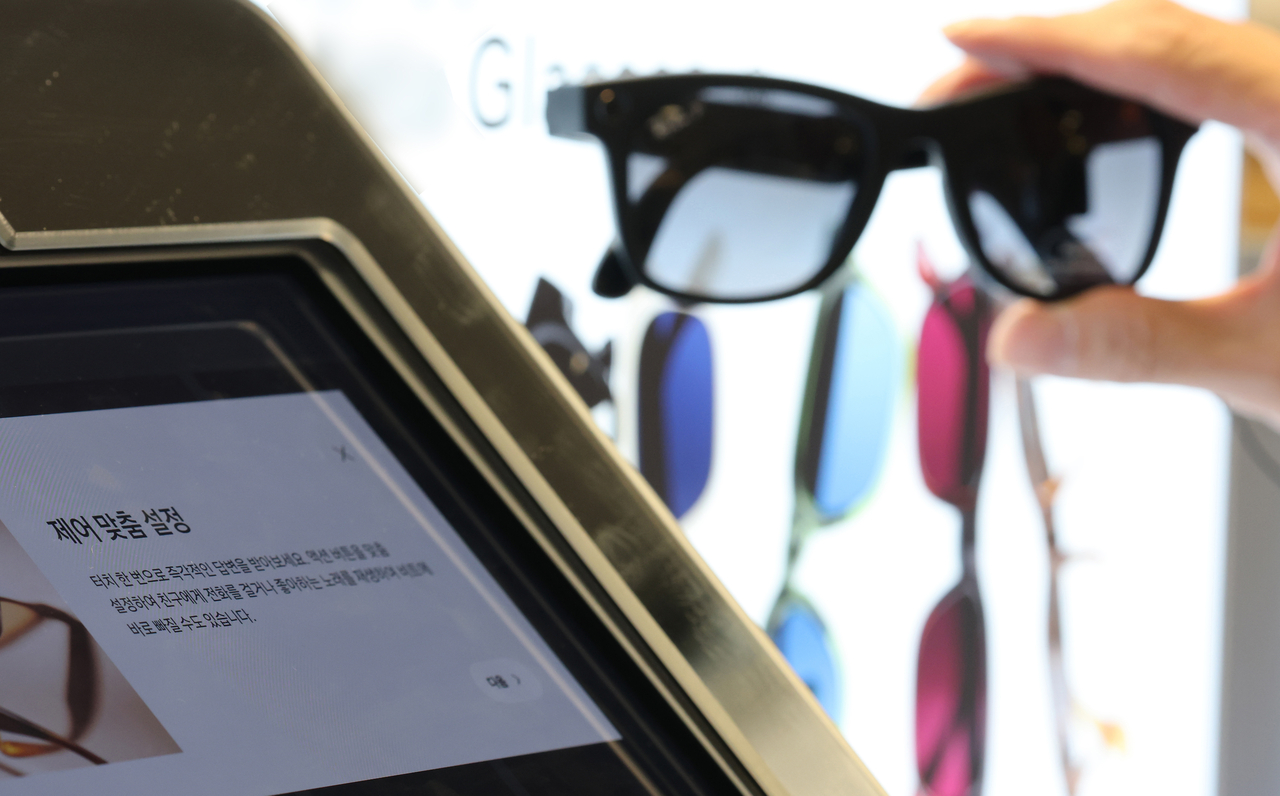
The Ministry of Education announced Thursday a tough response to cheating using smart glasses at the College Scholastic Ability Test, including criminal referrals, an extension of the exam ban from one year to three, and the deployment of a dedicated inspector at every test site for this year's exam.
The ministry released the plan — titled "Response Plan for Smart Glasses-Related Cheating at the CSAT" — on Thursday. The measures focus on toughening penalties for cheating and reducing the burden on exam supervisors tasked with identifying smart glasses. The plan was drawn up amid concerns that similar attempts could occur at the CSAT, following multiple cases of smart glasses cheating detected at university-administered admissions tests and other nationally certified exams.
"Using smart glasses to cheat is a deliberate and premeditated act of disrupting the administration of a national examination," a ministry official said. "We will respond by filing criminal complaints and requesting investigations on charges of obstruction of official duties by deception or interference with business operations, so that criminal punishment can be carried out."
At this year's CSAT, any student who uses or wears smart glasses during the exam will have that sitting invalidated and will be barred from taking the following year's exam. Bringing smart glasses into the test site without using them — or simply possessing them — will result in that sitting being voided. Refusing to comply with a supervisor's request for inspection may, after a review process, result in invalidation of the exam and loss of eligibility for the following year.
However, extending the exam ban to three years requires an amendment to existing law. The current Higher Education Act limits the suspension of cheating candidates' eligibility to one year. The ministry also plans to recommend that universities reflect the same principles — stricter criminal penalties and tighter eligibility restrictions — in their own admissions testing procedures.

In addition, the ministry will deploy dedicated personnel at CSAT sites and establish situation rooms to support on-site supervisors in making judgment calls. There have long been concerns that supervisors face inherent limitations in detecting smart glasses by sight alone, given how closely the devices can resemble ordinary eyewear.
Starting with the CSAT on Nov. 19, one dedicated inspector will be assigned to each test site. Depending on conditions in each region, additional personnel may be added or education office-dispatched supervisors may be designated. When a supervisor spots a pair of glasses suspected to be smart glasses, the dedicated inspector will step in to assist with the assessment.
If a determination cannot be made on the spot, the case will be escalated to the relevant metropolitan or provincial education office or to situation rooms operated by the ministry and the Korea Institute for Curriculum and Evaluation. Dedicated inspectors will also patrol exam rooms to assist with smart glasses monitoring when needed.
The ministry will also assess the feasibility of radio-wave detectors being developed by specialized agencies for use at test sites, and will review whether to deploy them at next year's CSAT. Beginning with the 2028 CSAT, the ministry plans to improve conditions for supervisors, including raising their compensation to more realistic levels.
The ministry will cover damages, legal fees, and litigation or mediation costs arising from incidents that occur during supervisory duties. "We will actively support teachers who carry out their supervisory duties in good faith, so that they are not held liable or suffer any harm," the ministry said.
brunch@heraldcorp.com




