
150.2 billion won earmarked for public rental construction; 500 new compact units for college students
32,000 young renters to receive up to 200,000 won monthly; newlyweds to get loan interest support
City to back redevelopment planning and cooperative formation to accelerate private housing projects
The Seoul Metropolitan Government has allocated 1.12 trillion won ($848 million) in its proposed budget for next year to supply public rental housing for young residents, newlyweds and low-income households. The public rental supply budget rises by 60.6 billion won from the figure announced last year for this year's budget, with the supply target increasing by 2,812 units. The city will more than double its budget for building integrated public rental housing and expand financial support for young renters and deposit loan interest subsidies.
Seoul announced the 2027 budget proposal Thursday. The total budget stands at 55.74 trillion won, up 8.3 percent from this year's main budget. The city is pursuing a two-track strategy — directly subsidizing housing costs for young residents and newlyweds while supporting the procedural steps of private redevelopment projects, such as plan formulation and cooperative formation, to accelerate housing supply.
Next year's public rental housing supply target is 27,200 units in total — 20,736 through acquisition, 3,100 through lease and 3,364 through construction. That is 11.5 percent more than the 24,388 units announced when the 2026 budget was presented last year. The supply budget also rose 5.7 percent, from 1.06 trillion won to 1.12 trillion won.
The city set aside 293.6 billion won for purchasing existing homes — including multi-family houses and urban-lifestyle housing units — to rent to low-income households, young residents and newlyweds. An additional 108.4 billion won was allocated to acquire transit-oriented private rental units as public rentals under the Youth Safe Housing program, with plans to purchase 3,027 new units.
The budget for building integrated public rental housing comes to 150.2 billion won — 82 billion won, or 120.2 percent, more than the 68.2 billion won earmarked in the 2026 budget proposal announced last year. The program uses idle land and other sites to develop public housing alongside neighborhood amenity facilities. The number of supported project sites expands from eight sites with 2,831 units to 12 sites with 3,260 units next year.
The city also set aside 1.8 billion won for the Seoul-type Saessak One-Room program for college students, which provides affordable housing near universities to enrolled students at Seoul institutions. The program plans to supply 500 new rental units through interest-free deposit support and remodeling.
Youth monthly rent support received 126.2 billion won. The city said it will expand the number of beneficiaries from 23,000 to 32,000. Households of renters aged 19 to 39 without a home of their own in Seoul will receive up to 200,000 won per month toward rent.
Support for deposit loan interest for newlyweds and young residents was allocated 75.8 billion won. Newlyweds can receive interest support of up to 4.5 percent per year on loans of up to 300 million won, while young residents can receive up to 3 percent per year on loans of up to 200 million won. The actual loan ceiling is whichever is lower — the category cap or 90 percent of the rental deposit.
Funding was also directed at housing-vulnerable households. The city allocated 1.03 trillion won for housing benefits targeting households earning at or below 48 percent of the median income standard. Another 72.5 billion won was set aside for interest-free loans to help cover long-term jeonse deposits, with support of up to 70 million won per household.
The budget also includes funding to accelerate private redevelopment projects. The city allocated 10.8 billion won for the Fast-Track Integrated Planning 2.0 program and 12.3 billion won for the Moa Town and Moa Housing initiative. Through the Moa Town-type fast-track integrated planning scheme, the city will support integrated plan formulation at 27 sites.
The city set aside 5.6 billion won for drawing up public redevelopment plans for private redevelopment candidate sites, and 3.2 billion won to support the formation of promotion committees and housing cooperatives. Support will cover a portion of district-level redevelopment planning costs, professional project management service fees and election expenses.
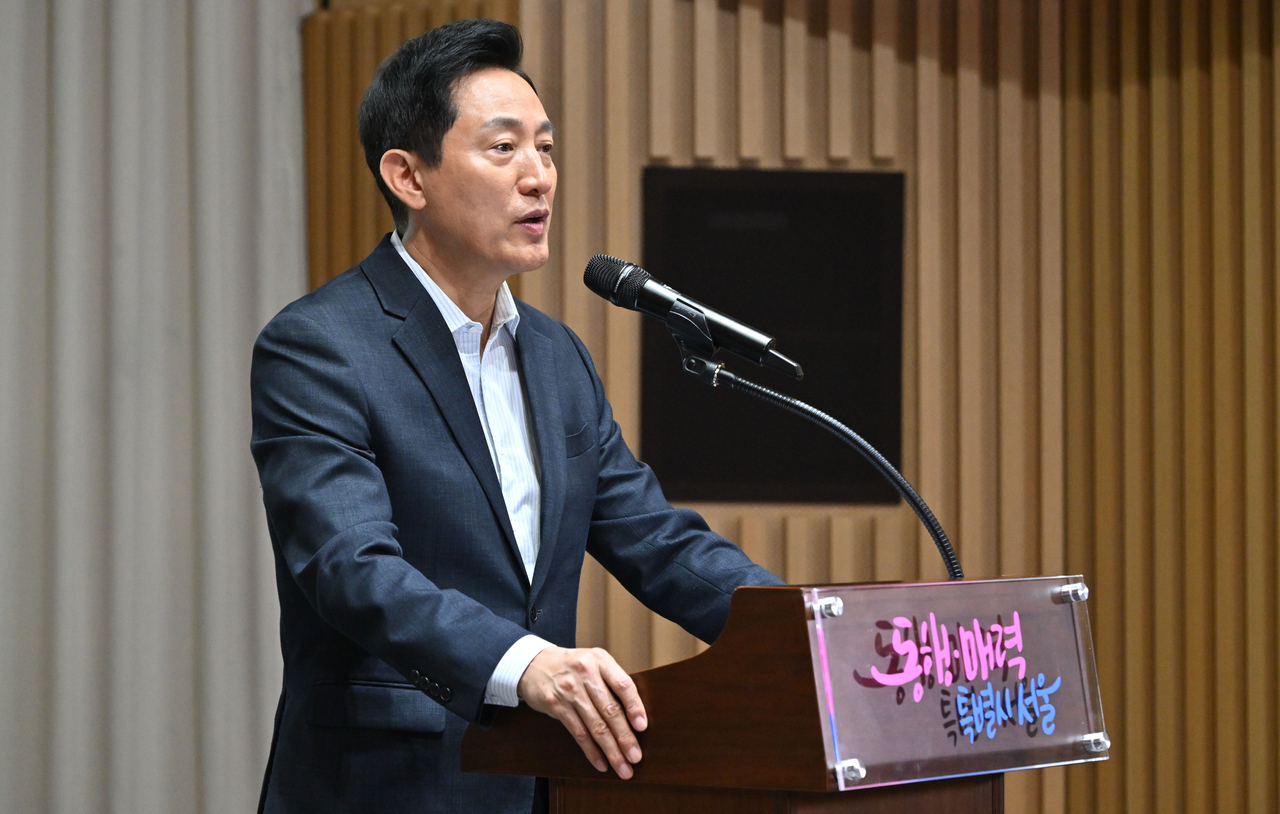
"We will give young people the opportunity to leap forward, provide housing stability to citizens burdened by housing worries, and offer a strong safety net to those in need," Seoul Mayor Oh Se-hoon said. The city plans to submit the budget proposal to the Seoul Metropolitan Council on Friday.
quq@heraldcorp.com




