
Dedicated website for 'Pads for All' program launches today
About 500 public facility dispenser locations available in pilot regions
Effectiveness questioned at national audit; nationwide expansion planned for next year
The government is launching an online service Thursday to improve access to its "Pads for All" pilot program — a free sanitary pad initiative open to all ages and income levels — as the program faces mounting questions over misuse and effectiveness.
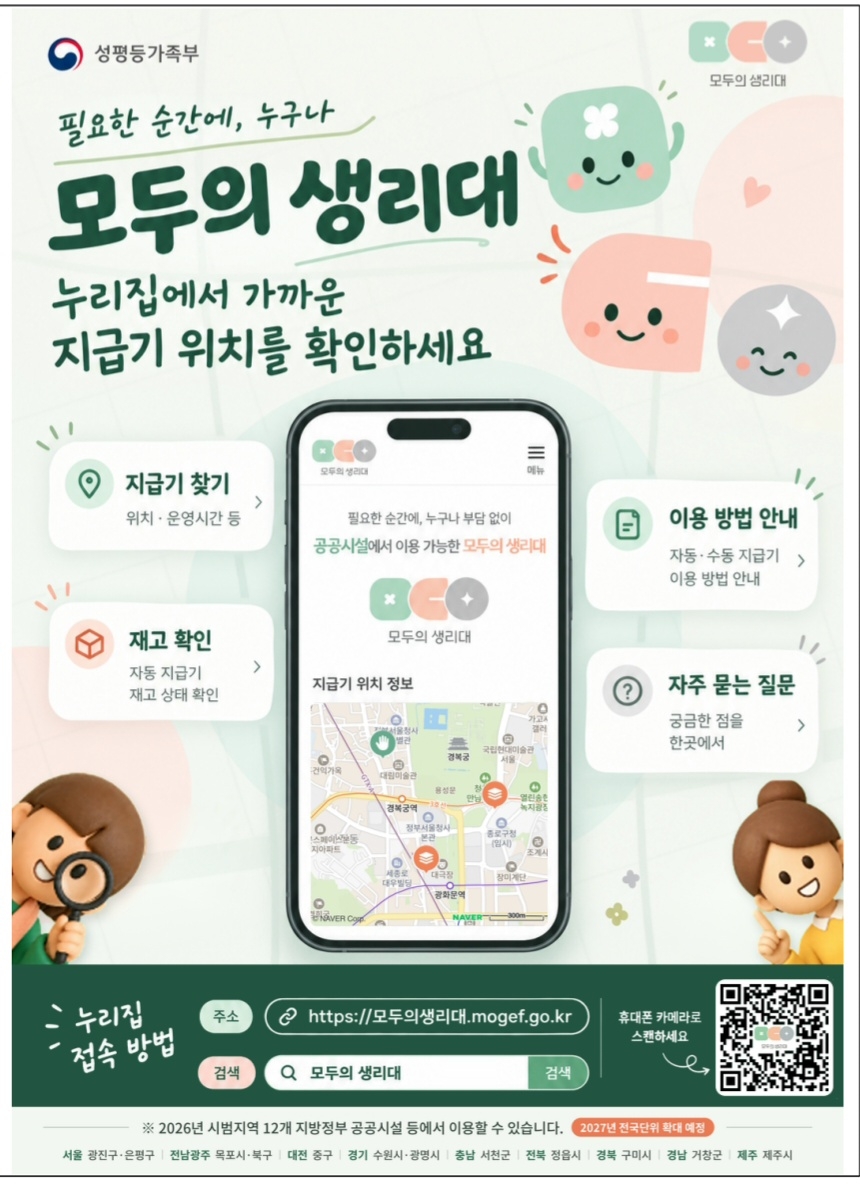
The Ministry of Gender Equality and Family said it has opened a dedicated website for the program, allowing users to find the locations and operating details of public sanitary pad dispensers across the country on an interactive map.
"Pads for All" is a public sanitary pad support pilot program that has been running in 12 regions nationwide since July 6. Previously, sanitary pad support was provided through a voucher system targeting low-income youth, but the program expanded eligibility so that anyone, regardless of age or income, can obtain free sanitary pads at public facilities.
The program currently operates at community centers, libraries, public health centers and other public facilities across 12 regions: Gwangjin-gu and Eunpyeong-gu in Seoul; Gwangmyeong and Suwon in Gyeonggi Province; Jung-gu in Daejeon; Seocheon-gun in South Chungcheong Province; Jeongeup in North Jeolla Province; Mokpo in South Jeolla Province; Buk-gu in Gwangju; Gumi in North Gyeongsang Province; Geochang-gun in South Gyeongsang Province; and Jeju.
Previously, users had to visit the ministry's website or each local government's site separately to find which facilities had dispensers installed. The new dedicated website consolidates all that information in one place.
The site's core feature is a map-based dispenser locator that guides users to the nearest available unit.
Automatic dispensers are marked in orange and manual dispensers in green. Selecting a dispenser icon on the map displays the facility name, exact installation location, operating hours and contact information.
For automatic dispensers — shown in orange — users can also check the remaining pad inventory and whether a machine is out of order before making the trip.
However, even as the government works to improve user convenience, a number of problems and controversies have emerged in the course of running the pilot.
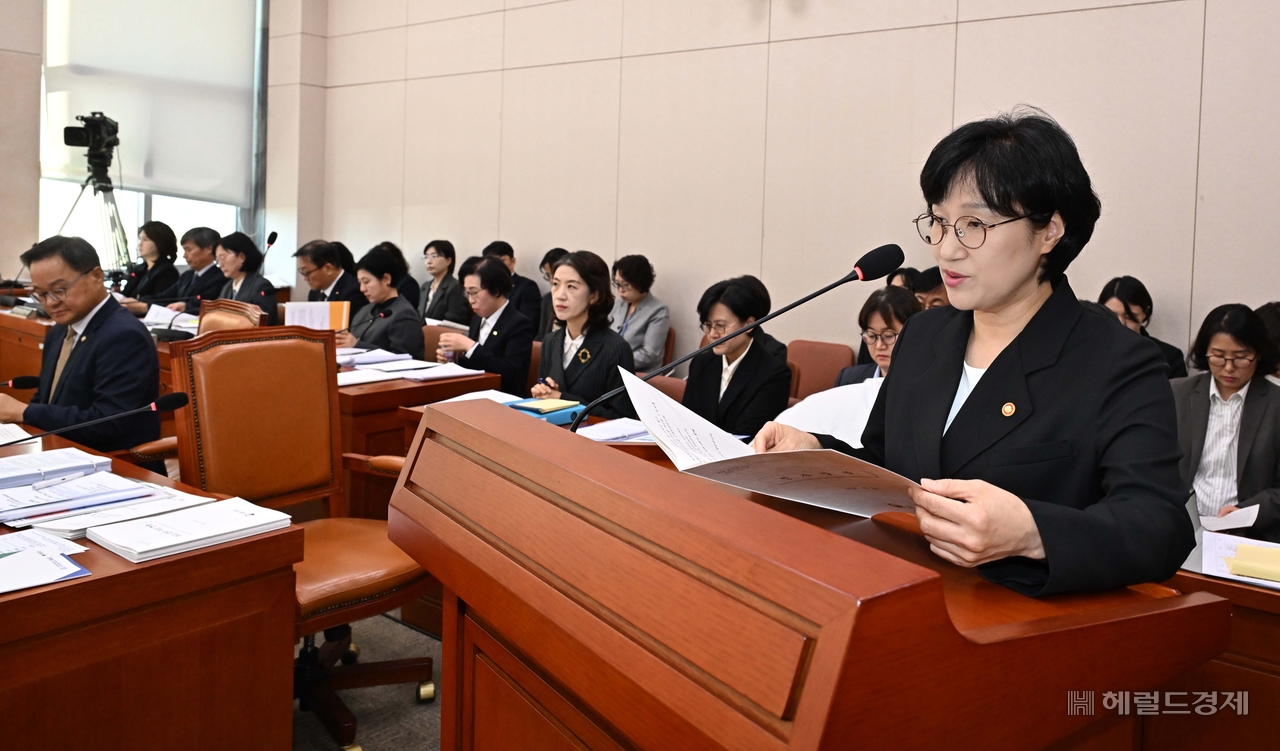
At a National Assembly Gender Equality and Family Committee national audit session on Wednesday, lawmakers raised concerns that the "Pads for All" program has been used primarily by employees at public institutions such as city halls and district offices — contrary to its original intent. Calls were also made for stronger controls to prevent repeated collection and other forms of misuse.
There are also concerns that the government is pushing for a nationwide rollout before the program's effectiveness has been adequately verified. The ministry has yet to release data on how many of the distributed pads were actually used, or the results of any user satisfaction survey.
The Ministry of Gender Equality and Family has allocated 22.81 billion won ($17.2 million) for the "Pads for All" program in next year's budget — about 7.1 times the 3.21 billion won set aside for this year's pilot. Including local government contributions, the total project cost is estimated at around 48 billion won. The government plans to expand the program nationwide starting next year, based on the results of this year's pilot.
Gender Equality and Family Minister Won Min-kyung said the sanitary pad support initiative is "a lifestyle-oriented policy that protects women's right to health and removes everyday inconveniences," adding that the ministry would "continue to make improvements to how the program is run."
kido@heraldcorp.com




