Rick Rieder says AI fundraising is 'unprecedented'
Short-term single-A bonds offering around 7% annually
10-year Treasurys lose appeal despite yields above 5%
AI-grade bond issuance tops $300 billion this year
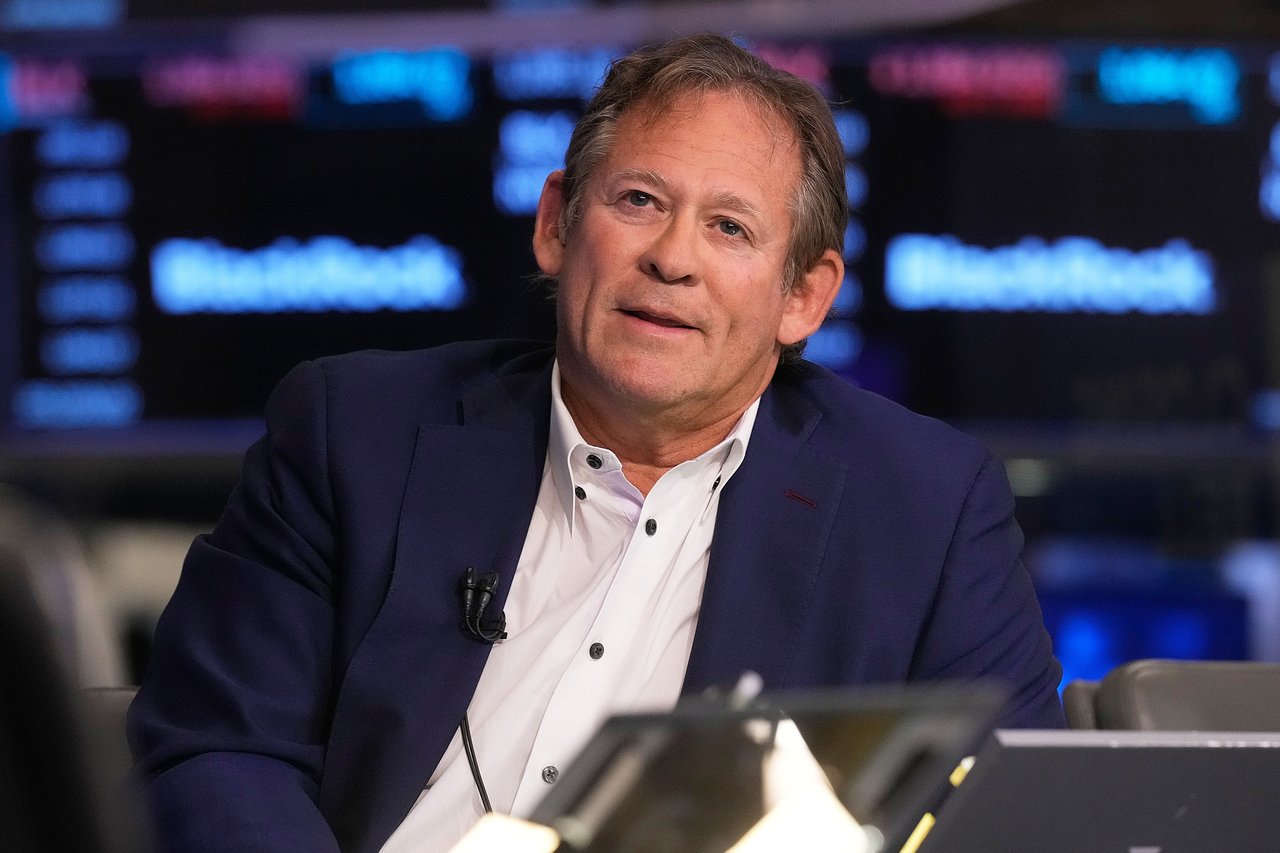
The head of fixed income at BlackRock, the world's largest asset manager, said investment-grade corporate bonds issued to fund AI infrastructure are a more attractive investment than long-term US government bonds. With the AI investment boom driving a surge in corporate fundraising, investors can now secure annual yields of around 7% even on short-term, high-grade corporate bonds.
According to Bloomberg, Rick Rieder, BlackRock's global chief investment officer of fixed income, said in a Bloomberg TV interview Monday (local time) that he had "never seen capital formation of this magnitude in both the bond and equity markets" and called the current environment "the most interesting investing backdrop I've experienced."
Rieder said he is particularly focused on investment-grade corporate bonds issued to fund AI infrastructure, including GPUs and data centers.
"I spent the entire weekend going through deals and spending time actually participating in size," he said, signaling his conviction that large-scale bond issuance by AI companies presents a genuine investment opportunity.
The flood of new corporate bond supply driven by AI investment has created conditions in which investors can demand higher yields. While borrowing costs have risen for companies, bond investors are being offered more favorable terms than in the past.
Rieder also said investment-grade corporate bonds have grown more appealing than US Treasurys.
"The 10-year Treasury is above 5%, but it's been pushed to the back of the line by other products in the market," he said. "It's become more of a barometer for equities than a core investment."
He added that buying short-term single-A rated corporate bonds alone can now yield around 7% annually, while also avoiding the duration risk that comes with long-term government bonds.
Duration risk refers to the sensitivity of a bond's price to changes in market interest rates — the longer the maturity, the greater the price swing when rates move. Short-term corporate bonds, by contrast, can offer relatively high interest income while limiting that price risk. Corporate bonds do, however, carry credit risk tied to the issuing company, unlike government bonds.
"I spent a good part of my career waiting for a 7% rate environment," Rieder said, describing the current bond market as a once-in-a-generation investment opportunity.
He said he particularly favors secured bonds issued by high-quality companies and assets that generate stable cash flows. On AI investment more broadly, he said valuations in semiconductor and computing stocks also look reasonable.
This investment environment has been shaped by aggressive corporate fundraising to expand AI infrastructure.
Hyperscalers operating large-scale data centers are raising hundreds of billions of dollars through record corporate bond issuance to secure AI computing capacity, funding the enormous capital expenditures required for data center construction and GPU procurement.
Global fundraising through AI-related investment-grade bonds has surpassed $300 billion this year — roughly triple last year's full-year total.
The flood of corporate bond supply is also rippling into the US Treasury market. As AI companies attract investor capital by offering higher yields, money that might otherwise flow into Treasurys is moving into the corporate bond market, analysts say, adding upward pressure on US government bond yields.
As the AI investment boom reshapes capital flows beyond equities and into the bond market, BlackRock said high-grade AI corporate bonds have emerged as an investment that can simultaneously deliver strong interest income and relatively short maturities.
sjy@heraldcorp.com