First election since Hamas war, 7.3 million voters casting ballots
Neither Netanyahu nor opposition bloc projected to win majority
Arab parties holding 14-16 seats seen as kingmakers
Reports emerge of Netanyahu pushing Iran strike before vote
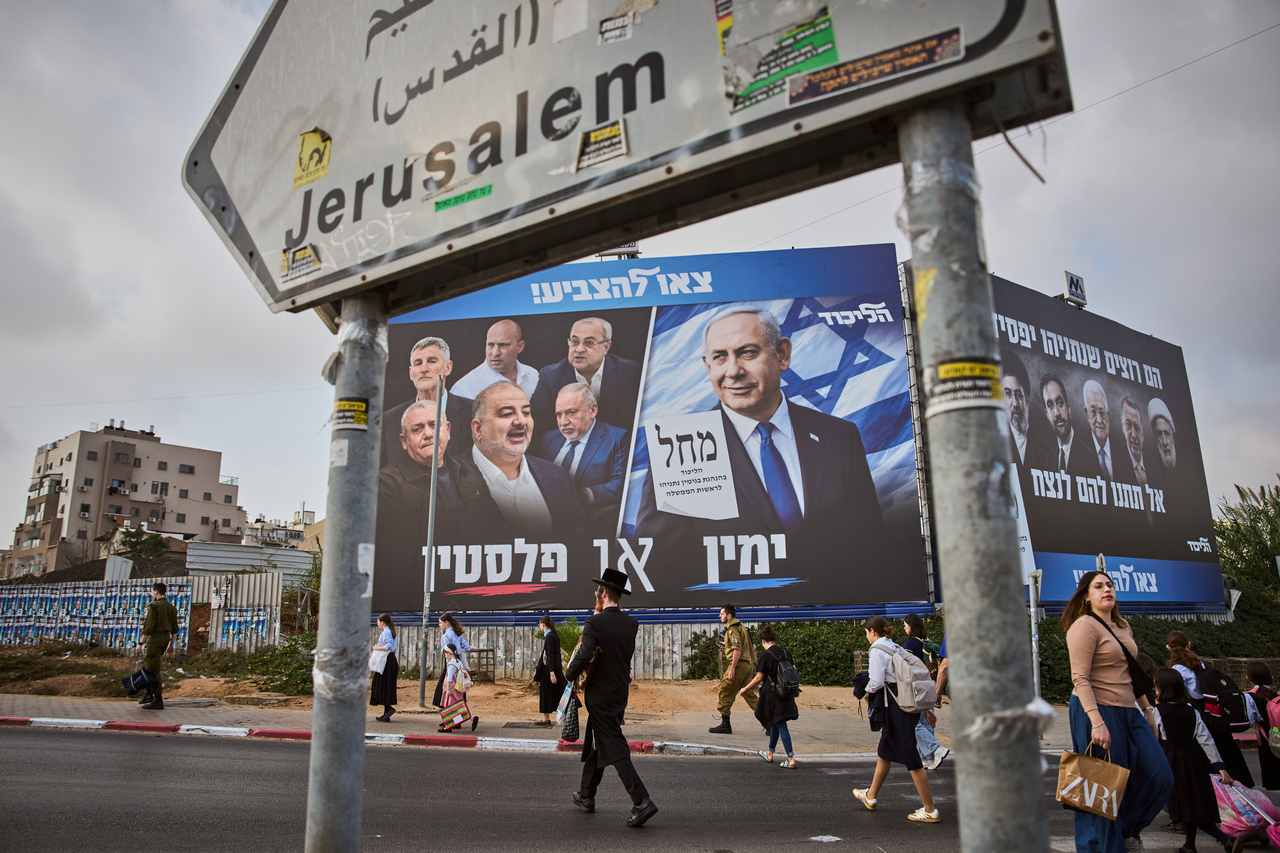
Israel opened polling Tuesday (local time) for a general election that will determine the political fate of Prime Minister Benjamin Netanyahu, who has led the country for more than 18 years and has been at war with Palestinian militant group Hamas since October 2023. It is the first election since that war began, and polls suggest neither Netanyahu's camp nor the opposition bloc is on track to secure a majority, raising the prospect of prolonged political uncertainty.
According to the National Election Commission, voting began at 7 a.m. at 12,018 polling stations across the country. About 7.3 million eligible voters are choosing 120 members of the Knesset, Israel's parliament. Seats are allocated by proportional representation, and a prime ministerial candidate must command at least 61 seats through a coalition to take power.
The election is widely seen as a referendum on Netanyahu. He faces criticism for deepening national divisions by pushing to curtail the judiciary's powers, and has come under sustained pressure over his government's failure to prevent Hamas's surprise attack in October 2023.
His main challenger is Gadi Eisenkot, a former military chief of staff who now leads the centrist new party Yashar. Eisenkot was appointed chief of staff by Netanyahu himself and later joined the wartime cabinet, but resigned after accusing Netanyahu of prolonging the war and endangering the hostages. He lost his youngest son and two nephews in combat in Gaza.
The race is extremely tight. Final polls from major broadcasters — excluding Channel 14, which leans toward Netanyahu — projected Netanyahu's bloc at 50 to 51 seats and the four Jewish opposition parties at 52 to 56 seats. Neither side is expected to reach the 61-seat threshold needed to form a coalition.
That leaves Arab parties, projected to win 14 to 16 seats, potentially holding the balance of power in government formation. However, both sides have signaled reluctance to partner with Arab parties, making coalition negotiations likely to be difficult.
Polls close at 10 p.m. Tuesday, with exit survey results from broadcasters expected immediately afterward. Official results are scheduled for release on Nov. 4. Given the razor-thin margins, some analysts say it could take days just to determine which party finishes first.
Even after the election, forming a government could take considerable time. The prime ministerial candidate designated by the president has a basic 28 days — extendable to 42 — to assemble a coalition. Past Israeli governments have taken anywhere from 20 to 100 days to form. If both sides fail, a snap election cannot be ruled out.
Ahead of the vote, The New York Times reported, citing Israeli military officials, that Netanyahu had pushed in recent weeks for additional strikes on Iran but was blocked by military chief of staff Eyal Zamir.
In the final stretch of campaigning, Netanyahu released an AI-generated image of a mushroom cloud rising over Tel Aviv, declaring that this election would decide "the existence of Israel."
The war continued on election day. The Israeli military said it carried out airstrikes on northern, central and southern Gaza on Tuesday, killing four Hamas and Islamic Jihad militants. As voters headed to the polls, the competing narratives of war fatigue and security crisis framed the choice before them.
sjy@heraldcorp.com