Special measures period runs Oct. 23–Nov. 1
14 areas across city under intensive management
3,271 safety personnel to be deployed on the ground
361 CCTV cameras, urban data systems and drones to monitor crowds
244 million won in disaster funds distributed to 7 districts
Subway trains to skip Itaewon and other stations if crowds surge
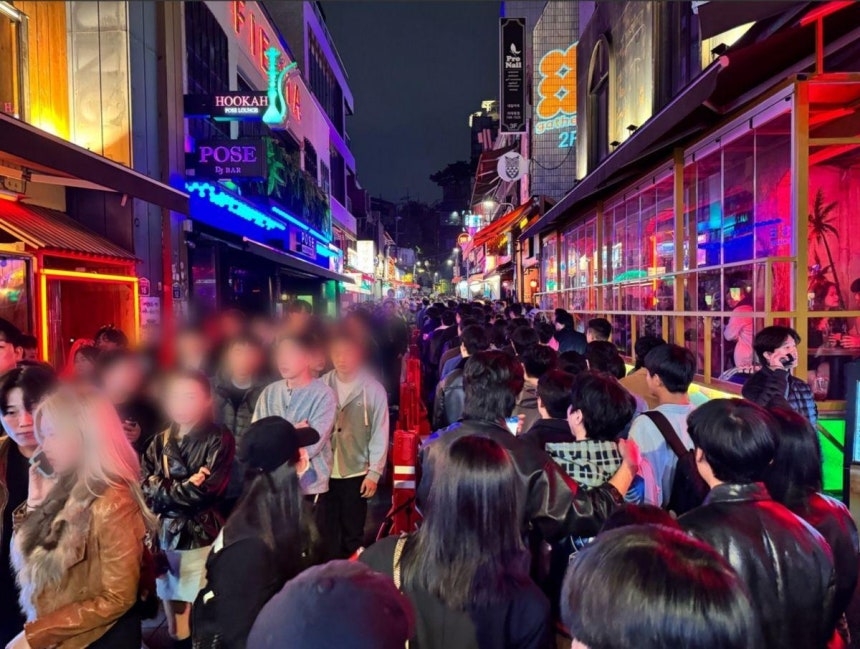
The Seoul Metropolitan Government announced Thursday it has drawn up a comprehensive Halloween safety plan and will work with city and district offices, police and fire departments to strengthen crowd management ahead of Halloween on Oct. 31.
This year's Halloween falls on a Saturday, and the number of foreign tourists visiting South Korea has been exceeding 2 million a month, raising expectations of large crowds in popular entertainment districts such as Itaewon, Hongdae and Seongsu-dong.
In response, the city has designated Friday through Nov. 1 as a "Halloween special measures period." The three days from Wednesday through Nov. 1, when the heaviest crowds are expected, will be treated as an "intensive management period," with all available resources focused on on-site safety.
The city selected 14 areas across 10 districts for management, based on historical crowd data, terrain conditions, and public safety and emergency response needs. Eight of those locations, where the largest gatherings are anticipated, have been designated "priority management zones" with heightened safety measures. The eight zones are the Itaewon tourism special zone, the Hongdae tourism special zone, Ikseon-dong, Myeong-dong Street, the Seongsu-dong cafe street, the Konkuk University food street, Gangnam Station and Apgujeong Rodeo Street.
Joint on-site command centers will be established and operated at all eight priority zones, with participation from the Ministry of Interior and Safety, the Seoul Metropolitan Government, district offices, police and fire departments. In the Itaewon area specifically, a "disaster safety field command bus" — equipped with specialized communications equipment, a video conferencing system and high-powered external loudspeakers — will be stationed at Noksa-pyeong Square from Oct. 31 through Nov. 1 to serve as a command hub and crowd evacuation guidance point. Yongsan-gu estimates that about 165,000 people will visit the Itaewon area, including the World Food Culture Street and Quinon-gil, during the measures period, based on visitor trends over the past three years.
To detect dangerous crowd density early and respond quickly, the city will strengthen real-time crowd monitoring using AI-powered crowd-detection CCTV cameras, Seoul's real-time urban data system and drones. Of the 1,094 crowd-detection CCTV cameras installed across Seoul, 361 units located in the 14 Halloween crowd management zones will be used for intensive monitoring.
Congestion levels in key areas will also be continuously tracked through Seoul's real-time urban data system, which draws on mobile carrier base station signals. In areas where large crowds gather, on-site safety measures tailored to each location — including road closures, pedestrian flow separation and queue management at establishments — will be implemented to prevent crowd concentration in any single spot.
On Oct. 31 in particular, vehicle restrictions will be imposed in the Itaewon and Hongdae areas to create additional pedestrian space. Itaewon-ro will be fully closed to traffic, while one lane of the Hongdae club street will be converted to pedestrian use.
The city plans to deploy a total of 3,271 safety personnel on the ground, including 2,011 public workers such as civil servants and 1,200 private-sector personnel including professional safety officers and volunteer disaster prevention teams.
In addition, the city has distributed 244 million won ($184,000) from its disaster management fund as emergency support to seven districts to strengthen their on-site safety management capacity. The funds will be used to hire additional private professional safety personnel in key high-density areas, set up field command centers, and expand safety fencing and broadcasting equipment.
Subway operations and station access will also be managed flexibly. If crowds surge at major stations — including Itaewon Station, Hongik University Station, Seongsu Station and Konkuk University Station — the city will restrict station entrances and have trains pass through without stopping.
"This year's Halloween falls on a weekend and the number of foreign tourists visiting Korea has grown significantly, making thorough, field-centered advance preparation more important than ever," said Kim Seong-bo, Seoul's second deputy mayor for administration. "We will concentrate safety personnel on the ground and conduct thorough inspections to create a safe environment where citizens can enjoy themselves with peace of mind."
ikson@heraldcorp.com