Court finds no breach of duty in share buyback tender offer
Youngpoong, MBK say ruling 'cannot serve as absolution'; vow to pursue liability at higher court
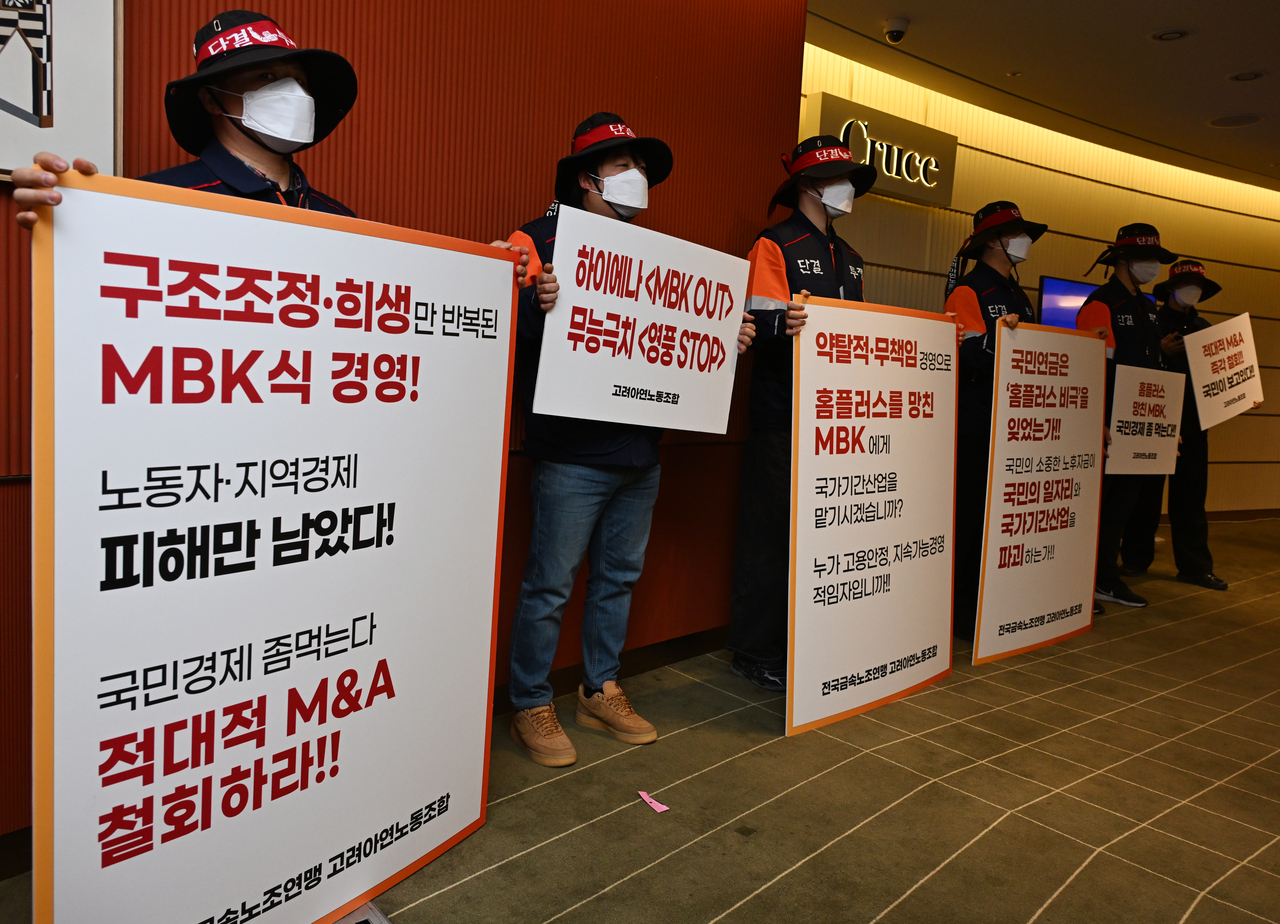
Youngpoong and private equity fund manager MBK Partners said they will immediately appeal after losing the first-instance ruling in a shareholder derivative suit they filed against Korea Zinc Chairman Choi Yun-beom and other directors over the company's treasury share tender offer. The two said the court focused solely on procedural formalities and managerial discretion while ignoring the real harm the buyback inflicted on Korea Zinc's financial structure and shareholder value.
Youngpoong and MBK Partners issued an official statement Thursday, immediately after the ruling against them, saying they would "immediately appeal to seek a strict legal judgment from a higher court."
The 30th Civil Division of the Seoul Central District Court, presided over by Judge Kim Seok-beom, ruled against Youngpoong in its approximately 837 billion won ($631 million) shareholder derivative suit against Korea Zinc's directors. The court found it difficult to conclude that the directors' decision to acquire treasury shares constituted a breach of their duty of care or duty of loyalty. It said the Korea Zinc board had recognized Youngpoong's tender offer as a hostile threat to the company and had reached its decision after reasonably reviewing external legal advice, relevant injunction rulings, purchase price conditions and financing arrangements.
Youngpoong and MBK strongly criticized the ruling, saying it failed to properly reflect the illegality of a treasury share tender offer carried out solely to protect Choi's personal grip on the company.
They said the Korea Zinc board raised more than 1.6 trillion won in debt to fund the roughly 2 trillion won treasury share tender offer, and that buying back shares at 890,000 won per share inflicted actual losses of more than 830 billion won on the company. As a result, they said, Korea Zinc's net-cash financial position — built up over decades — collapsed virtually overnight into a state of heavy net debt.
They added that "no external advice or procedural formality can justify sacrificing the company's future growth engines and financial safety net solely to preserve the personal control of inside director Choi Yun-beom," calling the decision a breach of the duty of care.
Youngpoong and MBK also criticized an attempted public offering that they said was designed to shift the debt-repayment burden from the tender offer onto ordinary shareholders, as well as allegations that Choi made advance investments in an unlisted entertainment company.
"The sequence of events — saddling the company with an unbearable debt to protect one person's position and then trying to pass the bill to ordinary shareholders — makes it plainly clear that the board's decisions at the time were not made in the interest of the company and its shareholders as a whole," they said, again raising what they called serious distortions in Korea Zinc's board functions and internal controls.
They further warned that "granting absolution under the guise of managerial discretion would undermine corporate governance and shareholder protection principles in the capital markets," and vowed to "hold Choi and the directors fully accountable, legally and financially, and thoroughly establish their illegality at a higher court."
an@heraldcorp.com