Tax delayed three times, now set for Jan. 1 — government leaves door open for further review
Democratic Party says no more delays; People Power Party cites infrastructure gaps
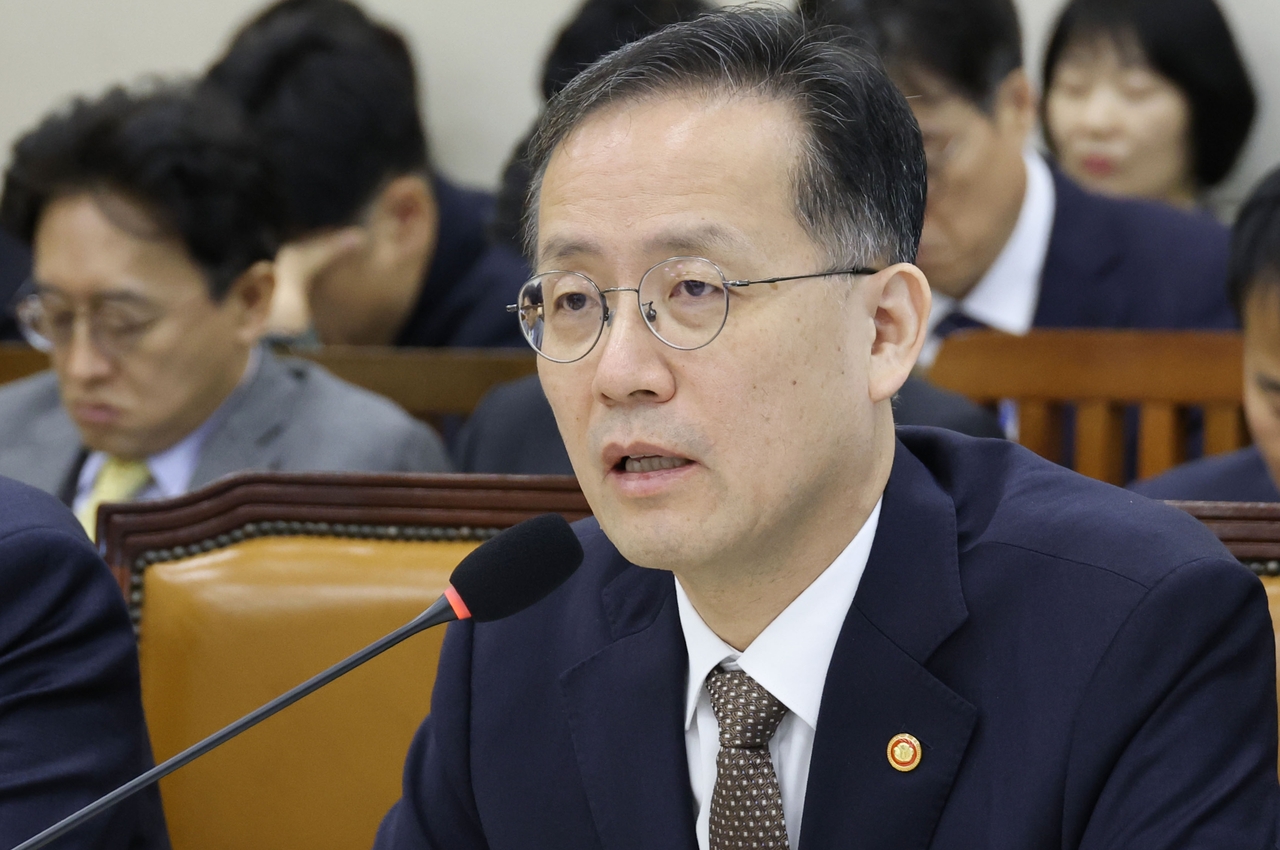
With the ruling and opposition parties at odds over a virtual asset tax set to take effect in January, Deputy Prime Minister and Minister of Economy and Finance Lee Hyung-il said Thursday he would gather views from all sides before making a careful decision. The debate over whether to implement the tax regime — already delayed three times — is flaring up again.
Speaking at the comprehensive national audit of the Ministry of Economy and Finance held by the National Assembly's Planning and Finance Committee on Thursday, Lee said he would "collect all the opinions from the industry and the National Assembly and deliberate as thoroughly as possible before reaching a judgment."
He added that at a previous national audit he had also promised to consult further with experts and industry representatives before deciding, and that he intended to follow through on that commitment.
The virtual asset tax was introduced through a 2020 amendment to the income tax law but has since been delayed three times. Under current law, it is scheduled to take effect Jan. 1 next year. The government has been proceeding with administrative preparations on that timetable, but the virtual asset industry has argued that the necessary taxation infrastructure is not yet in place and has called for additional regulatory groundwork before implementation.
At Thursday's audit, lawmakers from the ruling and opposition parties staked out sharply different positions on the timing of the tax.
Democratic Party lawmaker Yun Hu-deok said the repeated delays were eroding public trust in policy. "The United States, Japan, Germany, the United Kingdom and others already tax virtual assets, and some 48 countries appear to have such taxes in place," Yun said. "Every time a delay was granted, the government promised to get ready — and now we're hearing the exact same thing again."
He went further, saying that moving to delay or repeal a law passed by a plenary vote of the National Assembly with bipartisan agreement "shakes the very foundations of the Republic of Korea." "If we keep undermining laws that have already been settled, what basis is there for running the country?" he said.
People Power Party lawmaker Lim Yi-ja, by contrast, raised concerns about tax equity and infrastructure shortfalls. Unlike domestic exchanges, she noted, overseas exchanges are under no obligation to submit transaction records to Korean authorities, creating potential blind spots in enforcement.
"We can tax domestic exchanges, but overseas exchanges have no obligation to submit transaction records to us," Lim said. "Tax equity is breaking down."
She also said legal taxation standards and the supporting infrastructure remained inadequate. "Virtual asset businesses say it takes at least six to nine months to build the infrastructure in line with National Tax Service guidelines — so what exactly has been prepared?" she asked.
With the government pressing ahead with legal preparations while signaling openness to further consultation, whether the virtual asset tax will actually take effect next year is expected to become a key point of contention in discussions between the government and the National Assembly. Lee, however, stopped short of stating a clear position Thursday on whether the tax would be delayed again or scrapped altogether.
fact0514@heraldcorp.com