Korea Labor Foundation ESG seminar examines corporate impact and support measures
As major economies including the EU expand legislation requiring human rights due diligence in global supply chains, managing labor and human rights risks has emerged as a pressing challenge for South Korean companies.
The issue affects not only Korean firms operating abroad but also domestic suppliers to global companies, which must now meet international labor standards. The seminar highlighted the importance of labor-management cooperation and the need for stronger support to help companies build their capacity to respond.
The Korea Labor Foundation held a seminar Thursday at its headquarters in Seodaemun-gu, Seoul, under the theme "Global ESG Response Strategies Through Labor-Management Cooperation," with the impact of global supply chain due diligence legislation on Korean companies and ways to address it as the central agenda.
At the event, Noh Yong-jin, a professor at Seoul National University of Science and Technology, presented on "Corporate Support Measures for Responding to Global Supply Chain Due Diligence Legislation," examining international trends in human rights due diligence laws and their implications for Korean businesses and outlining practical support measures to help companies respond effectively.
The growing importance of labor and human rights within global ESG frameworks was also underscored. Key areas identified for action included labor rights, industrial safety, discrimination, forced labor, freedom of association and collective bargaining.
Lee Yeon-woo, a specialist at law firm Bae, Kim & Lee, spoke on "2026 Global ESG Disclosure Trends and Labor-Management Cooperative Responses," explaining shifts in the ESG disclosure environment and key issues related to labor and human rights. She also outlined directions for companies and unions to work together in addressing them.
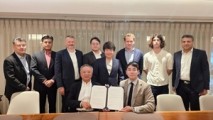
Aihara, chairman of the Japan International Labour Foundation, introduced trends in sustainable management in Japan's labor sector, the role of trade unions in global supply chains, and case studies of labor-management cooperation in responding to labor and human rights due diligence requirements.
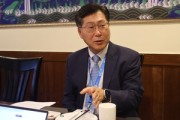
Park Jong-pil, secretary-general of the Korea Labor Foundation, said global ESG standards are "expanding beyond the environmental sphere to encompass the full range of sustainable corporate management, including labor and human rights." He added that he hoped the seminar would serve as "an opportunity for companies and unions to jointly understand the changing global ESG landscape and proactively address risks in the labor and human rights arena."
The foundation said it plans to continue providing field-centered support to help labor and management cooperate, communicate and adapt to an evolving global labor environment.
fact0514@heraldcorp.com