FSC chairman speaks at National Assembly audit
Lee says multiple considerations needed on tax delay or abolition calls
Digital asset framework bill in final stages of government consultations
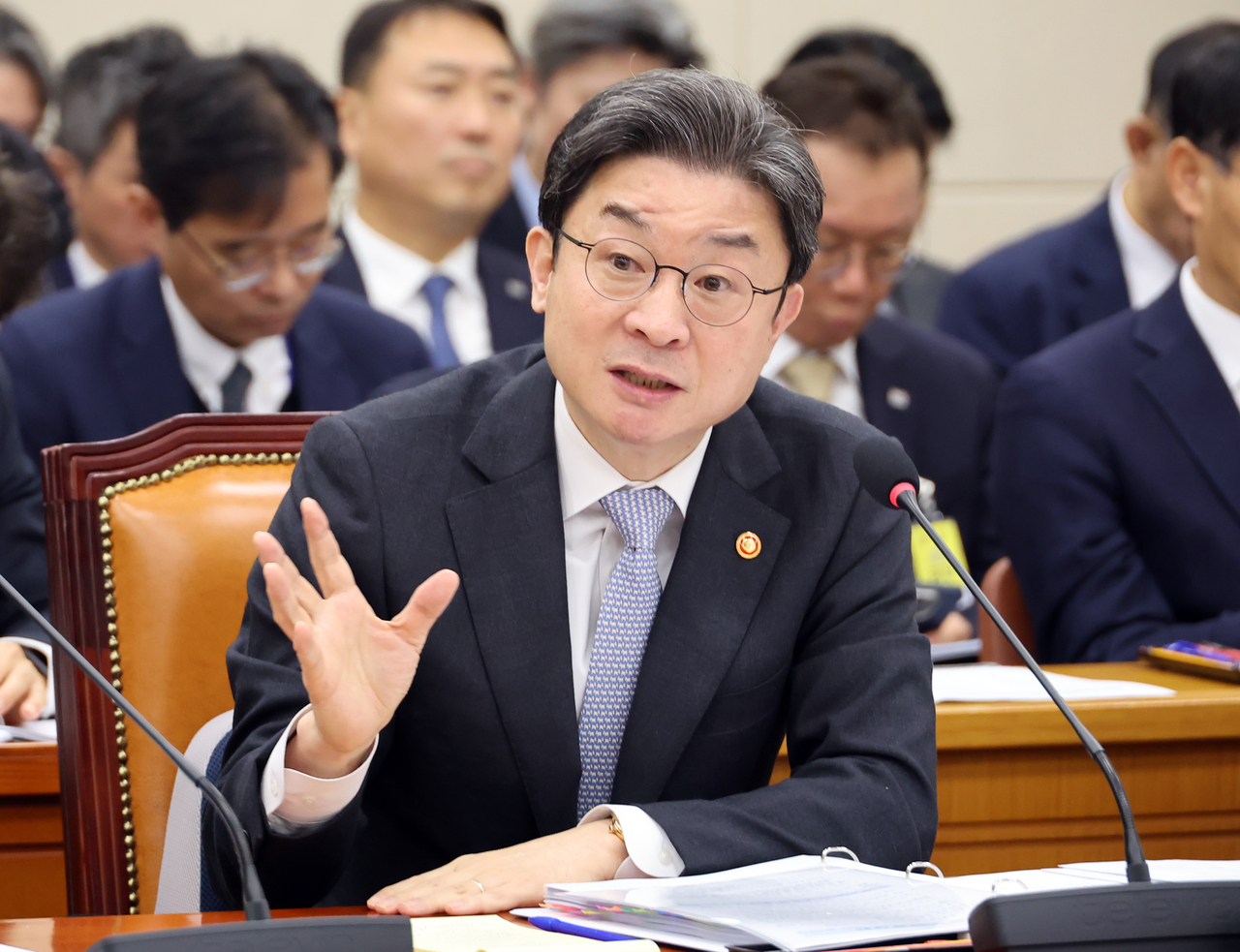
With a virtual asset tax set to take effect in January, FSC Chairman Lee Eok-won said Thursday that "all the various circumstances must be given sufficient consideration" regarding the timing of the levy. He also said government consultations on a digital asset framework bill — which would govern the broader virtual asset market — are in their final stages.
Lee made the remarks at the National Assembly's Financial Services Committee national audit on Thursday, responding to People Power Party lawmaker Song Eon-seog, who asked whether the virtual asset tax should be abolished or delayed until a basic digital asset law is in place.
Song said it was inappropriate to impose the tax before a framework law defining the nature of virtual assets and the government's policy direction had been established. He also said that while the government pledged in July to produce a related bill by year's end, no draft had yet been released.
In response, Lee said the digital asset bill was "in its final stages of internal consultation" and that the government would "move as quickly as possible to bring it to discussion."
On whether to proceed with the tax, Lee said the Ministry of Economy and Finance was gathering opinions from various stakeholders. "I believe Deputy Prime Minister Lee Hyeong-il has also spoken on this — there are diverse views, and my understanding is that they are currently being collected," he said. "I think all the various circumstances must be given sufficient consideration."
The virtual asset tax was introduced through an amendment to the income tax law in 2020 but has been delayed three times. Under current law, income generated from transferring or lending virtual assets on or after Jan. 1, 2027, is subject to separate taxation as miscellaneous income. After a basic deduction of 2.5 million won ($1,890) per year, a 20 percent income tax applies, with the effective rate rising to 22 percent when local income tax is included.
The government is pressing ahead with preparations on the assumption that the tax will take effect next year, but calls for a further delay or outright abolition continue in the political arena. The People Power Party has introduced a bill to strike the virtual asset income tax provision entirely, while the Democratic Party of Korea is pushing a separate bill that would in effect push the tax start date back to 2029.
Separately from the tax debate, work on a government draft of the digital asset framework bill has also been slow to advance. The legislation is expected to cover the issuance and retail distribution of virtual assets, disclosure and listing rules, and a framework for issuing and operating won-denominated stablecoins. Within the government, detailed coordination is continuing over issues including who may issue stablecoins and how to regulate the governance structures of exchanges.
rim@heraldcorp.com