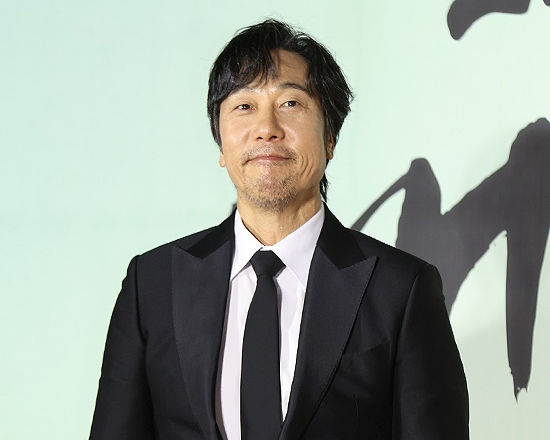
Singer Lee Moon-se, 67, shared a lighthearted story about his wife following cataract surgery.
On Thursday, Lee posted a photo of himself inside a car on Instagram, writing that he was on his way to a follow-up appointment exactly one week after the procedure.
"Maybe because I had presbyopia correction done at the same time, but I can see so clearly," he wrote. "I jokingly told her, 'I never realized how pretty you were,' and my wife's face turned red as she broke into a big smile."
Lee had earlier revealed that he underwent two surgeries for thyroid cancer.
On a television entertainment program, he said doctors told him cancerous tissue had been found in his thyroid. "They said it was straightforward and not to worry, so I asked them to operate quickly," he recalled. "They said I might not be able to sing anymore. I told them that was the worst-case scenario — give me the positive case."
He added that a small amount of cancerous tissue remained near his vocal cords but was left untreated because operating on it was too risky. "If anything went wrong, even slightly, I wouldn't be able to sing. So we just left it," he said.
Cataracts, a condition in which the eye's lens becomes cloudy and impairs vision, are common with age. Cataract surgery is the most frequently performed procedure in South Korea.
According to the National Health Insurance Service's 2025 annual report on major surgical procedures, cataract surgery was the most common of 35 major operations covered by national health insurance and medical aid last year, with 692,126 cases — up 4.2 percent from the previous year.
Among patients in their 50s and older, cataract surgery ranked first across every age group. Last year, 157,403 patients in their 60s and 176,945 in their 70s underwent the procedure.
Born in 1959, Lee made his debut in 1983 with his first studio album and went on to produce a string of hits, including "Nan Ajik Moreujanayo," "Gwanghwamun Yeonga" and "Yetsarang."
dbsdn1110@heraldcorp.com