Kim Keon Hee's detention in the 'three allegations' cases expires Oct. 31
Eyes on whether arrest warrant will be issued in influence-peddling case
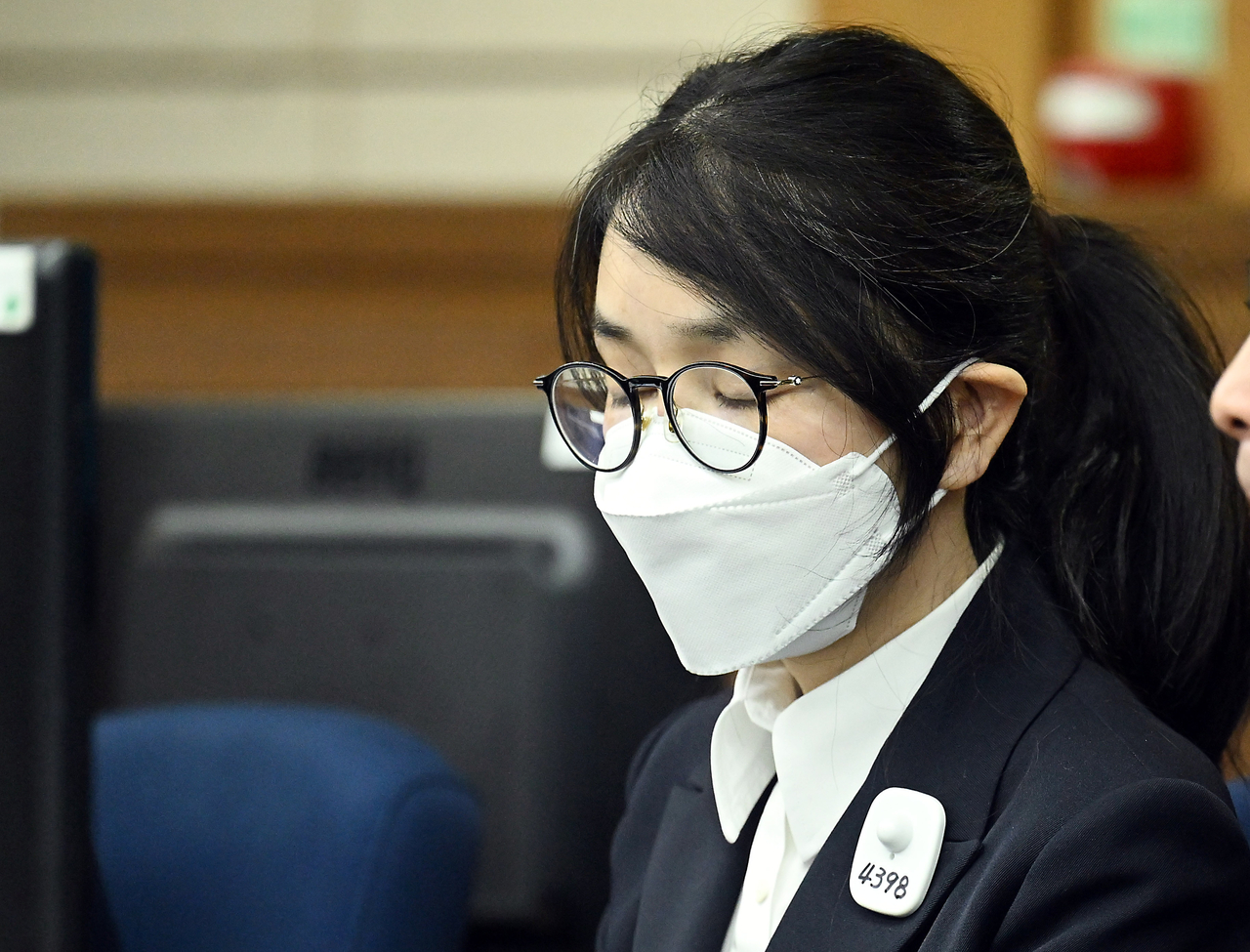
The Supreme Court has assigned a panel and a presiding justice to hear the final appeal in the so-called "influence-peddling" case against Kim Keon Hee, wife of former President Yoon Suk Yeol, as her current detention period nears expiration. The assignment is expected to accelerate the court's deliberations on whether to issue an additional arrest warrant against her.
The Supreme Court assigned Kim's appeal — in which she faces charges of illicit brokerage under the Act on the Aggravated Punishment of Specific Crimes — to its Second Division on Thursday. Justice Oh Kyung-mi will serve as the presiding justice. The presiding justice leads deliberations on assigned cases, reviews key legal issues, and plays a central role in reaching a consensus with fellow justices and drafting the ruling. The Second Division comprises Oh along with Justices Kwon Young-jun, Park Young-jae and Kim Sung-su.
With the case now assigned, the panel is expected to begin formally reviewing whether to issue an additional arrest warrant against Kim. The special prosecutor's team submitted a request to the Second Division on Friday, asking it to issue an arrest warrant on its own authority, citing the imminent expiration of Kim's detention period in the influence-peddling case.
Kim's detention expires Oct. 31. She is currently held on charges stemming from three separate cases — alleged manipulation of Deutsch Motors share prices, alleged receipt of gifts from the Unification Church, and alleged receipt of free polling services from political operative Myung Tae-kyun. An appellate court sentenced her to four years in prison in those cases, but the Supreme Court referred the matter to its Grand Bench in July, delaying a final ruling.
The Grand Bench held its first deliberation session on Sept. 29 and convened a second session Thursday. If the Grand Bench issues a ruling before Oct. 31 that finalizes Kim's sentence, or if no additional arrest warrant is issued in a separate case, she will be released and stand trial without being detained.
Article 92 of the Code of Criminal Procedure sets the basic detention period for a defendant at two months, renewable by decision up to twice per court level in two-month increments when necessary. For appellate proceedings, however, up to three renewals are permitted when additional hearings are unavoidable — for instance, to examine evidence requested by the defendant or defense counsel, or to allow supplementary written submissions on grounds for appeal.
In practice, the maximum detention period at the first-instance level is six months, while at the second and third levels it is eight months each. Kim's case, currently before the Supreme Court's Grand Bench, is approaching that eight-month ceiling.
The influence-peddling case, in which the special prosecutor is seeking an additional warrant, centers on allegations that Kim received expensive gifts from business figures in exchange for using her influence over personnel appointments, political candidacies and business favors. A first-instance court sentenced her to seven years in prison, but an appellate court acquitted her on some charges and reduced the sentence to five years. Both Kim's side and the special prosecutor appealed, bringing the case to the Supreme Court. Because no arrest warrant has ever been issued in this case, a separate warrant remains legally possible.
yg@heraldcorp.com