Air force chiefs sign LOI on autonomous collaborative platform cooperation on sidelines of 2026 Sacheon Airshow
South Korea and the United States will deepen cooperation on manned-unmanned teaming systems — combat configurations in which crewed fighter jets operate alongside autonomous drones. The two air forces plan to jointly design interoperability for combined operations from the earliest stages of development, including for next-generation unmanned platforms such as the US Air Force's Collaborative Combat Aircraft (CCA).
The South Korean Air Force announced Thursday that it had signed a letter of intent (LOI) with the US Air Force on cooperation for autonomous collaborative platforms (ACP).
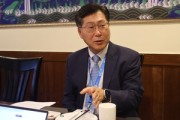
The LOI was signed during a bilateral meeting between the two countries' air force chiefs on the sidelines of the 2026 Sacheon Airshow. South Korean Air Force Chief of Staff Gen. Son Seok-rak and US Air Force Chief of Staff Gen. Kenneth Wilsbach signed on behalf of their respective services.
An autonomous collaborative platform performs missions by working in coordination with crewed aircraft and other assets using autonomous functions. The CCA — an unmanned combat aircraft that flies in formation with manned fighters — is the prime example. Known as the "loyal wingman" concept, it reduces risk to pilots while expanding the operational reach and survivability of crewed aircraft, making it a centerpiece of future air combat.
The US Air Force has been accelerating CCA development and the construction of its operational framework. It established an Experimental Operations Unit (EOU) in June last year to test the tactics and procedures needed to operate CCAs and to refine how manned and unmanned aircraft collaborate.
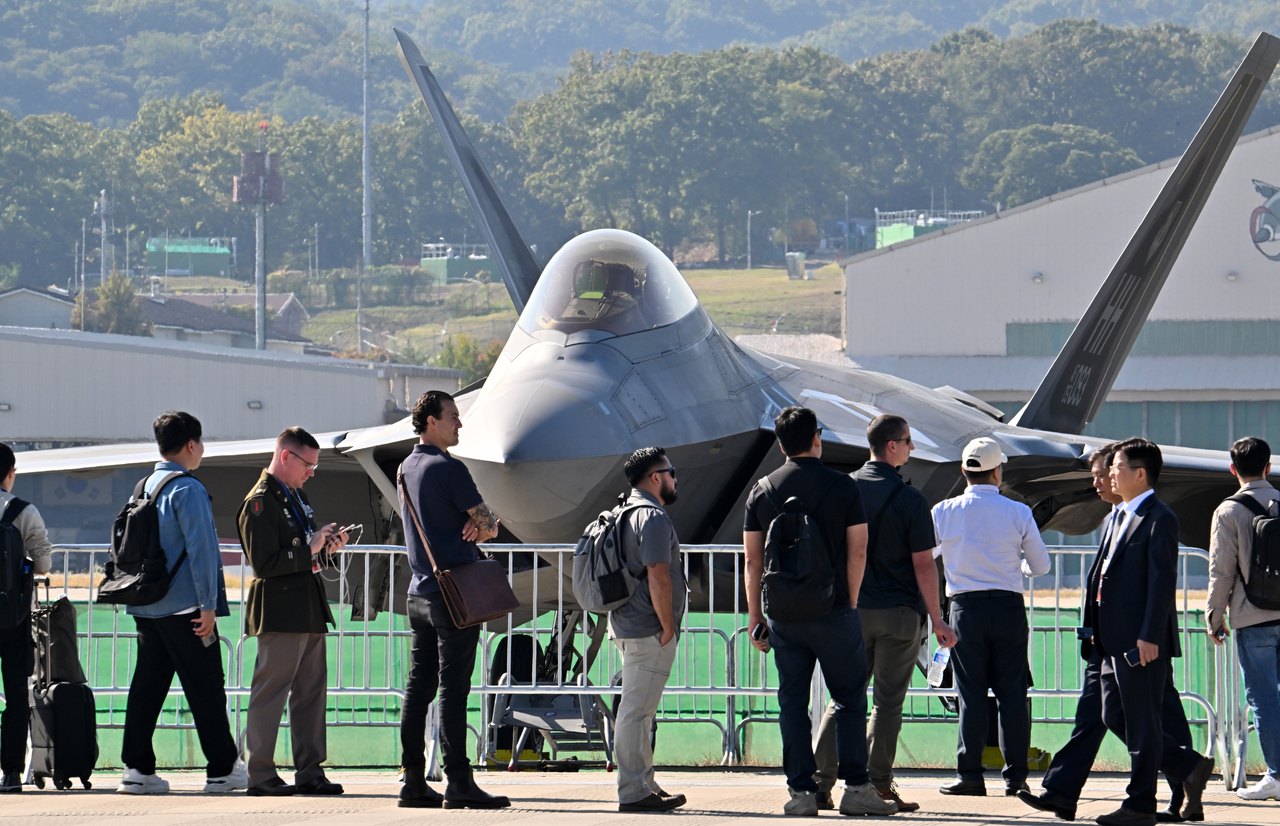
Building on that foundation, the US Air Force conducted prototype flight tests of the CCA last year and this month successfully completed an aerial tactical control flight test in which an F-22 fighter issued tactical commands to a CCA — marking the point at which a pilot in the cockpit of a fifth-generation stealth fighter can directly command an unmanned wingman.
The two air forces plan to strengthen cooperation under the LOI to advance operational concepts and interoperability for future manned-unmanned teaming systems.
The core focus is integration from the development stage. The two sides intend to discuss mission data-sharing methods and linkage between manned and unmanned assets from the system-development phase, so that their unmanned platforms can operate seamlessly together in future combined operations. To that end, they will form a working-level consultative body and set out priority tasks and a concrete timeline. The scope of cooperation spans operational concept development, test and evaluation, and education and training.
The South Korean Air Force plans to apply the experience and knowledge gained through the cooperation to developing operational concepts and capability requirements suited to the Korean Peninsula's operational environment. It will also link the effort with domestic research and development to build the foundation for fielding manned-unmanned teaming systems.
Observers inside and outside the military say the LOI will serve as a channel through which South Korea can share, from an early stage, the test and operational know-how of the US Air Force — the most advanced force in CCA development.
rimsclub@heraldcorp.com