Guidelines spell out criteria for AI scope, performance and operating conditions
Virtual expert endorsements and deepfake ads also covered
Public comment open until Nov. 11; guidelines carry no legal binding force
South Korea's antitrust regulator is drawing up criteria to identify misleading advertising by companies that market products as AI-powered without actually using the technology, or that exaggerate the scope and performance of AI features.
The Korea Fair Trade Commission said Thursday it has released a draft "Guidelines on Labeling and Advertising Related to Artificial Intelligence" and will collect feedback from businesses, consumers and experts through Nov. 11.
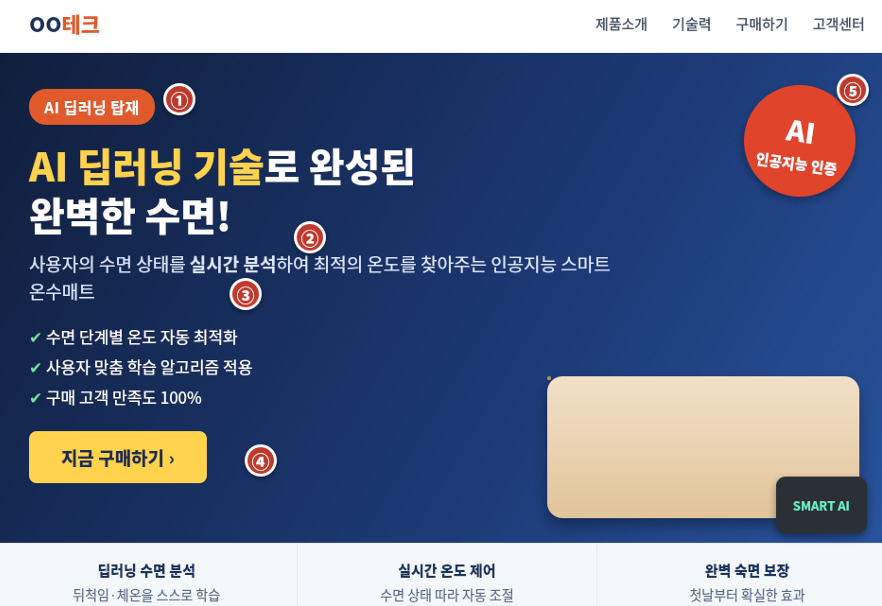
The guidelines were developed in response to the spread of so-called "AI washing" — where companies overstate whether or how much AI is actually used in their products — as well as false and exaggerated advertising that relies on AI-generated virtual personas, fake consumer reviews and deepfakes.
A consumer perception survey conducted by the Korea Consumer Agency last November found that 57.9 percent of respondents said they would be willing to pay more for a product marketed as AI-powered than for a comparable non-AI product. On average, those respondents said they would pay about 21 percent above the standard price. The finding underscores how inaccurate claims about AI features can directly influence purchasing decisions.
The guidelines classify misleading AI-related advertising into four types: false or exaggerated claims, deceptive claims, unfair comparisons and disparagement. They also present 16 hypothetical cases drawn from actual consultations and investigations, covering electrical appliances, household goods, food, cosmetics, and education, legal and financial services.
Advertising a product as primarily AI-driven when it lacks AI technology or uses it only in a simple or supplementary way may constitute false or exaggerated advertising. Functions based on simple sensor controls or fixed rules do not qualify as AI, whereas features that perform learning or inference may.
Even when AI technology is genuinely used, concealing limitations in operating conditions or performance can be deemed deceptive advertising. One example would be promoting a robot vacuum's AI capabilities without disclosing that users must install and connect a dedicated app.
The guidelines also cover advertising that misleads consumers by presenting AI-generated virtual experts or fabricated consumer reviews as real-person endorsements or experiences. Endorsements and testimonials by AI-generated virtual experts in food, cosmetics and pharmaceutical advertising will be prohibited starting Nov. 27.
Emphasizing performance with claims such as "X times better than competitors" without objective benchmarks, or concealing laboratory test conditions, may be treated as unfair comparative advertising. Disparaging existing technologies as "outdated" or "fake" without basis while touting one's own AI as "perfect" may constitute defamatory advertising.
The Fair Trade Commission also prepared a four-step, eight-item checklist that businesses can use to self-assess their advertising before publication. Key items include whether AI technology is actually applied, the scope of its application, operating conditions, and whether objective supporting data on performance has been secured.
However, the guidelines do not impose new regulatory obligations on AI-related advertising. They apply the existing principles of the Act on Fair Labeling and Advertising — truthfulness, completeness, fairness and verifiability — to the specific characteristics of AI technology, and carry no legal binding force. Failing a checklist item alone does not constitute a violation. Whether an advertisement is misleading will be assessed comprehensively, taking into account the type of conduct, the likelihood of consumer confusion and the potential harm to fair trade.
The Fair Trade Commission plans to finalize and distribute the guidelines after gathering public comments and consulting with related ministries, and will update them periodically to reflect technological developments and relevant rulings.
y2k@heraldcorp.com