Last of Gaepo district to relocate in February
Nearby jeonse surges from 1.16B to 1.45B won since July
Heavy assessments, interest burden freeze sales
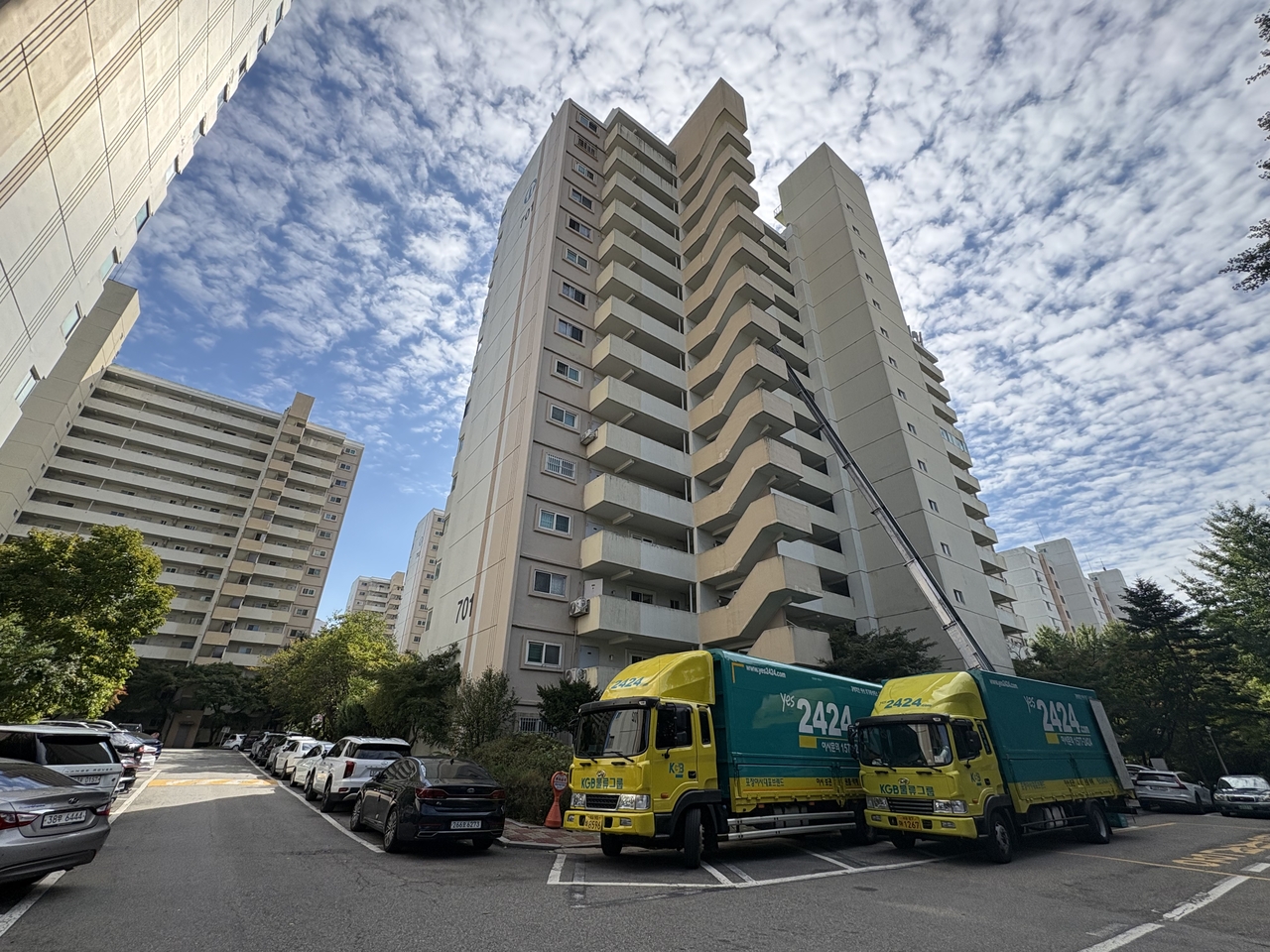
There are no jeonse listings and prices have shot up so much that residents are saying they'll end up on the street. Even with the 600 million won ($452,000) relocation loan, there is not a single apartment jeonse in this area you can get for that amount.
Anxiety ran high among residents of Gaepo Jugong complexes 6 and 7 in Gaepo-dong, Gangnam-gu, Seoul, when a reporter visited Tuesday ahead of the planned relocation early next year. While expectations have risen as the reconstruction project gains momentum, finding a place to live in the meantime has proved far from easy. With jeonse listings at nearby apartments dwindling and prices climbing steeply, residents are looking to move farther out or are considering multi-family housing.
Reconstruction clears final hurdle, but jeonse crunch clouds relocation plans
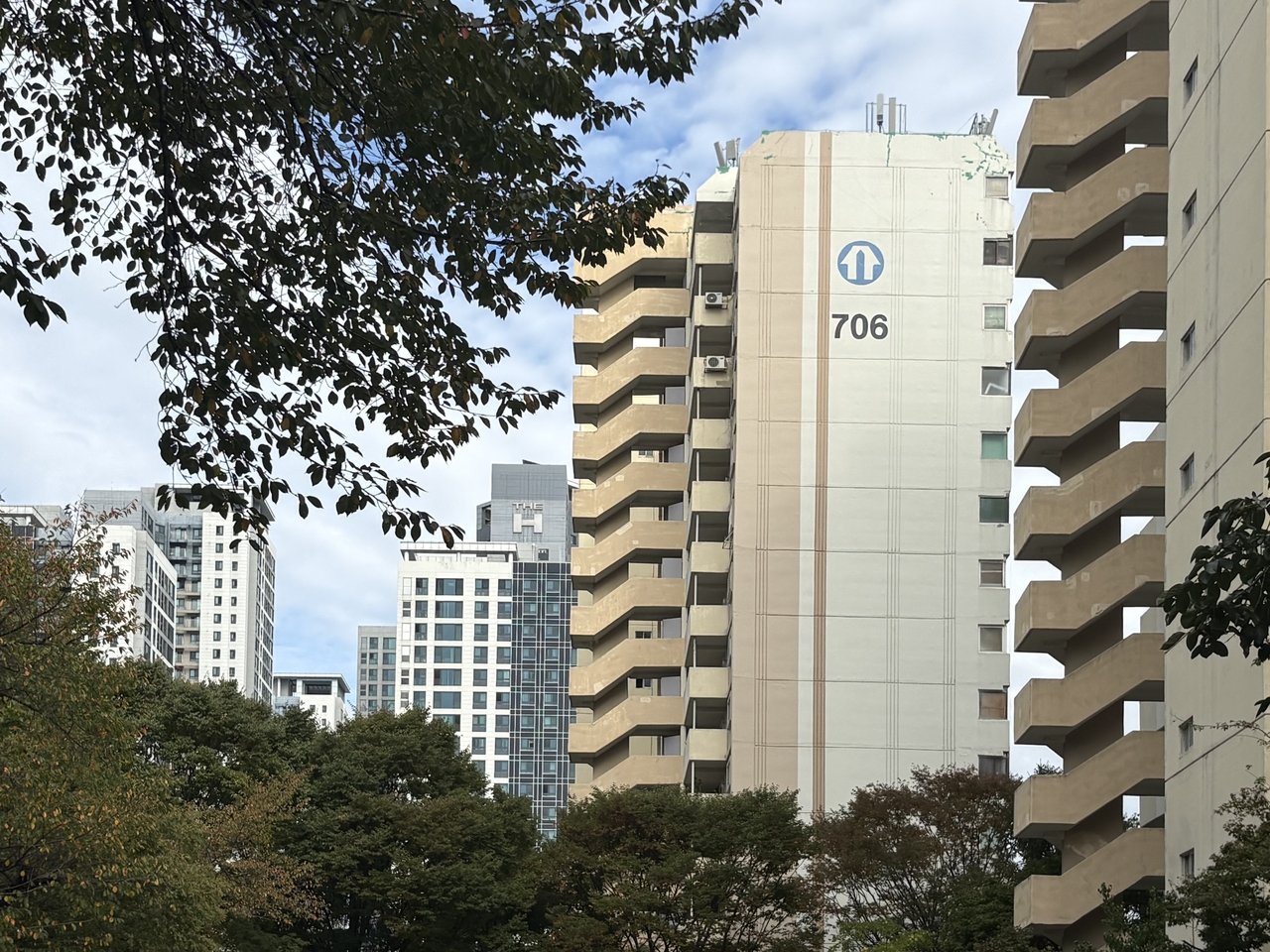
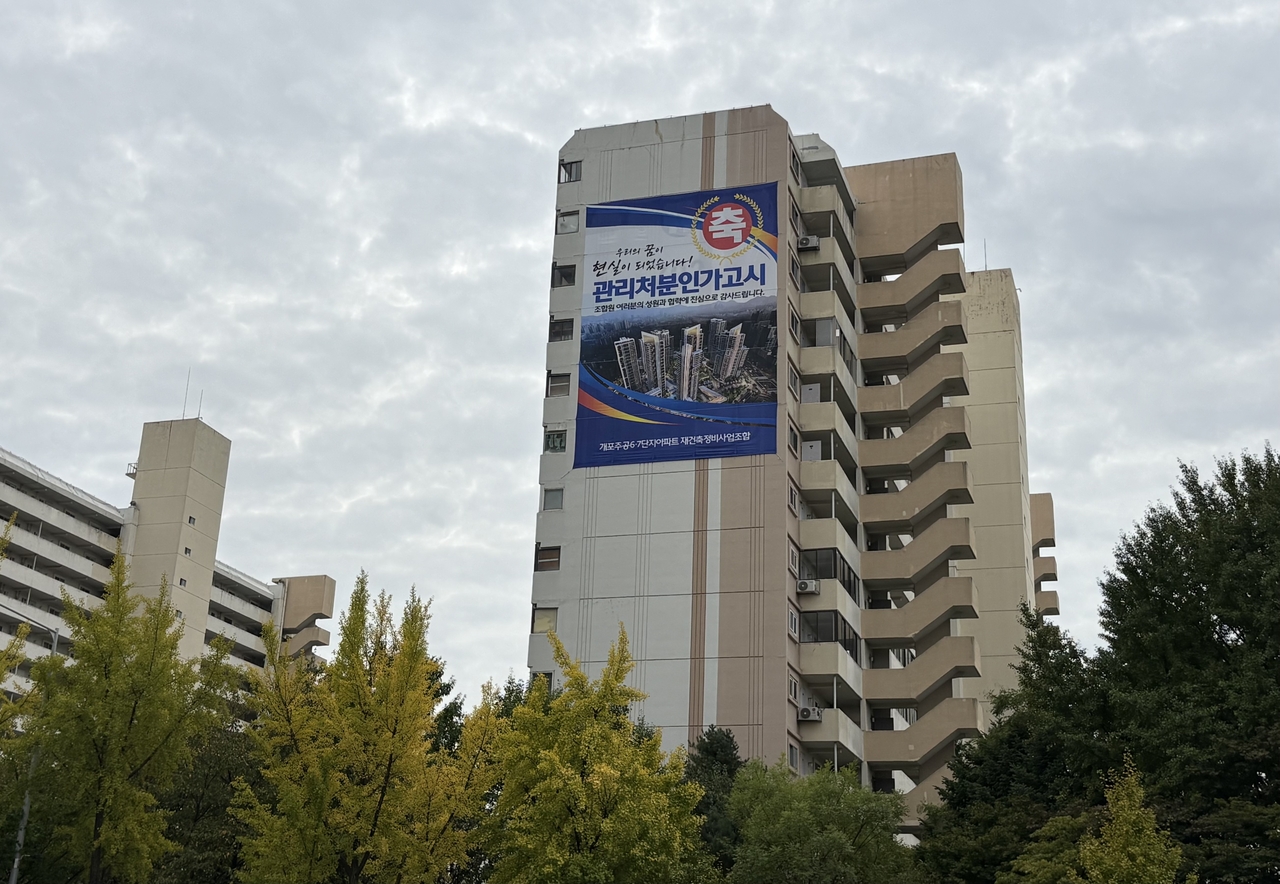
Banners celebrating the management and disposal plan approval hung from the outer walls of the complex that day, and moving trucks were a common sight. Gaepo Jugong complexes 6 and 7 — comprising 1,060 and 900 households respectively — are the last remaining projects in the Gaepo district, Gangnam's flagship reconstruction zone. The complexes received association establishment approval in January 2021, project implementation plan approval in November 2024, and management and disposal plan approval on Oct. 8.
The management and disposal plan approval — which determines each member's allotment, assessed value and additional contributions — is widely regarded as the final major hurdle in a redevelopment project. Complexes 6 and 7 are set to begin relocations in February next year, break ground in 2028 and welcome residents in 2032. Once reconstruction is complete, the site will be reborn as "The H Le Vert," a development of up to 35 floors across 21 buildings with 2,698 units.
The mood on the ground, however, was somber. According to local real estate agents, association members can borrow about 600 million won as a basic relocation loan, but jeonse prices at nearby apartments far exceed that amount. The head of one agency said residents had been coming in all day to vent their frustrations. One resident, he said, had been eyeing an older apartment listed at 850 million won two to three months ago, only to find it had since crossed the 1 billion won mark — leaving them wondering whether to look farther from the area.
Listings shrink, prices surge — 'You can't find anything at jeonse deposit levels'
Jeonse prices at nearby complexes have risen sharply. A 59-square-meter unit at Gaepo Xi Presidence — rebuilt on the site of the former Gaepo Jugong Complex 4 — was leased for 1.155 billion won on July 22, but a new contract was signed at 1.45 billion won on Oct. 15. One agency head noted that at DH Honor Hills, there are simply no jeonse listings available for units in the 66- to 99-square-meter range.
Residents are responding by widening their search area or downsizing. One agent said she had been recommending older, smaller complexes to her regular clients — including Garak Kumho Apartments in Songpa-gu, Sindong-a Apartments in Suseo-dong and Kachi Village Apartments — and that those who found even those options too costly were looking into multi-family housing.
Tenants face an even harder situation. Jeonse deposits within the complexes currently range from just above 300 million won to around 600 million won depending on unit size, but finding a comparable jeonse nearby for the same amount is effectively impossible. One agency head said that while owners can supplement their relocation loan with personal funds to stay in the area, tenants have nowhere obvious to go. "Many children are transferring schools to Wirye or Seongnam," he added.
Owners list units to cover costs, but buyers stay on the sidelines
Rising costs have added to residents' worries. Elderly association members with little income after retirement are particularly burdened by relocation loan interest and higher-than-expected additional contributions. One agency head said that when reconstruction was first discussed, members were told they would receive a refund of more than 100 million won if they stayed in the same unit size — but now they face additional contributions of more than 200 million won, with the prospect of further increases. Some owners who had planned to hold on to their units are now considering selling, he said.
Some association members have put their units on the market as a result, but the sales market remains firmly in wait-and-see mode. Agents say regulatory pressure on the Gangnam housing market remains heavy, and with more than six years until actual move-in, buyers are reluctant to commit large sums.
Sale prices have fallen sharply compared with the start of this year. According to the Ministry of Land, Infrastructure and Transport's actual transaction price disclosure system, an 83-square-meter unit at Gaepo Jugong Complex 7 set a record high of 4.05 billion won ($3.05 million) on Jan. 14, but changed hands at 3.4 billion won on Sept. 26. At Complex 6, a 73-square-meter unit that sold for 3.77 billion won on Jan. 24 was sold again at 3.25 billion won on Sept. 22.
Since the management and disposal plan approval, some owners have also begun factoring higher capital gains tax liabilities into their asking prices. One agent said the tax burden on an 83-square-meter unit is estimated to rise by about 300 million won following the approval, and some owners have adjusted their asking prices accordingly. "Units that were selling for much less as recently as September suddenly became expensive, and the market froze," he said. Another agent said prices could recover as the move-in date approaches, but for now there are no buyers and the market is in a holding pattern.
Experts warned that a large-scale relocation amid a jeonse shortage could trigger a chain reaction, displacing existing tenants. Choi Won-cheol, a professor at Yonsei University's advanced course in future real estate development, said that with a mass relocation planned in Gangnam and virtually no apartment jeonse supply available, prices for nearby villas — low-rise multi-family and row houses — are likely to surge. "Existing villa residents could be pushed out, and the shift toward monthly rent could intensify, with monthly rents of 3 million won or even 4 million won becoming a real possibility," he said.
shy@heraldcorp.com
hss@heraldcorp.com