Musinsa's running shoe trial service sees 2.3-fold jump in usage
New Balance, Puma, Fila join push for experience-driven stores
"You have to try running shoes on yourself to really know."
With South Korea's running population estimated at about 10 million, fashion brands are expanding "trial services" that let customers borrow a pair of running shoes, take them out on an actual course and then decide whether to buy. Stores, too, are evolving from simple retail spaces into experience and community hubs.
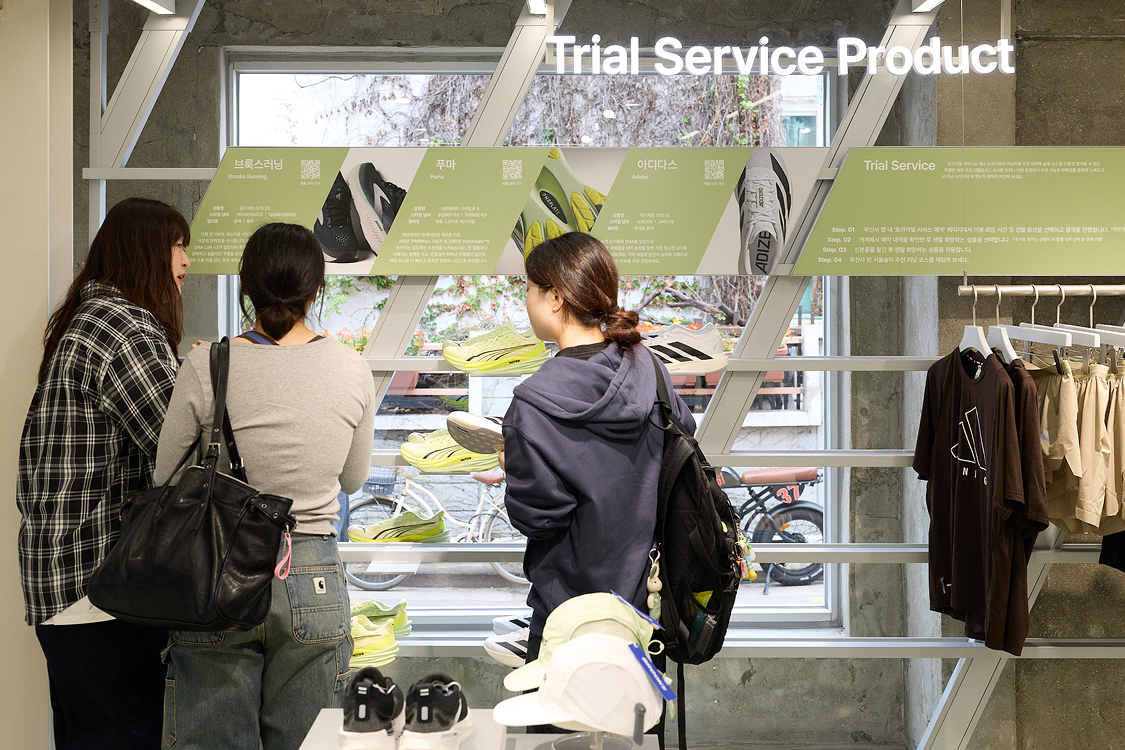
Musinsa said Monday that its running shoe trial service at Musinsa Run Seoul Forest in Seongdong-gu, Seoul logged 1,350 uses in September — 2.3 times the 586 recorded the previous month, or an average of 45 uses a day. The trial service lets customers borrow running shoes from the store, test them on an outdoor course and then make a purchase decision.
Musinsa opened the running specialty select shop Musinsa Run near Seoul Forest in April and has been operating the rental service since. The fee is 2,000 won for 90 minutes. Borrowers can run through the Seoul Forest area and assess fit, cushioning and other qualities firsthand. Unlike the conventional in-store try-on — a few steps across a shop floor — the service lets customers actually run in the shoes, which has driven its popularity.
Seven brands are available for rental, including Puma, Adidas, Brooks, Salomon, Saucony, Under Armour and Diadora. Since May, customers have been able to sign up on the spot without a reservation. Shoes are organized by purpose — racing, cushioning and stability — and the store also offers a foot-scanning service that recommends shoes based on foot shape, along with lockers for rental customers.
Musinsa Run's transaction volume last month rose 45 percent from the previous month. "The seasonal shift into good running weather in autumn combined with a wider brand selection and improved convenience," a Musinsa official said. "We plan to keep adding rental brands and models and expand running programs using the Seoul Forest course to strengthen our role as a base for runners."
Other sports brands are also investing in experience-driven retail. New Balance converted its directly operated store in Bukchon, Seoul into a running trial specialty shop called Run Hub in March last year. Customers can borrow running shoes and apparel for up to two hours and run routes around Gyeongbokgung and the Bukchon area.
Puma opened its Sneaker Box store in Bukchon, Seoul on Sept. 11, featuring a running lab where customers can have their foot shape measured with a foot scanner, have their running form analyzed on a treadmill and receive advice from a professional coach. Fila also opened its first running-focused store, Fila Running Club, near Seoul Forest last month. In addition to shoe rentals, it offers a regular running program led by a professional instructor.
Nike operates a running club out of its store at IFC Mall in Yeouido, offering participants a chance to try running shoes along with locker and fitting room access. A weekly Saturday group run through the Yeouido area keeps the brand in regular contact with the running community.
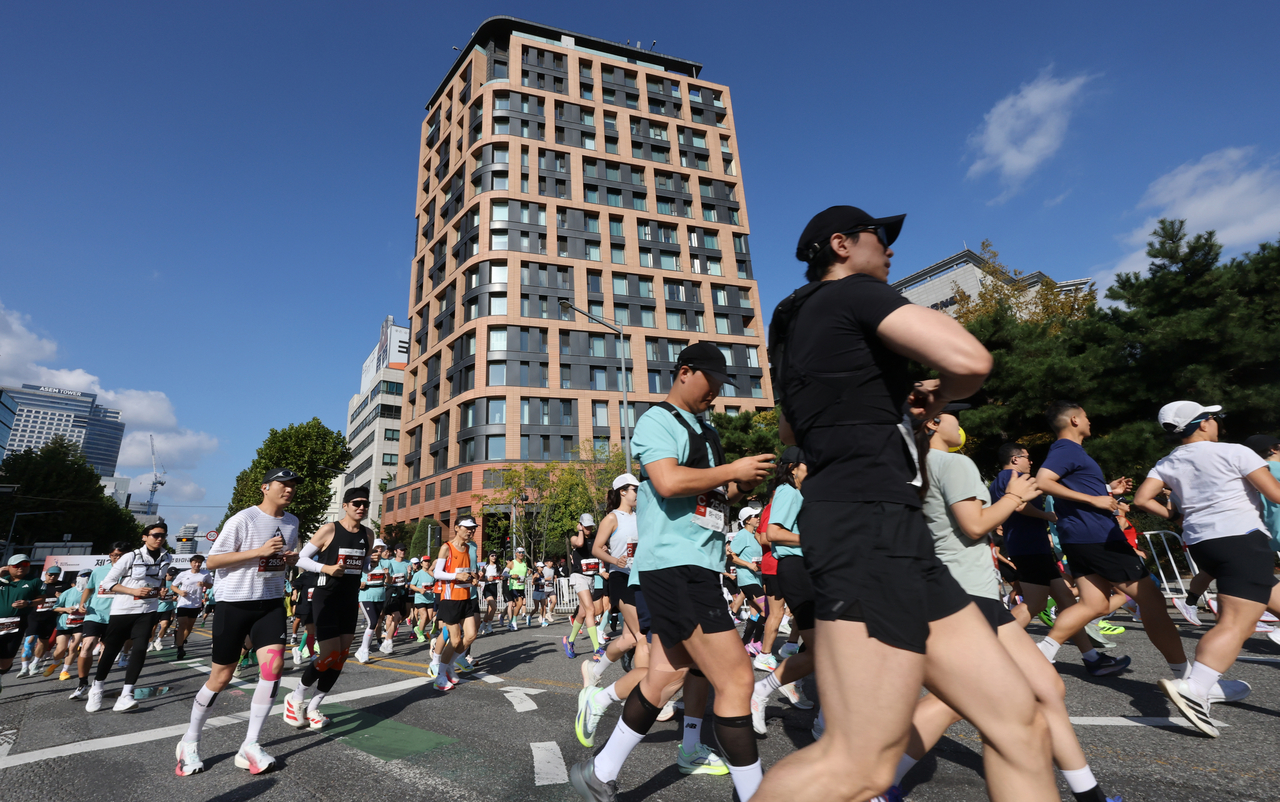
The strategy across the fashion industry is straightforward: let customers verify fit — the decisive factor in choosing a running shoe — before they buy, in hopes of boosting purchase satisfaction. The target audience is the same roughly 10 million runners. According to the Ministry of Culture, Sports and Tourism's 2025 National Leisure Sports Survey, the share of regular sports participants who cited running as their primary activity rose 2.9 percentage points, from 4.8 percent in 2024 to 7.7 percent last year.
"Unlike the old try-on method, where you just walked a few steps indoors, customers can now check cushioning and fit in a real running environment," an industry official said. "Because you can only tell whether a running shoe suits you by actually running in it, we are focused on creating an environment where people can get enough experience before they buy."

korean@heraldcorp.com