
Patients with chronic neck pain who consistently receive chuna therapy gain more benefit than the added cost compared with those who rely solely on medication and physical therapy, according to new research.
The Spine and Joint Research Institute at Jaseng Hospital of Korean Medicine announced Monday that it had published a study comparing the three-year cost-effectiveness of chuna therapy and conventional treatment for chronic neck pain in the SCI(E)-indexed international journal Integrative Medicine Research (impact factor: 4.9).
Neck pain is a leading musculoskeletal condition that diminishes both physical and mental quality of life. According to the Institute for Health Metrics and Evaluation at the University of Washington, more than 203 million people worldwide suffered from neck pain as of 2020, a figure projected to rise by 32.5 percent by 2050. Chronic neck pain in particular is prone to recurrence and difficult to fully resolve, placing a growing financial burden on patients through repeated treatment while also reducing productivity. That reality underscores the need for a long-term, efficient pain-management strategy.
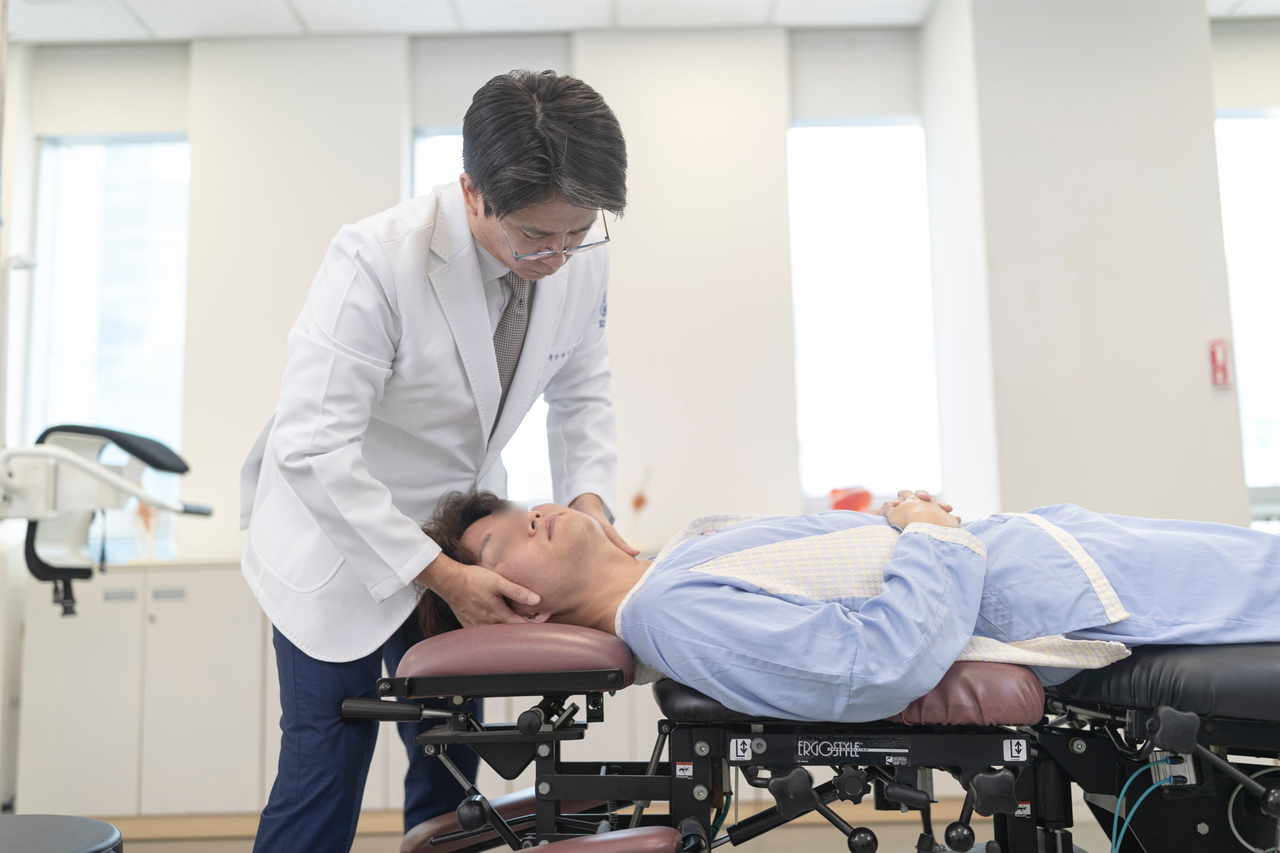
Treatment options for neck pain include medication, physical therapy, injections and manual therapy. Manual therapy is widely recognized as effective for improving muscle and joint mobility and relieving pain. In Korean medicine, chuna therapy serves as the primary manual treatment — a technique in which a Korean medicine doctor uses the hands or other parts of the body to push, pull and realign the spine and joints. Chuna therapy has been covered by national health insurance since 2019, with up to 20 sessions per year eligible for coverage, following recognition of its effectiveness for musculoskeletal conditions. However, despite evidence of its clinical benefits, research evaluating its long-term cost-effectiveness had been limited.
In response, a research team led by Kim Do-young, a Korean medicine doctor at the Spine and Joint Research Institute of Jaseng Hospital, conducted a comparative analysis of the long-term cost-effectiveness of chuna therapy versus conventional treatment comprising medication and physical therapy. The team applied a Markov model to data from a domestic multicenter randomized controlled trial. The Markov model is an economic evaluation method that probabilistically predicts changes in a patient's health status over time to estimate long-term costs and treatment outcomes.
The research team classified patient condition by neck pain intensity on a numerical rating scale of 0 to 10: mild (below 4), moderate (4 to below 7) and severe (7 or above). They then tracked how patients in the chuna therapy group and the conventional treatment group — receiving medication along with electrotherapy and thermotherapy — moved between these categories at three-month intervals over three years.
The analysis found that the total treatment cost per patient over three years was about 1.06 million won ($786) in the chuna therapy group and about 590,000 won in the conventional treatment group — a difference of 470,000 won. The question then becomes what that additional 470,000 won buys. In economic evaluations, the answer is measured in quality-adjusted life years, or QALYs — a metric that assigns a value of 1 to one year lived in perfect health and discounts that value proportionally as quality of life declines, reflecting the difference between a year spent in pain and a year spent in full health.
With a three-year study horizon, the maximum possible QALY score was 3. The chuna therapy group scored 2.40, compared with 2.37 for the conventional treatment group — a difference of 0.03 QALYs, meaning patients who received chuna therapy spent more time maintaining a higher quality of life.
Converting the 0.03 QALY difference into an incremental cost-effectiveness ratio, the team calculated that gaining one additional year of healthy life through chuna therapy costs about 16.33 million won ($12,100). Whether that figure is reasonable is judged against the willingness-to-pay threshold — the amount society is considered willing to spend for one additional year of healthy life. In South Korea, that benchmark is set at 30.49 million won. Because the chuna therapy figure came in at roughly half that threshold, the treatment was assessed as sufficiently cost-effective.
The finding held up under varying assumptions. Running 62 recalculations with adjusted parameters, the team found that chuna therapy's cost fell below the threshold in 57 scenarios, or 91.9 percent of cases. The team modeled a scenario in which patients with moderate or greater persistent pain received up to 10 sessions every three months — as many as 40 sessions per year, double the 20 currently covered by national health insurance. Even under those conditions, the cost-effectiveness ratio remained below the threshold, suggesting that expanding the number of covered sessions would not undermine the therapy's economic viability.
When social costs were factored in alongside direct medical expenses, the economic advantage of chuna therapy became even more pronounced. Accounting for transportation, time spent in treatment and lost work productivity, the total three-year social cost for the chuna therapy group came to about 29.26 million won — about 3.66 million won less than the roughly 32.92 million won recorded for the conventional treatment group. The finding suggests that sustained pain management and reduced productivity loss can ease the overall cost burden on society. A probabilistic sensitivity analysis using 1,000 simulation runs found that chuna therapy was more cost-effective than conventional treatment in 77.2 percent of cases from a healthcare perspective and in 98.5 percent of cases from a social perspective.
"The true value of chuna therapy lies not only in its immediate pain relief but in its ability to sustain that improvement over time, reducing the long-term burden on patients," Kim said. "This study is significant in that it confirms the cost-effectiveness of chuna therapy." He added that for chronic conditions, the value of treatment needs to be assessed over years rather than months, and expressed hope that the findings would serve as a reference in discussions about expanding national health insurance coverage for chuna therapy.
kty@heraldcorp.com