
'Urban competitiveness through speed, youth futures through opportunity'
Expanding integrated review for redevelopment projects, early mediation of construction-cost disputes to minimize delays
Accelerating renewal of aging residential areas in Daechi and Dogok; public contributions to focus on facilities residents actually need
Closing youth AI access gap is urgent — budget allocation sought for 2027, support framework in the works
Strengthening three core urban centers, expanding self-sustaining functions by district to pursue balanced development across Seoul
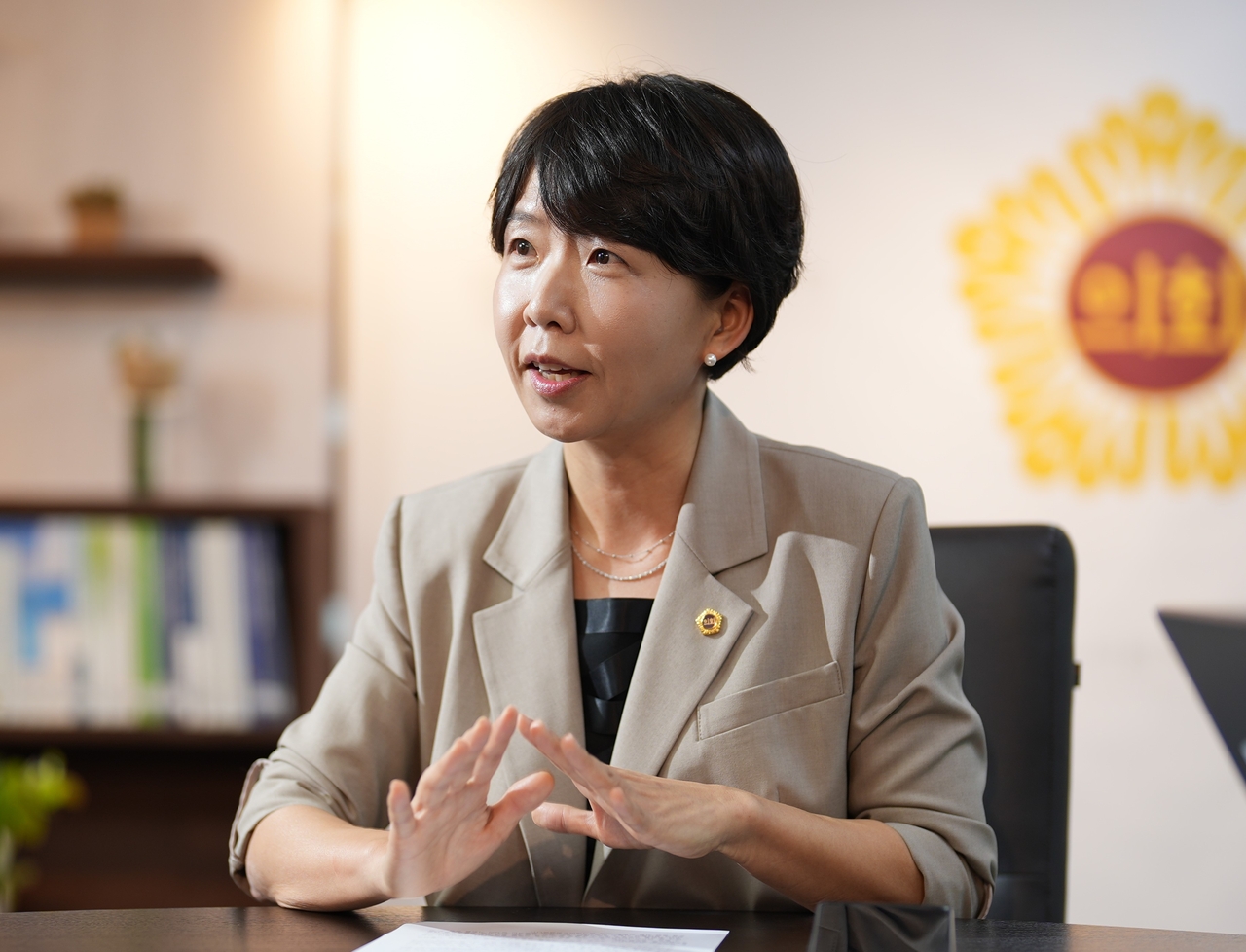
Boosting Seoul's urban competitiveness requires more than speed — it demands that the fruits of development reach residents in their daily lives. Reducing the administrative delays and community conflicts that recur throughout redevelopment and reconstruction projects, and closing the gap in local infrastructure, are the defining challenges of quality urban growth. Now, the unequal access young people have to artificial intelligence is emerging as yet another problem city policy must solve.
Lee Do-hee, vice chair of the Seoul Metropolitan Council's Urban Planning Balance Committee and a People Power Party lawmaker representing Gangnam District 5, laid out Seoul's growth strategy in three parts during an interview Wednesday: efficient restructuring of urban space, balanced development across districts, and strengthening young people's capacity for the future. The key, she said, is to revitalize the private sector through rational regulatory reform while ensuring that development gains do not concentrate in any single area.
She particularly stressed the need to upgrade the functions of Seoul's three core urban centers — the city center, Yeouido and Gangnam — while providing substantive support to areas with weaker growth foundations, including attracting businesses and expanding everyday infrastructure.
"For Seoul to leap into the ranks of the world's top three cities, it must respond proactively to a changing industrial environment," she said. "I will strengthen the implementation of urban planning so that growth in key hubs translates into shared prosperity across all of Seoul."
Speed up redevelopment while reducing community conflict
The first priority Lee identified for urban policy reform is the complex web of administrative procedures surrounding redevelopment projects.
Redevelopment and reconstruction are under way across Seoul, she said, but separate reviews for urban planning, architecture, transportation and environmental impact assessments are conducted independently, stretching project timelines.
Her own constituency — Daechi 1 and 4 dong and Dogok 1 and 2 dong in Gangnam-gu — has high demand for renewal of aging residential areas. Residents are pressing for faster progress, but uncertainty is growing because of permit delays, rising construction costs and internal disputes within reconstruction associations.
To accelerate projects, Lee said the scope of integrated review should be expanded across the board, and administrative procedures should be flexible enough to allow associations to begin formation preparations even before a redevelopment zone is officially designated.
She also emphasized the need for institutional mechanisms to resolve construction-cost disputes. Rising construction costs have fueled a growing number of conflicts between contractors and associations over cost increases, with some projects now at risk of delays or outright stoppages.
Her plan is to standardize Seoul's verification criteria for construction-cost increases and deploy specialist mediation teams from the earliest stages of a project to prevent disputes from dragging on.
She also flagged the use of public-contribution facilities secured through redevelopment as an area needing improvement. Rather than simply acquiring facilities, she said, priority should go to the everyday infrastructure residents actually need — gyms, libraries and childcare centers.
"The success of a redevelopment project depends not only on how quickly buildings go up, but on how faithfully the facilities and services residents need are secured," she said, adding that she would work to strengthen communication among residents, administrative agencies and project operators.
On the real estate tax burden — a local concern — she said relief for residents is necessary. She plans to explore improvements at the council level, including local tax reductions and tax rationalization, to ensure that owner-occupiers of a single home are not saddled with excessive tax burdens.
From Gangnam's growth to citywide competitiveness
On balanced development across Seoul, Lee said growth strategies must account for each district's distinct characteristics.
Past balanced-development policy has focused largely on filling gaps in facilities, she said, but going forward the city must strengthen each district's self-sustaining functions — its own jobs, industries and everyday infrastructure.
To that end, she said the city should flesh out district-level action plans linked to Seoul's residential-area planning framework, and improve mobility in areas with poor transit access through better bus routes and connections to micro-mobility services.
She particularly stressed that the property-tax joint-levy system should be used as a policy tool to narrow the gap between districts. The goal, she said, is to move beyond simply redistributing funds to fiscally weak areas and instead build a foundation for growth — attracting businesses, expanding investment and creating jobs.
She also proposed tax incentives for business attraction, floor-area-ratio incentives and regulatory sandboxes as additional policy tools.
"When high-quality companies and jobs gather in a self-sustaining city, talent and investment follow, and everyday infrastructure — transportation, culture, commercial districts — grows alongside them," she said, adding that she would pursue urban planning that strengthens cooperation among autonomous districts and draws out each area's potential.
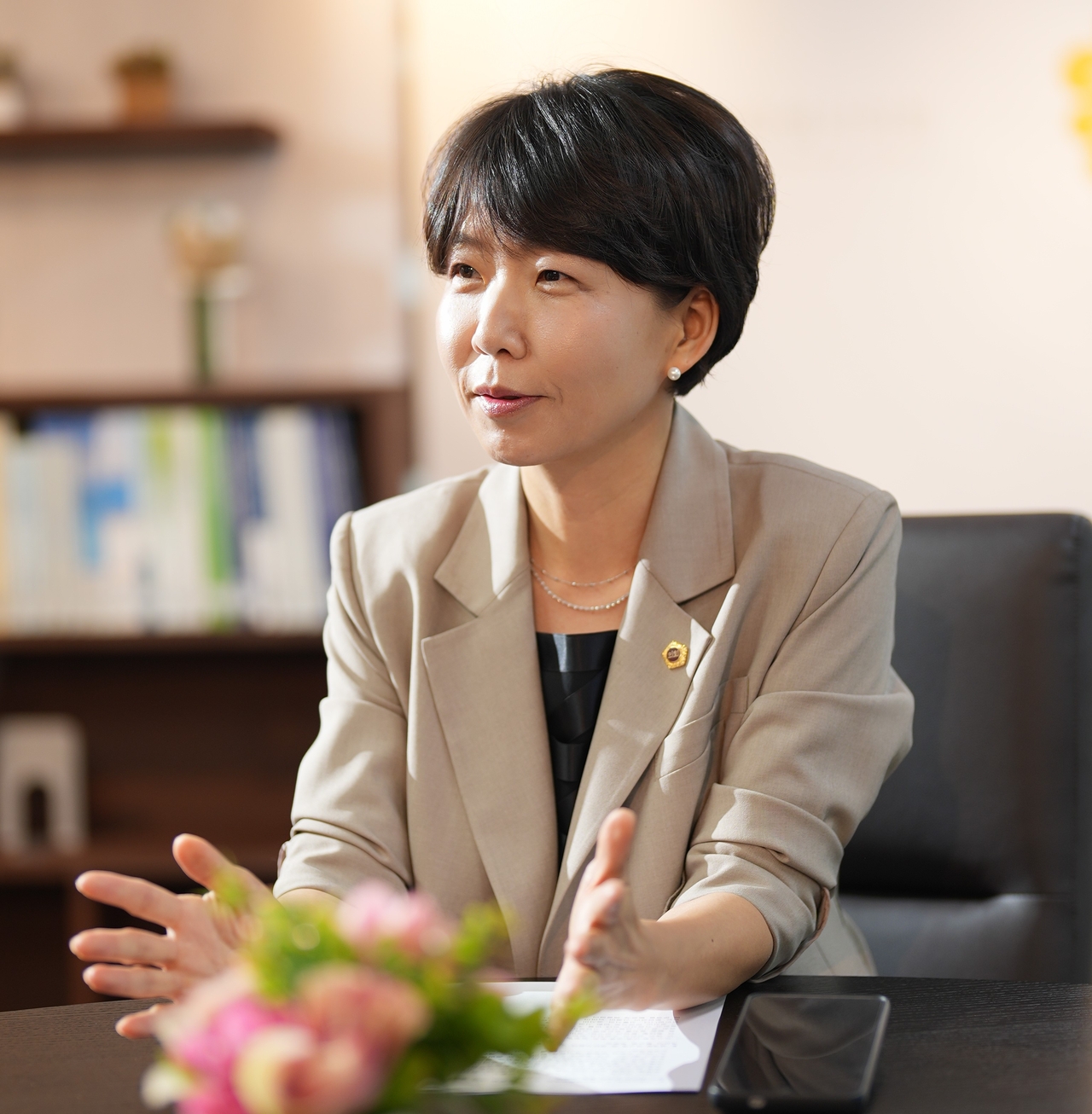
The AI access gap is becoming a youth opportunity gap
Alongside urban policy, Lee said she is focused on young people's competitiveness for the future.
As generative AI becomes widely used — from job hunting and workplace tasks to starting businesses — the economic means to access paid AI services and specialized training is creating a new kind of inequality, she said.
At a forum she recently hosted, titled "The Broken AI Ladder: A Youth Crisis," she said the reality is that young people's ability to use AI varies according to their financial circumstances.
She called on Seoul to swiftly introduce a "Youth AI Ladder" program that would provide young people with access vouchers for paid AI services, subsidies for professional infrastructure use and practical, job-focused training.
She identified securing funding for the program in Seoul's main 2027 budget as a key legislative priority.
She expressed regret that the youth AI support budget had been cut entirely during the Seoul Metropolitan Council's review process, and said she would consult with Democratic Party lawmakers to build consensus for reviving the program.
However, she said youth policy must not stop at providing digital tools.
The city should build a practical training system linking universities, companies and research institutions in future industries — AI, biotech and fintech — and expand startup spaces and seed funding so young people can find real employment and entrepreneurial opportunities, she said.
She also stressed tailored support for isolated and reclusive youth. Young people who struggle to form social connections or to continue working or studying, she said, should be supported in finding new learning opportunities through AI education and gradually re-engaging with society.
"Creating an environment where young people can learn and use AI is a policy challenge that cannot be solved by individual effort alone," she said. "I will put in place the budget and systems needed so that anyone, regardless of their financial situation, can build the skills they need for the future."
Regulatory reform and fiscal accountability for change residents can feel
Lee said the benchmarks for her legislative work going forward will be effectiveness and fiscal accountability.
She said she will scrutinize administrative procedures, regulations and budget execution to ensure that urban policy moves beyond long-term plans and translates into real project progress and tangible improvements in residents' lives.
She particularly stressed that the Urban Planning Balance Committee must both check Seoul Metropolitan Government policy and offer workable alternatives.
She said she will cooperate with the city government where policy goals are shared, but will take a clear stand on matters that violate principles or increase the burden on residents.
"Rationally reforming outdated regulations that slow projects down is directly tied to stabilizing livelihoods and strengthening urban competitiveness," she said. "I will reduce conflict based on what I hear on the ground and make sure residents can feel the change in their daily lives."
Above all, she said she will carefully examine the necessity and outcomes of policies to ensure that citizens' hard-earned tax money is not wasted, and pledged to continue her legislative work close to the public — offering practical solutions without losing sight of why she started.
7toy7@heraldcorp.com




