Seo Gang-seok composes a thematic poem each year for the Hanseong Baekje Cultural Festival and recites it at the opening ceremony — tracing a journey from historical roots to cultural globalization, human connection and community unity
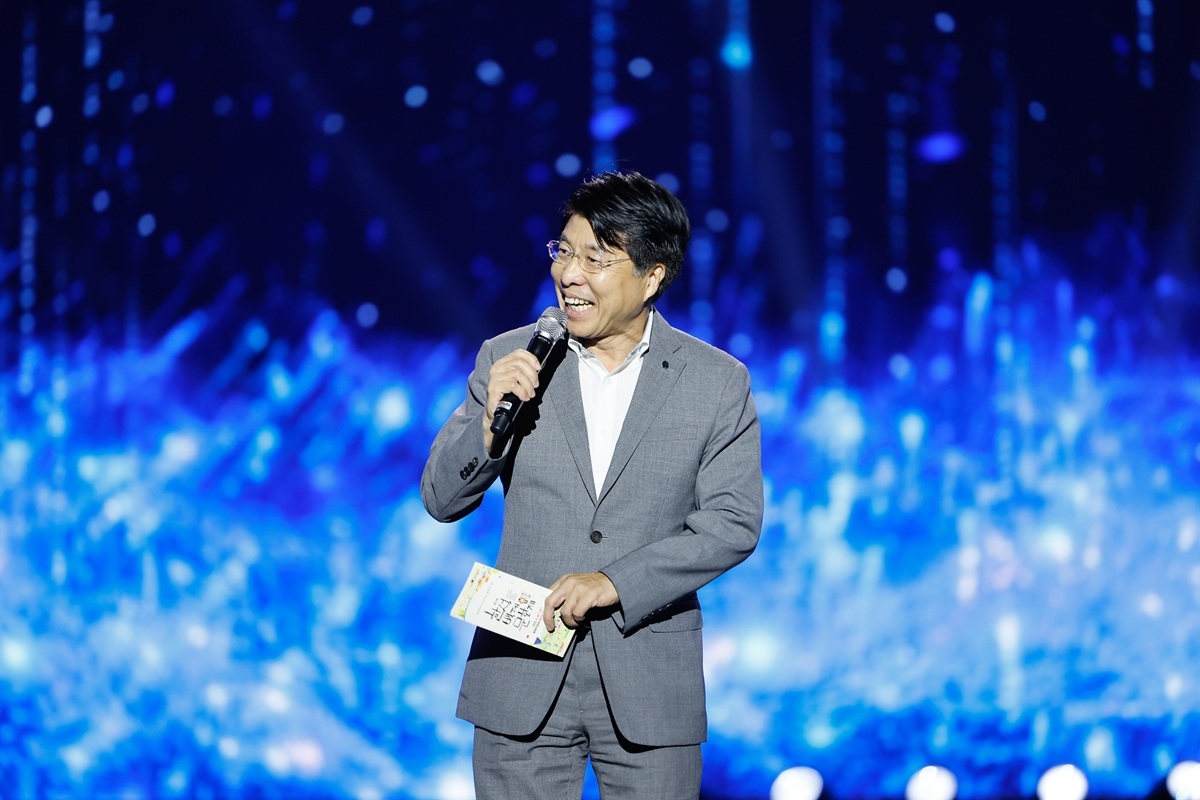
Every festival has a theme. And if a single sentence can distill that theme to its essence, a poem may be what gives it life.
Songpa-gu District Mayor Seo Gang-seok writes the thematic poem for the annual Hanseong Baekje Cultural Festival himself. He first settles on a theme phrase that captures the festival's direction, then composes a poem around it and recites it in person at the opening ceremony. Rather than limiting his role to administrative preparation, Seo uses poetry to express his own thinking about the district's history and culture.
It is the meeting point between his literary sensibility — honed through years of work as a poet and novelist — and his deep interest in the arts, on one side, and the district's signature festival on the other.
Reading through the thematic poems Seo has written for the festival, a single consistent thread emerges. Each poem departs from the historical roots of Hanseong Baekje, moves through the transmission and spread of culture, and then reaches outward — connecting people's hearts and pointing toward the community's future.
The theme phrase changes every year, but at its center sits an abiding preoccupation: the power of culture.
'The power of culture, flowing with dignity' — summoning history into the present
One of the expressions that recurs most often in Seo's thematic poems is "the power of culture, flowing with dignity."
The theme of the 22nd Hanseong Baekje Cultural Festival, held in 2022, was "The Power of Culture, Flowing with Dignity."
The poem opens with Hanseong Baekje, the ancient kingdom that forged a brilliant civilization 2,000 years ago. It then traces the flow of culture as it crossed time and space to open new horizons, connecting the history of Hanseong Baekje to the Korea of today.
"The progressive power of Hanseong Baekje's culture always let us dream of hope even in darkness, united the Korean people as one, and met the world with confidence."
Culture, the poem argues, does not rest as a relic of the past. It is a force that generates new hope within the current of history, binds people together and reaches out to the world.
That perspective connects to the way Seo views Songpa as a place. Today Songpa is one of Seoul's foremost residential and commercial centers, yet it is also a district that holds within it the history of Hanseong Baekje. Through the festival, Seo appears intent on revealing not only the present face of Songpa as a modern city but also the historical identity at its roots.
22nd Hanseong Baekje Cultural Festival (2022): The Power of Culture, Flowing with Dignity Two thousand years ago, Hanseong Baekje forged a brilliant civilization — crossing time and space like a wave, endlessly widening new horizons. Korea has flowed with dignity through the great current of history and culture. The progressive power of Hanseong Baekje's culture always let us dream of hope even in darkness, united the Korean people as one, and met the world with confidence. We will not stop — we will flow toward a new future. Songpa surges again; the power of Hanseong Baekje's culture, flowing with dignity through the ages, promises our people's hope toward tomorrow.
Crossing rivers and seas — from local culture to world culture
The theme of the 23rd Hanseong Baekje Cultural Festival, held in 2023, was "The Power of Culture, Crossing Rivers and Seas."
The poem draws on local imagery — the Han River and the hills of Songpa. Culture born in the historical space where Hanseong Baekje once stood crosses rivers and seas to reach the world.
The poem's latter half draws a direct line between the culture of Hanseong Baekje and today's K-culture.
"The culture of Hanseong Baekje, today's K-culture, goes out to the world — and the world's cultures gather on the hills of Songpa."
It is a passage that views the ancient past and the global spread of modern Korean culture as a single, unbroken current.
The poem assigns a sense of historical continuity between the cultural vitality of Hanseong Baekje 2,000 years ago and the Korean culture drawing worldwide attention today. It also reflects a desire to see the local festival not as a re-enactment of the past but as a cultural platform in dialogue with the world.
The relationship between Hanseong Baekje culture and modern K-culture, of course, calls for careful distinction between historical fact and cultural metaphor. The message the poem seeks to convey, however, is clear: local history and culture can meet the world when reinterpreted in the language of today.
23rd Hanseong Baekje Cultural Festival (2023): The Power of Culture, Crossing Rivers and Seas Atop the hills of Songpa, a lone pine stands tall — the wind off the Han River breathes life into new land. Two thousand years ago, destined by heaven, a new history opened as Hanseong Baekje — the power of culture, flowing with dignity, crossed rivers and seas and surged outward. The people of this land, the culture of this land, flow toward tomorrow without ever running dry through thousands of years. From the hills of Hanseong Baekje Songpa, culture shining like a sunrise has flowed endlessly, following the spirit of the people. Now it crosses the wide sea and goes out as a culture of the world. The culture of Hanseong Baekje, today's K-culture, goes out to the world — and the world's cultures gather on the hills of Songpa. Our hearts beat again. The power of culture, deepened through years of endurance, surges as a light of hope illuminating our future.
'Connecting heart to heart' — the ultimate value of culture is people
The theme of the 24th Hanseong Baekje Cultural Festival, held in 2024, was "The Power of Culture, Connecting Heart to Heart."
Where earlier poems had emphasized the historical flow of culture and its expansion to the world, this poem turns its focus more squarely to culture's effect on people.
"The power of culture, flowing with dignity along the hills of Songpa, connected the hearts of the people who have lived on this land for five thousand years."
The poem then sings of how the power of Hanseong Baekje's culture crosses rivers and seas to connect the hearts of all humanity.
What is the value of culture? It does not lie only in preserving ancient sites or re-enacting tradition. It also lies in the empathy and communication that culture enables between people living in different eras and places.
Seo's poem focuses on precisely that point — linking historical heritage to local pride, and then extending that pride into empathy and solidarity among people.
It can also be read as a message that a festival should be more than a venue for performances and food: it should be a communal space where citizens share the history and culture of their district.
24th Hanseong Baekje Cultural Festival (2024): The Power of Culture, Connecting Heart to Heart Along the hills of Songpa, the power of culture, flowing with dignity, connected the hearts of the people who have lived on this land for five thousand years. Breathing with the wind of the Han River, rooted on the pine-covered hills, the power of Hanseong Baekje's culture crossed rivers and seas and connected the hearts of five billion people. Flowing on the spirit of the people, enduring through years of hardship, the power of culture that reached out to the world shines like a sunrise breaking through the mountains. Becoming a light of hope, the power of culture that has flowed without running dry for thousands of years — our united, burning hearts surge forward with strength.
'The power of culture, united and advancing' — making the past a force for the future
The theme of the 25th Hanseong Baekje Cultural Festival, held in 2025, was "The Power of Culture, United and Advancing."
This poem is marked by expressions that emphasize culture's roots and vitality.
"Culture that holds the spirit does not stop; culture with deep roots blooms."
The line conveys that culture, grounded in memories and spirit accumulated over long ages, produces new fruit. It carries a belief that the history and culture of Hanseong Baekje can sustain their vitality today and be carried forward into the future.
The poem also declares: "With the power of culture, united and advancing, our burning hearts surge forward with strength once more."
The connection of heart to heart emphasized in the 2024 poem extends, in 2025, into community solidarity and a march toward the future.
The message is that it is not enough to remember history — the community of today must unite on the foundation of that history and move forward together.
25th Hanseong Baekje Cultural Festival (2025): The Power of Culture, United and Advancing The wind of the Han River has breathed, unchanged, for five thousand years, uniting you and me as one atop the hills of Songpa. Two thousand years ago, destined by heaven, the history of Hanseong Baekje opened — the power of culture, flowing with dignity, crossed mountains and seas and connected the hearts of people. Sharing time and space, reaching us who live today, the breath of that culture — like memories carved in stone, like stories hidden in the earth — flows united into the future. Culture that holds the spirit does not stop; culture with deep roots blooms. With the power of culture, united and advancing, our burning hearts surge forward with strength once more.
2026: 'Brilliant culture, deep resonance, united we' — three keywords
This year's 26th Hanseong Baekje Cultural Festival carries the theme "Brilliant Culture, Deep Resonance, United We."
Seo's 2026 thematic poem distills the recurring preoccupations of earlier works — history, culture and community — into three keywords.
The poem's first stanza speaks of the space where Hanseong Baekje's history began and the people who have shared that place through the ages.
"On the day the sky opened and the land spread wide, there was a destined fate — and here, by this river, on this hill, we have lived together for two thousand years."
It then sings of how the lives and history of those people have flowed ceaselessly, connecting heart to heart and becoming a brilliant culture.
The final stanza describes the united cries and movements of the people crossing mountains and rivers to become a deep resonance.
The poem's structure moves from past to present, from history to culture, and from culture to the emotion of community. Rather than simply explaining the historical significance of Hanseong Baekje, it connects that significance to the shared feeling citizens experience together at the festival today.
"Brilliant culture" can be read as symbolizing the festival's historical and cultural value; "deep resonance," the emotion that culture conveys to people; and "united we," the community formed through that emotion.
The words "cries" and "movements," in particular, show that the poem is attuned to the live energy of the festival. It aspires to be more than a poem read on a page — one recited on the opening-ceremony stage and completed through the participation and response of citizens.
26th Hanseong Baekje Cultural Festival (2026): Brilliant Culture, Deep Resonance, United We On the day the sky opened and the land spread wide, there was a destined fate — by this river, on this hill, we have lived together for two thousand years. Our lives, our history, have flowed ceaselessly with dignity, connecting the hearts of people — becoming a culture that shines with brilliance. The passionate cries of our united selves, the vigorous movements of our united selves, cross mountains and rivers to become a deep resonance and shine ever more brilliantly.
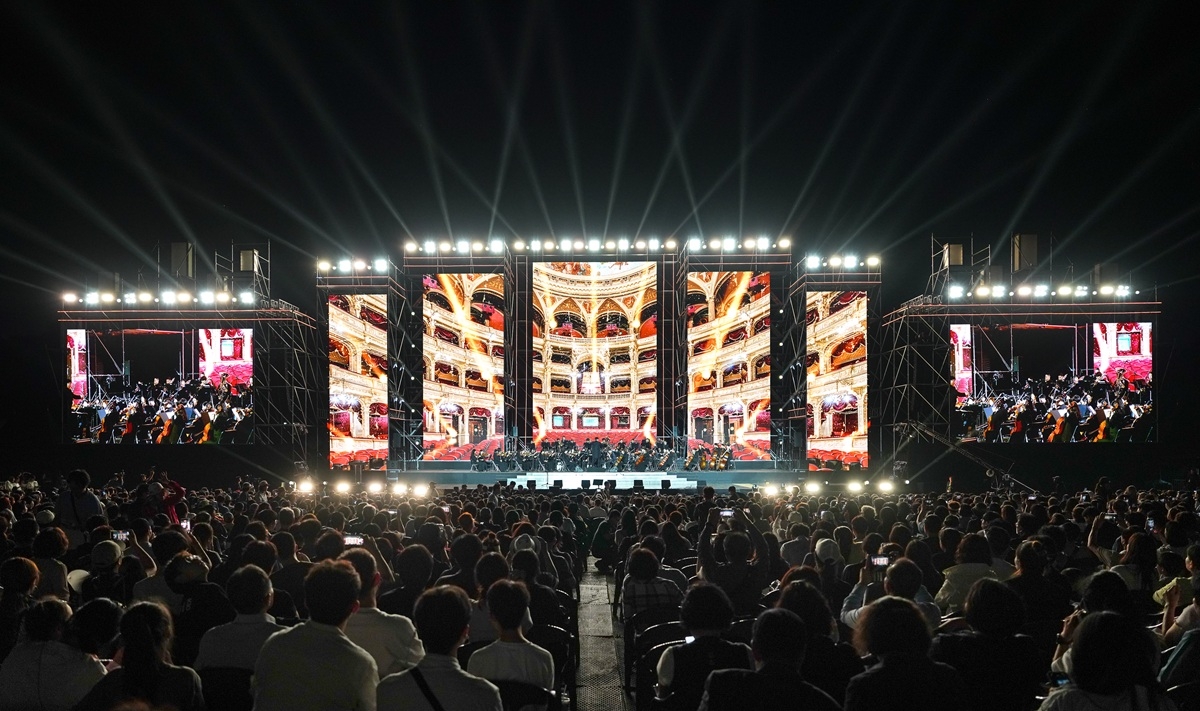
A theme that changes each year, a cultural philosophy that does not
Across the five thematic poems written from 2022 through 2026, the central conviction is that culture must not remain anchored in the past.
In 2022, the poem emphasized the historical flow of culture stretching from Hanseong Baekje to the present day. In 2023, it highlighted culture's capacity to expand beyond rivers and seas to reach the world. In 2024, it focused on culture's role in connecting people's hearts. In 2025, it celebrated the power of a community uniting and advancing toward the future. In 2026, it compressed the brilliance of culture, the emotion it stirs and the integration of community into a more concise form.
That progression reflects one way of understanding the Hanseong Baekje Cultural Festival. If preserving and commemorating historical heritage is the starting point, the ultimate goal is to transform that heritage into present-day cultural pride and carry it forward through citizens' empathy and solidarity.
From a literary standpoint, recurring images and abstract expressions give the body of work a coherent consistency. At the same time, the similar vocabulary and thematic structure that reappear each year raise a question worth pursuing: how to sharpen the distinctiveness of each individual poem. Drawing more richly on specific historical scenes, figures, artifacts and sites from Hanseong Baekje could deepen both the individuality and the literary texture of future works.
Even so, the fact that the district mayor writes the thematic poem himself and recites it at the opening ceremony stands out as an attempt to convey the meaning of the festival not in the language of administration but in the language of literature.
The measures by which a festival's success is judged are many — visitor numbers, the scale of programming, the ripple effect on the local economy. To those can be added another: how much the festival has deepened citizens' understanding of, and pride in, their district's history and culture.
Seo's thematic poems do not by themselves prove the achievements of cultural administration. Yet the annual act of choosing a theme, composing a poem and reciting it before citizens can be seen as a symbolic effort to articulate and share the values the Hanseong Baekje Cultural Festival aspires to embody.
A poem that departs from the history of Hanseong Baekje passes through the Songpa of today and points toward the world and the future. That is also the question Seo's thematic poems ask, year after year.
How can a region's ancient culture unite the citizens of today — and be passed on to the generations that follow?
In the thematic poems of the Hanseong Baekje Cultural Festival, Seo Gang-seok's answer takes shape. The power of culture, he suggests, begins with remembering history, moves on to connecting people's hearts, and finds its purpose in gathering those hearts and carrying them forward into the future.
seouldream01@heraldcorp.com