From clinics to hotels, department stores and alleyway shops — Seocho-gu launches drive to turn medical tourism into an industry
Foreign patient numbers up 20-fold in three years, reaching 440,000 last year
Task force of 30 medical, tourism and retail experts formed for public-private push
Seocho-gu in Seoul is drawing up a strategy to turn its surging influx of foreign medical tourists into a new engine of local economic growth.
The district is moving to build what it calls a "stay-based wellness medical tourism" ecosystem — one that extends the medical tourism experience beyond hospital visits to hotel stays, sightseeing, dining and shopping across the local commercial district.
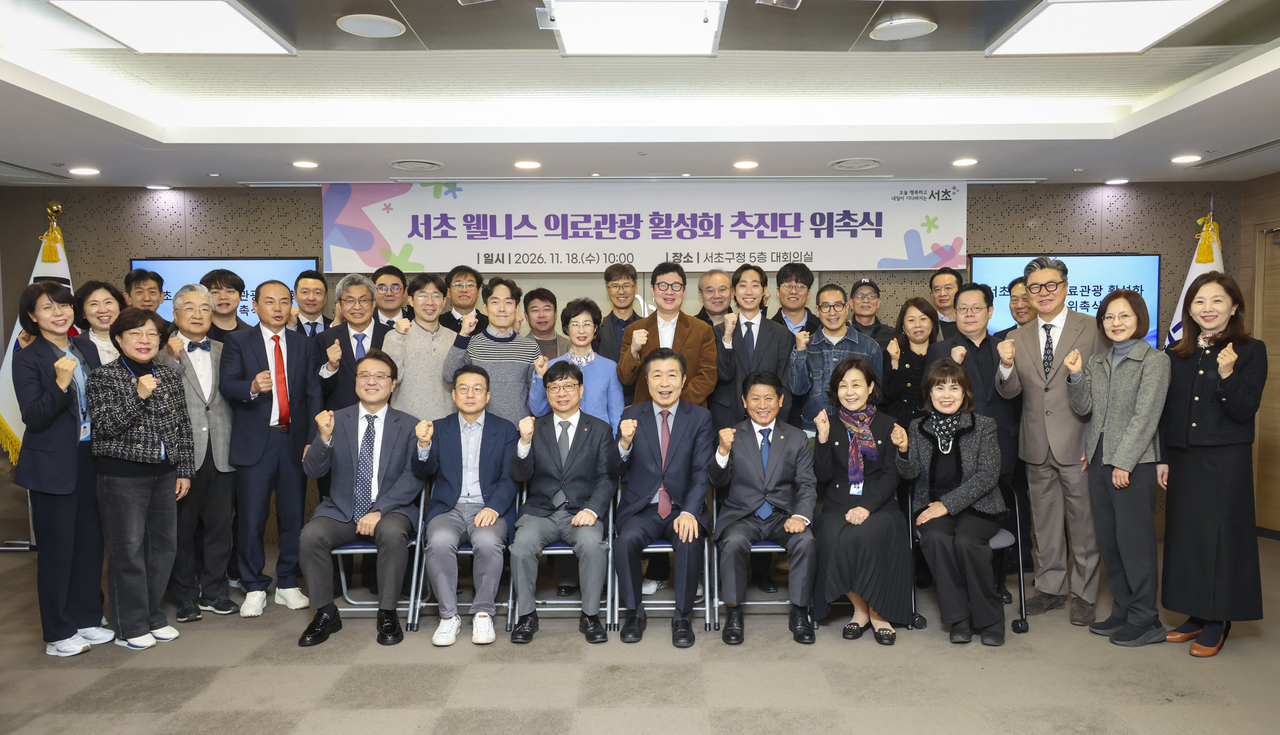
Seocho-gu launched the initiative Wednesday, holding a commissioning ceremony for the "Seocho Wellness Medical Tourism Promotion Task Force" at the district office. The newly formed body brings together 30 experts from the medical, tourism and retail sectors in a public-private partnership.
The task force is the operational arm of a campaign pledge from the ninth elected-term administration to develop wellness medical tourism in Seocho. The district plans to combine its strong medical infrastructure with tourism resources and local commerce to extend foreign patients' stays and spread their spending more broadly across the area.
Seocho-gu is well positioned to capitalize on the medical tourism market. The number of foreign patients visiting the district reached about 440,000 last year — roughly 20 times the figure from three years earlier. District officials say the rapid growth in demand makes a systematic strategy essential to channel that momentum into broader tourism and commercial activity.
The district intends to shift foreign medical tourists away from a pattern of receiving treatment and immediately returning home, encouraging them instead to stay longer and spend on sightseeing, culture, food and shopping.
To that end, the task force includes not only medical associations — representing doctors, dentists, traditional Korean medicine practitioners and pharmacists — and hospital representatives, but also the Seoul Tourism Foundation, hotel and department store officials, restaurant and beauty industry groups, and merchants' associations.
The aim is to expand the existing medical-institution-centered network to encompass tourism, accommodation, retail, dining, beauty services and neighborhood commercial districts, routing foreign visitors' spending throughout the local economy.
The task force will identify areas for cross-sector collaboration and propose policies and support measures to extend medical tourists' stays and increase their spending. It will also gather on-the-ground concerns from industry and channel expert input into concrete action plans.
Seocho-gu plans to roll out a series of initiatives in stages: designating affiliated medical institutions, launching a concierge service tailored to foreign medical tourists, operating a dedicated medical tourism hub, and developing wellness tourism itineraries linked to local commercial districts.
Particular emphasis will be placed on building service connections and travel routes so that medical tourists can conveniently use local facilities — hotels, department stores, restaurants and beauty establishments — after their appointments.
The goal is to stimulate movement and spending within the district and ensure that the economic benefits of medical tourism do not remain concentrated at individual clinics but spread across the broader local commercial area.
"We will organically connect Seocho's excellent medical foundation, tourism resources and local commercial district to create an environment where foreign medical tourists stay and spend," Seocho-gu District Mayor Jeon Seong-su said. "We will actively incorporate the field experience and opinions of experts from each sector to develop Seocho into a world-class wellness medical tourism destination."
seouldream01@heraldcorp.com