District Mayor Seo Jun-o greets employees at the door, sends letters to all civil servants, and pledges a culture of open communication
New channels — a direct-text phone line, youth policy forums, and a reconstruction and redevelopment public-private council — expand resident engagement
Nowon-gu in Seoul marked the 100th day of its ninth directly elected administration Thursday, with District Mayor Seo Jun-o stepping up efforts to communicate with civil servants, residents and policy stakeholders as the district office pursues a field-centered approach to governance.
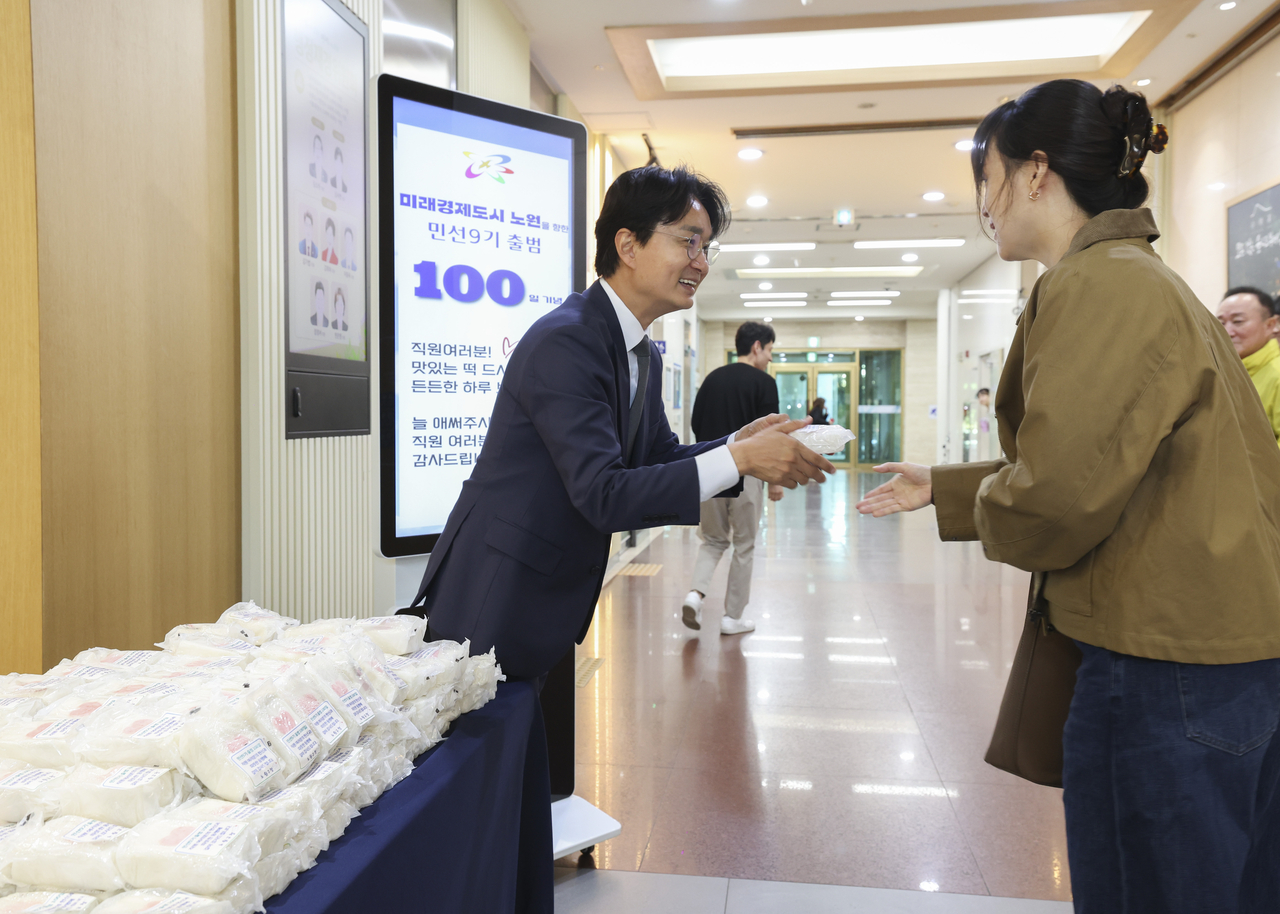
On the morning of the milestone, Seo stood in the first-floor lobby of the district office and personally greeted employees as they arrived for work. The gesture reversed a scene from his first day in office on July 1, when staff had lined up to welcome him — this time, the district mayor was welcoming them. He greeted employees one by one, expressing gratitude and acknowledging the hard work of the past 100 days.
Some employees appeared caught off guard at first but quickly warmed to the occasion. Several exchanged high-fives with Seo, starting the workday in a relaxed and cheerful atmosphere.
Once employees reached their desks, they found a letter of thanks waiting for them, sent by Seo through the district's internal work portal. The letter reached all civil servants employed by the district, including those who had not passed through the lobby that morning.
The letter carried three messages: gratitude and encouragement for staff who had kept pace with a demanding schedule over the first 100 days; an expression of trust in employees as partners in building Nowon's future; and a pledge to foster an organizational culture built on open dialogue and frank debate.
The emphasis on open communication has been a consistent theme since Seo took office. Even before his inauguration ceremony, he arranged a lunch with officers of the Nowon-gu Civil Servants' Labor Union on July 3, then visited each department of the district office to introduce himself. He also held a series of communication forums organized by job category and grade — including entry-level Grade 9 employees — and convened a vision-sharing session to brief staff directly on the key policy directions of the new administration.
Seo has also widened channels for resident engagement. His transition committee, the Nowon 3.0 Future Nowon Preparatory Committee, live-streamed its campaign pledge review sessions online in a program called "Campaign Pledge Talk." He also introduced a dedicated text-message phone line that allows residents to send opinions directly to the district mayor at any time of year.
The district is pushing to move beyond simply listening to residents and toward involving them in shaping policy. In July, the district office signed an MOU with a coalition of university student councils in the area to broaden youth participation in policymaking. In the reconstruction and redevelopment sector — the most pressing local issue — a public-private council with resident representatives was launched. The aim is to build what the district calls an "action-oriented communication system" that not only gathers on-the-ground voices but also shares policy direction and jointly identifies areas for regulatory improvement.
"I believe communication is both the starting point and the completion of policy," Seo said. "I will work with employees through open debate to build better policies together, and I will faithfully reflect residents' voices in how the district is run." He added that he intended to keep finding answers in the field and to make Nowon a place where employees and residents drive change together.
seouldream01@heraldcorp.com