
About 50 participants from six agencies to gather at Gwangjin Plaza; exercise simulates discovery of white powder at a festival
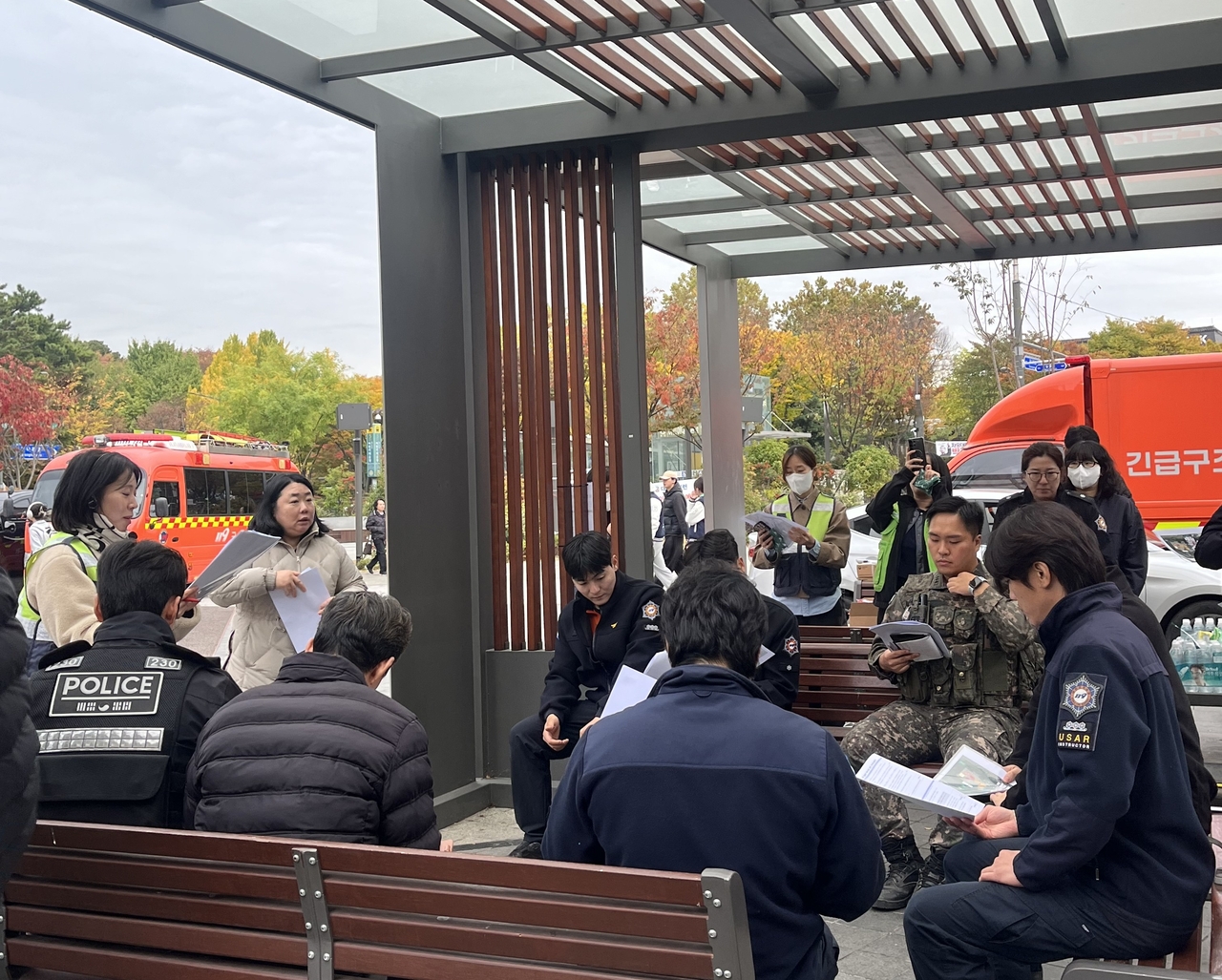
Gwangjin-gu will hold a large-scale bioterrorism response field exercise at Gwangjin Plaza on Wednesday in partnership with six agencies.
The drill is designed to strengthen early-response capabilities through close inter-agency coordination and to minimize casualties and social disruption in the event of a biological attack.
About 50 personnel from six organizations will take part, including the Gwangjin-gu Public Health Center, Gwangjin Police Station, Gwangjin Fire Station, the Seoul Metropolitan Government's 119 Special Rescue Unit, the Army's 56th Division Gwangjin-gu Battalion and Konkuk University Hospital. The Korea Disease Control and Prevention Agency and the Seoul Metropolitan Government's Infectious Disease Control Division will serve as evaluators, while public health centers from 16 other autonomous districts will observe.
The exercise will simulate a scenario in which a bag containing white powder is found open at a crowded festival. Participants will work through a step-by-step response sequence beginning with a 112 emergency call by event staff. The sequence proceeds through the dispatch of a first-response team, multi-detection kit testing and sample collection, expansion of the control perimeter and decontamination following a positive anthrax reading, operation of an on-site emergency medical station and evacuation of exposed individuals, disinfection of surrounding areas, epidemiological investigation and contact tracing, and public inquiry management.
Anthrax is a Class 1 infectious disease caused by Bacillus anthracis. The bacterium can survive for extended periods in spore form and is easily dispersed as a powder, making it susceptible to misuse in biological attacks. Inhalation of anthrax spores carries an extremely high fatality rate, making rapid and coordinated early response particularly critical.
To ensure the exercise reflects real-world conditions, Gwangjin-gu has been visiting participating agencies directly since September to coordinate training scenarios, agency-specific roles, and the deployment of personnel and equipment. A joint tabletop exercise was also conducted to review each agency's response procedures in advance.
After the drill concludes, the district plans to identify and address shortcomings revealed during each agency's response, so that it can react swiftly and systematically in an actual bioterrorism event.
Gwangjin-gu District Mayor Kim Kyung-ho said bioterrorism is difficult to predict in terms of when and where it may occur, making close routine coordination among relevant agencies more important than anything else. "Through this exercise, we will thoroughly review our early-response framework and do our utmost to protect the lives and safety of our residents," Kim said.
seouldream01@heraldcorp.com




