Ministry of Culture, Sports and Tourism faces questions at National Assembly audit over historical distortion controversy surrounding the film
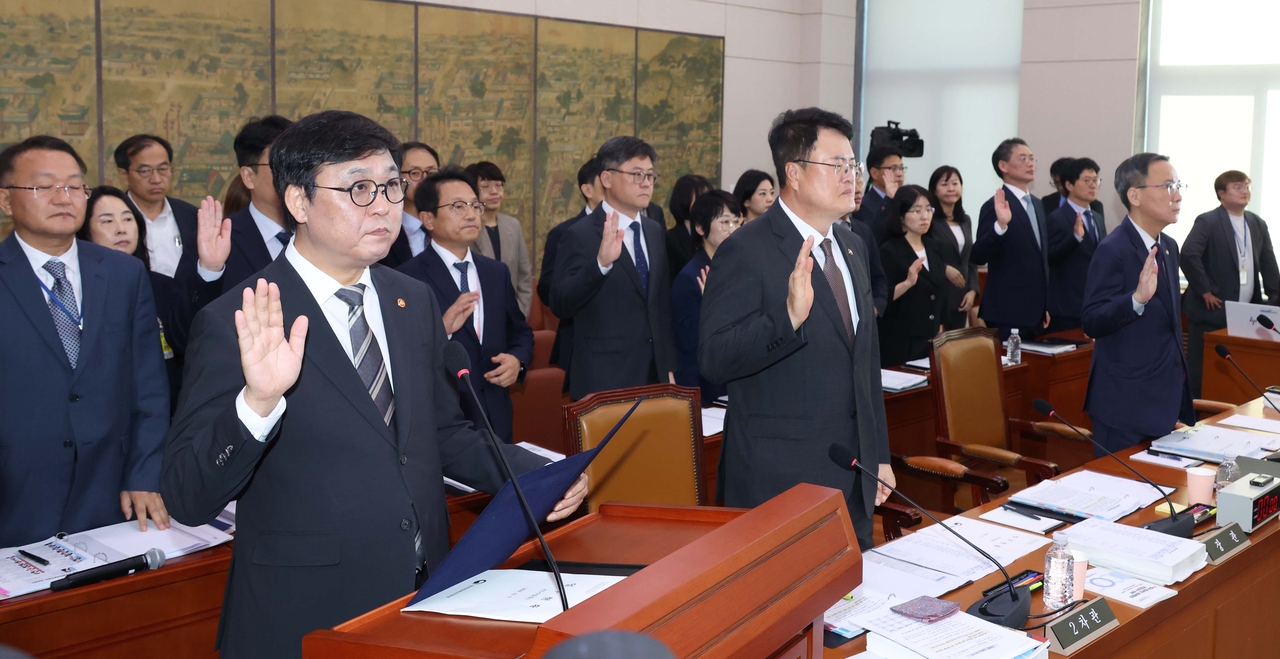
Culture, Sports and Tourism Minister Choi Hwi-young said Wednesday that creative works should face no restrictions, as lawmakers grilled him over the historical distortion controversy surrounding the film "The Assassin." While stepping back from rendering a personal verdict on whether the film distorts history — calling that a matter for the public and audiences to decide — he said the Ministry of Culture, Sports and Tourism must act to protect cast members facing threats.
At the National Assembly Culture, Sports and Tourism Committee's national audit of the ministry, Choi responded to a question from People Power Party lawmaker Yun Yong-geun about whether there should be limits on turning historical events into films: "There must be no restrictions on imagination and creativity."
The audit session was dominated by debate over "The Assassin," a film that has stirred considerable controversy in cultural circles. Lawmakers raised questions about whether the film's content constitutes historical distortion. Choi said the matter was "not for me to judge — it is for the public and audiences to judge," adding that in a country where freedom of expression is guaranteed and prior censorship is prohibited, "the government does not intervene in the content of creative works in any way." Asked what measures would be appropriate if distortion were found, he said legal procedures exist for anyone who feels they have suffered serious defamation.
Directed by Heo Jin-ho and released Sept. 23, "The Assassin" traces the forces behind the shooting of Yuk Young-soo at a Liberation Day ceremony on Aug. 15, 1974. Investigators at the time concluded the attack was carried out solely by Moon Se-gwang, but the film has drawn criticism from political circles for implying that former President Park Chung-hee and others in power at the time were behind the incident. The production company said Sept. 28 that the film does not identify any specific individual as the mastermind and does not present hypotheses or dramatic devices as historical fact.
The minister's response to protecting cast members also became a flashpoint at the audit. On Sunday, members of a conservative civic group held a rally outside actor Yoo Hae-jin's home, demanding the film be pulled from theaters and calling for an apology. The following day, Choi posted on SNS under the heading "Criticism of a film is free, but threatening the safety of creators is the destruction of democracy." In the post, he said he had asked the Korean National Police Agency and other relevant authorities to take safety measures for those involved in the film and its cast, and to strictly enforce the law against illegal acts such as threats and intimidation outside their residences.
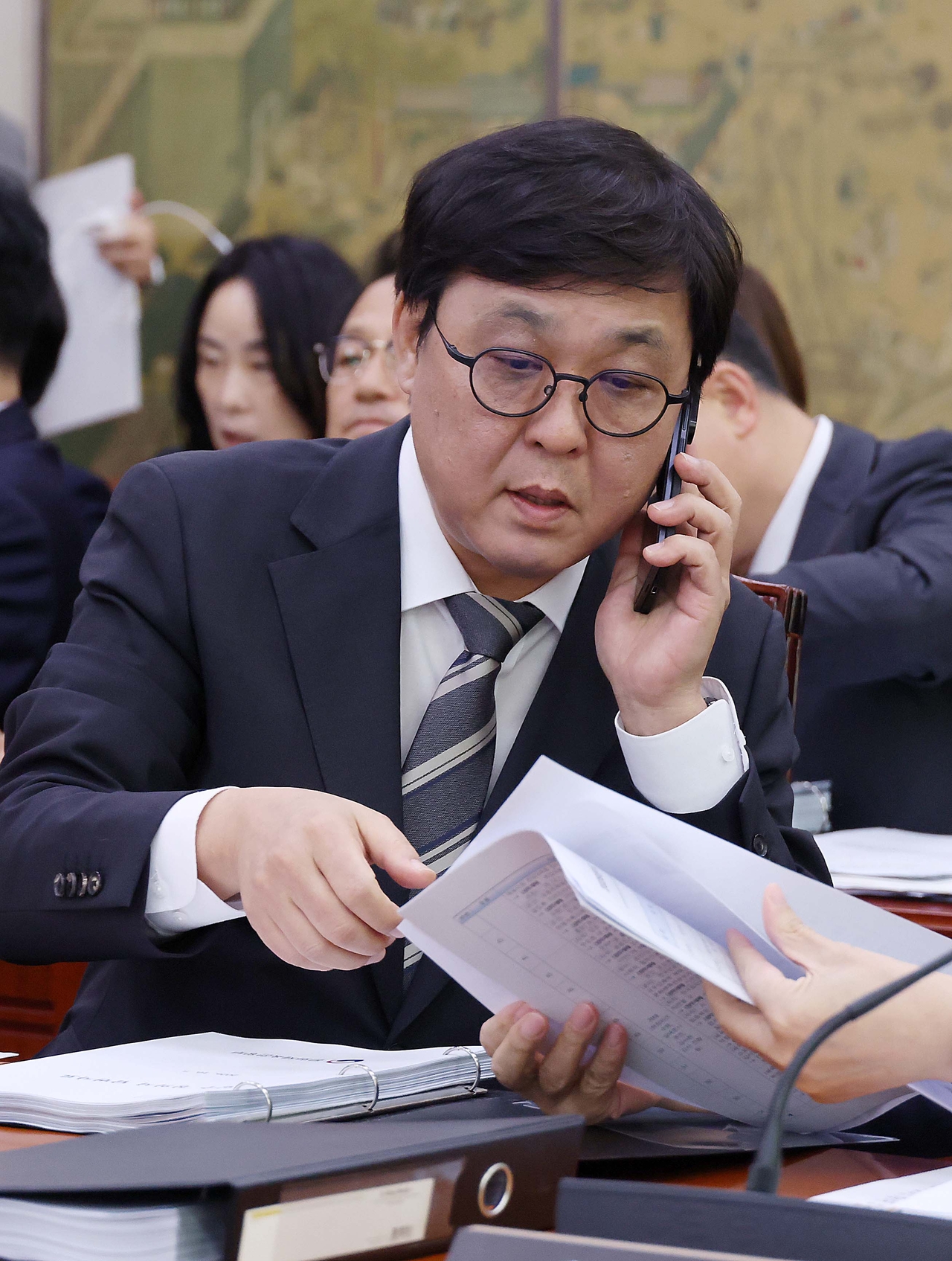
When lawmaker Yun challenged the minister's response, Choi fired back: "If the minister of culture, sports and tourism does not step up against acts that threaten the products of creativity, who will?" He said the SNS post was meant to express concern about a situation in which criticism of a film was escalating into personal safety threats against individual artists, and that he had sought preventive and protective measures to keep the situation from worsening.
People Power Party lawmaker Kim Seung-su asked whether the rally outside the actor's home was illegal. Choi said the footage showed participants demanding an apology, that no physical threats were made and that the crowd numbered around 50, adding that the same standard must be applied consistently. He said that even if the rally was lawful, holding a protest outside an actor's home could cause the person and their family severe fear, which was why he had expressed concern. Police began providing personal protection for Yoo Hae-jin on Tuesday at the request of his agency.
As the controversy over historical distortion in faction films continued, proposals for supporting historical verification also came up. Democratic Party of Korea lawmaker Im O-gyeong suggested that works dealing with real individuals or historical events that receive public funding should be required to seek advisory opinions from specialist institutions such as the National Institute of Korean History during the investment review stage, with creators left to decide whether to reflect the findings. Choi said it would be appropriate to provide support when historical verification advice is requested, adding that "that aspect could be strengthened somewhat." He stopped short of announcing a separate set of historical verification screening criteria. Asked whether he agreed that creativity and freedom of expression should be free from restrictions and partisan logic, he said: "I agree."
Questions were also raised about how the film came to receive investment. Lawmaker Kim's office had previously cited data from Korea Venture Investment Corp. to say that nine sub-funds under the mother fund had invested 7.8 billion won ($5.81 million) in the film between last November and this August. On allegations that ruling party lawmakers had intervened in the investment process, Choi said "the funds that invested in the film are not the mother fund but sub-funds created under the previous administration." He said those funds make investment decisions based on their own assessment of returns, with no government involvement whatsoever.
People Power Party lawmakers requested that director Heo Jin-ho and other members of the production team be called as witnesses or reference persons, but committee chair Lee Jae-jeong and Democratic Party lawmakers blocked the proposal. Lee said creators would not be summoned to the National Assembly to have the content of their work scrutinized.
According to the Korean Film Council's integrated ticketing system, "The Assassin" drew 412,012 viewers over the second weekend of its run, from Friday through Sunday. As of Monday, cumulative attendance stood at about 2.23 million.
shee@heraldcorp.com