
Netanyahu bloc projected at 53 seats, opposition at 48
Neither side reaches 61-seat majority threshold
Arab parties seen as kingmakers with 19 seats
New election early next year possible if coalition talks fail
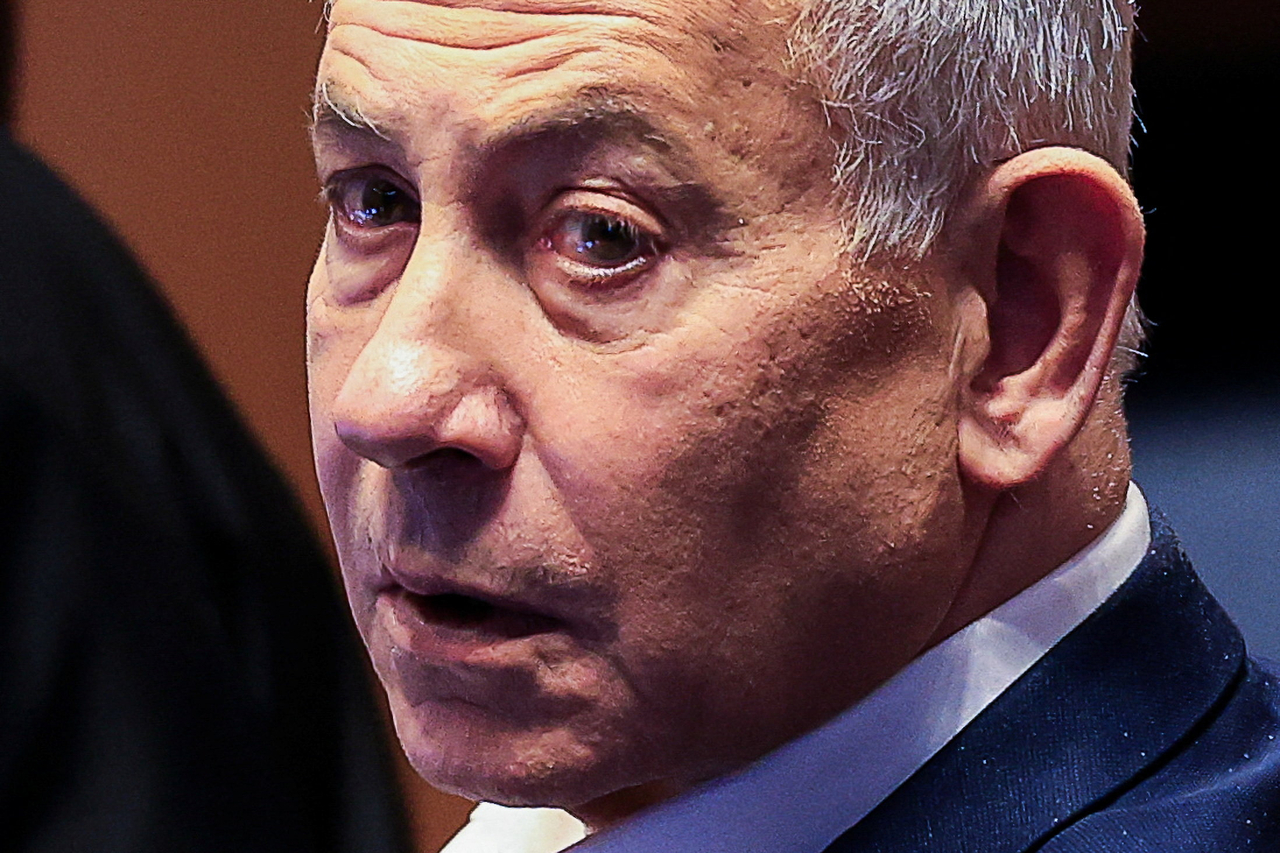
Israeli Prime Minister Benjamin Netanyahu overturned exit poll projections to take the lead in vote counting, but whether Netanyahu will extend his hold on power remains uncertain. With neither bloc expected to secure a parliamentary majority, Arab parties projected to win 19 seats have emerged as the pivotal factor in determining who forms the next government.
With 85 percent of ballots counted, Netanyahu's Likud party had received 20.8 percent of the vote, according to the AP. Yishar, the party led by former Israel Defense Forces Chief of Staff Gadi Eisenkot, stood at 16.1 percent, while Arab parties collectively received 14.9 percent.
Earlier exit polls from broadcasters had suggested Eisenkot's opposition bloc would edge ahead, but actual vote counting put the Netanyahu camp in the lead.
Based on current results, Netanyahu's Likud and allied parties are projected to win 53 of the Knesset's 120 seats, according to local media including the Times of Israel. Eisenkot's Yishar and its allied parties are projected at 48 seats, while Arab parties Ra'am and the Joint List are expected to take 19 seats.
The Netanyahu bloc leads the opposition by five seats but falls eight short of the 61-seat majority needed to form a coalition government. If the projections hold, Netanyahu's camp would lose 15 seats from its current 68.
The AP said the results reflected voter concerns over Netanyahu's alliance with far-right forces, war fatigue from the prolonged conflict, and a backlash against military service exemptions granted to ultra-Orthodox Jews.
Those grievances, however, did not translate into enough opposition support to decisively oust Netanyahu.
The central variable in this election is the choice of the Arab parties. With neither major bloc able to secure a majority on its own, the Arab parties — projected to hold 19 seats — have become the kingmakers in any coalition-building effort.
The path to an actual coalition, however, is expected to be fraught.
Netanyahu has consistently refused to work with Arab parties. On Wednesday, Netanyahu again made his opposition clear, calling any coalition that includes Arab parties a "dangerous government."
Eisenkot, by contrast, has left open the possibility of cooperating with Arab parties under certain conditions — including that they recognize Israel as a Jewish state and designate Hamas as an extremist organization.
But voices within the Arab parties themselves are also pushing back against joining forces with the Eisenkot camp.
Joint List leader Yousef Jabareen said the party could not join a government led by Eisenkot, citing the former chief of staff's support for military operations in Gaza and backing of the occupation of southern Lebanon.
Jabareen did leave open the possibility of supporting an Eisenkot-led government from outside the coalition in order to remove Netanyahu from power.
Another complicating factor is that if the opposition aligns with Arab parties, some Jewish parties currently within the opposition bloc may defect.
Should those parties break away in protest and shift toward a right-wing alliance, a scenario in which Netanyahu reassembles a coalition government becomes plausible.
Although counting is nearing its end, a final result is not expected immediately.
Most regular ballot boxes have been tallied, but about 500,000 absentee ballots cast by soldiers, diplomats and others must go through a separate verification process before being counted.
Vote counting is expected to wrap up Thursday afternoon, with official results set to be announced Nov. 4.
Israeli President Isaac Herzog, who holds the key to determining who gets the mandate to form the next government, called on the parties to negotiate a coalition.
Herzog posted on X, formerly Twitter, on Wednesday that he would invite party leaders next week to consult on whom to task with forming the next government, urging them to "come with an open mind."
Herzog also indicated a desire to avoid a situation in which failed coalition talks force the country into yet another election.
Under Israel's system, the president grants the mandate to form a government to the candidate deemed most likely to assemble a viable coalition after a general election.
If no bloc can put together a majority coalition, however, a new election could be held early next year.
Israel has been through similar political deadlock before, holding five general elections between April 2019 and November 2022 — a stretch of roughly three and a half years.
sjy@heraldcorp.com




