All five members of the Korean delegation win gold — a first since the country began competing — at a contest drawing 312 students from 64 nations
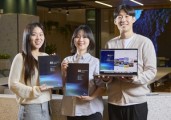
![The South Korean delegation at the 19th International Olympiad on Astronomy and Astrophysics. From left: Yun Ye-jun (Gwangju Science High School), Kim Geon-ho (Seoul Science High School), Kim Hyeong-geon (Seoul Science High School), Yeo Eun-su (Sejong Science and Arts Academy for the Gifted), Park Ha-yun (Daejeon Science High School). [Ministry of Science and ICT]](https://wimg.heraldcorp.com/news/cms/2026/10/06/news-p.v1.20261006.4cadc1b08848420ebbf23b70a2139152_P1.jpg)
South Korea's Ministry of Science and ICT and the Korea Foundation for the Advancement of Science and Creativity announced Tuesday that all five members of the South Korean delegation won gold medals at the 19th International Olympiad on Astronomy and Astrophysics.
The competition drew 312 students from 64 countries. All five Korean delegates — Kim Geon-ho and Kim Hyeong-geon, both third-year students at Seoul Science High School; Park Ha-yun of Daejeon Science High School; Yeo Eun-su of Sejong Science and Arts Academy for the Gifted; and Yun Ye-jun of Gwangju Science High School — took home gold, marking the first clean sweep since South Korea began participating in the olympiad.
The competition consisted of a theoretical exam (five hours), a data analysis exam (four hours), and an observational exam covering telescope and planetarium components (one day each). The three components were weighted at 50 percent, 25 percent and 25 percent, respectively, with the two observational sub-categories each accounting for 12.5 percent.
The theoretical exam covered astrophysics fundamentals, time and coordinates, planetary and stellar systems, interstellar matter, cosmology, and observational instruments. This year's paper featured 12 problems, including questions on the spiral structure of stellar winds from evolved stars and ultraluminous galaxies in the early universe.
The data analysis exam required contestants to calculate and analyze astronomical data and draw physically meaningful conclusions. Three problems were set, including one on the nature of "little red dots" observed by the James Webb Space Telescope and another on verifying the equation of state of neutron stars.
The observational exam's telescope component required students to use a reflecting telescope at night to directly observe Saturn and M29 — an open cluster in Cygnus — calculate hour angles and apply reverberation mapping, a technique for estimating the mass of black holes at the centers of active galactic nuclei; three problems in total were set. The planetarium component was held inside a 16-meter-diameter dome at Phenikka University, where three problems were posed, including one asking students to determine the position of the sun as seen from a hypothetical vantage point on the far side of the moon.
Lee Hee-won, head of the Korean Astronomy Olympiad Committee and leader of the delegation, said the International Olympiad on Astronomy and Astrophysics is "an important international competition where astronomy prodigies from around the world exchange ideas and demonstrate their creative knowledge and passion for the universe." He added that he hoped the experience would help the students "grow into the talented individuals who will lead South Korea into the space age."
Meanwhile, the South Korean delegation this year posted strong results across eight international olympiads, including those in mathematics and physics, in addition to the astronomy competition. The team will wrap up its season at the International Junior Science Olympiad.
nbgkoo@heraldcorp.com