82,617 unfair dismissal cases filed with labor commissions over past 3 years and 7 months
More than half of dismissed cases rejected due to 'fewer than 5 employees' rule
Workplace Harassment 119: coerced resignations are the most common form of dismissal
Fewer than 10 percent of unfair dismissal cases filed with South Korea's labor commissions were upheld as wrongful termination, data released Sunday showed.
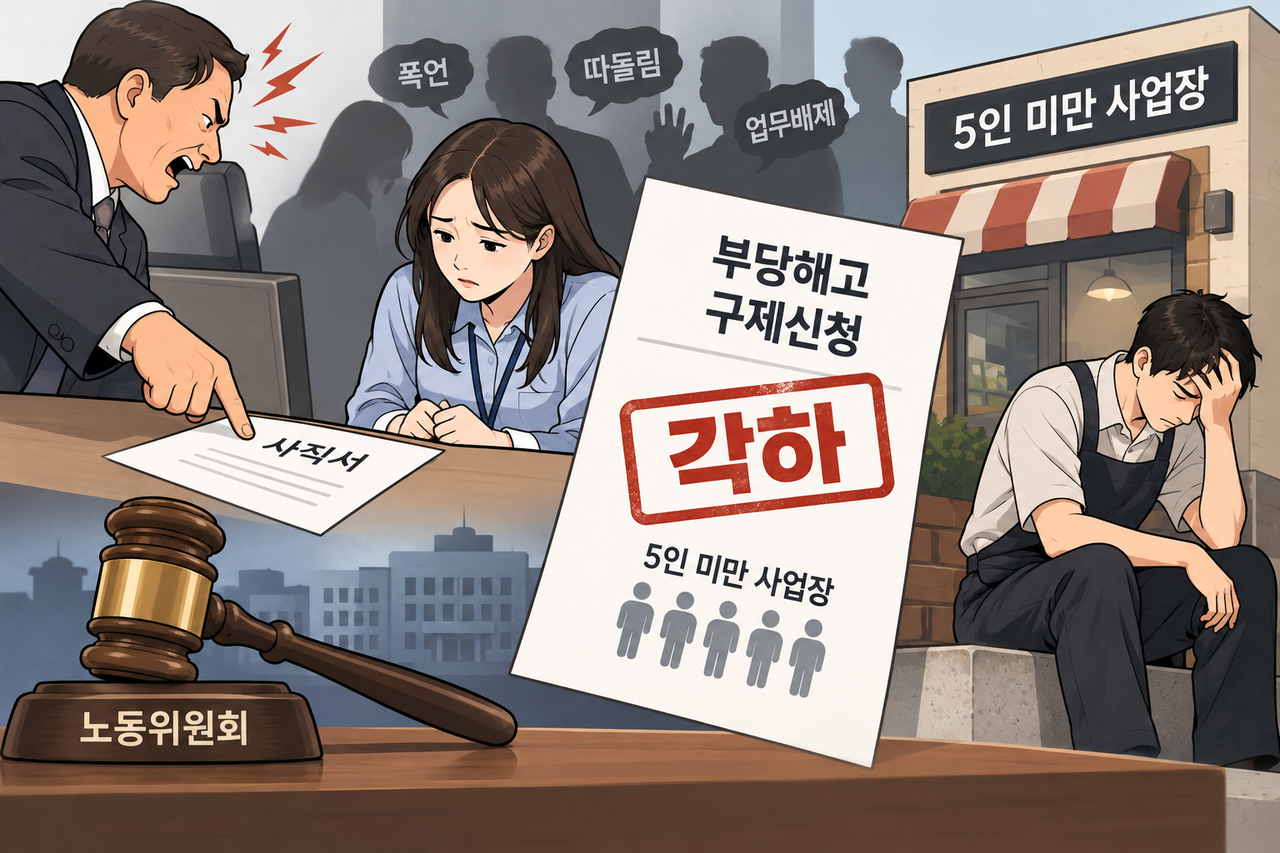
More than half of the cases dismissed without a ruling on the merits were rejected solely because the employer had fewer than five workers — highlighting a significant gap in legal protection for employees at small businesses.
According to data obtained by workplace harassment advocacy group Workplace Harassment 119 from the labor commission through the office of Progressive Party lawmaker Jeong Hye-gyeong, a total of 82,617 unfair dismissal cases were filed with the commission between Jan. 1, 2023, and July 31 this year. Of those, only 9.5 percent were recognized as actual unfair dismissals.
Of the 68,309 cases processed during the same period, 34.1 percent resulted in a formal ruling, 31.6 percent were settled through mediation between the parties, and 34.2 percent were dismissed without a substantive review.
A closer look at the dismissed cases revealed that a large share involved workplaces with fewer than five employees. An analysis of 1,700 dismissed cases found that 919, or 54.1 percent, were rejected on the grounds that the employer fell below the five-worker threshold.
Under the current Labor Standards Act, workplaces with fewer than five full-time employees are exempt from Article 23, Paragraph 1, which prohibits dismissal without just cause, as well as from the labor commission's unfair dismissal relief system. As a result, whether a worker can seek redress through the commission depends entirely on the size of the business.
Workplace Harassment 119 said workers at small businesses often struggle even at the application stage because it is difficult to accurately determine the number of full-time employees at their workplace.
The data also showed that employers most commonly avoid directly notifying workers of their dismissal, instead pressuring them to submit a resignation letter.
An analysis of 207 dismissal-related emails received by Workplace Harassment 119 found that 115 cases, or 55.6 percent, involved coerced or induced resignations. Of those, 74 cases, or 35.7 percent, involved workers being pressured to quit through verbal abuse, personal attacks, ostracism, exclusion from duties or other forms of harassment and humiliation.
Other categories included 38 cases of verbal or immediate dismissal with no explanation, 30 cases of dismissals beyond the reach of the law — such as those involving workplaces with fewer than five employees or disputes over worker status — and 28 cases of retaliatory dismissal following a complaint or report.
On Thursday, Workplace Harassment 119 published its "10 Commandments of Dismissal" report, outlining nine reform tasks to address gaps in law and policy. These included redefining the concept of "worker," introducing a presumption-of-employment principle, preventing abuse of fixed-term contracts and mandating employment succession.
Park Eun-ha, a labor attorney at Workplace Harassment 119, said that when a worker submits a resignation letter after being coerced or pressured into quitting, it is not a voluntary career change but rather a roundabout form of dismissal by the employer to avoid legal liability.
"The system needs to be reformed so that the actual reasons behind a departure are considered comprehensively when determining whether a dismissal occurred and when assessing the grounds for losing employment insurance eligibility," Park said. "Employers should be required to prove that a resignation was voluntary and that there was a legitimate reason for ending the contract."
fact0514@heraldcorp.com