Kim In-man of Kim In-man Real Estate Economic Research Institute speaks Friday
'Survival buying concentrated in Seoul outskirts, Gyeonggi Province amid jeonse and monthly rent crunch'
'Those without a home who need one should buy within their means'
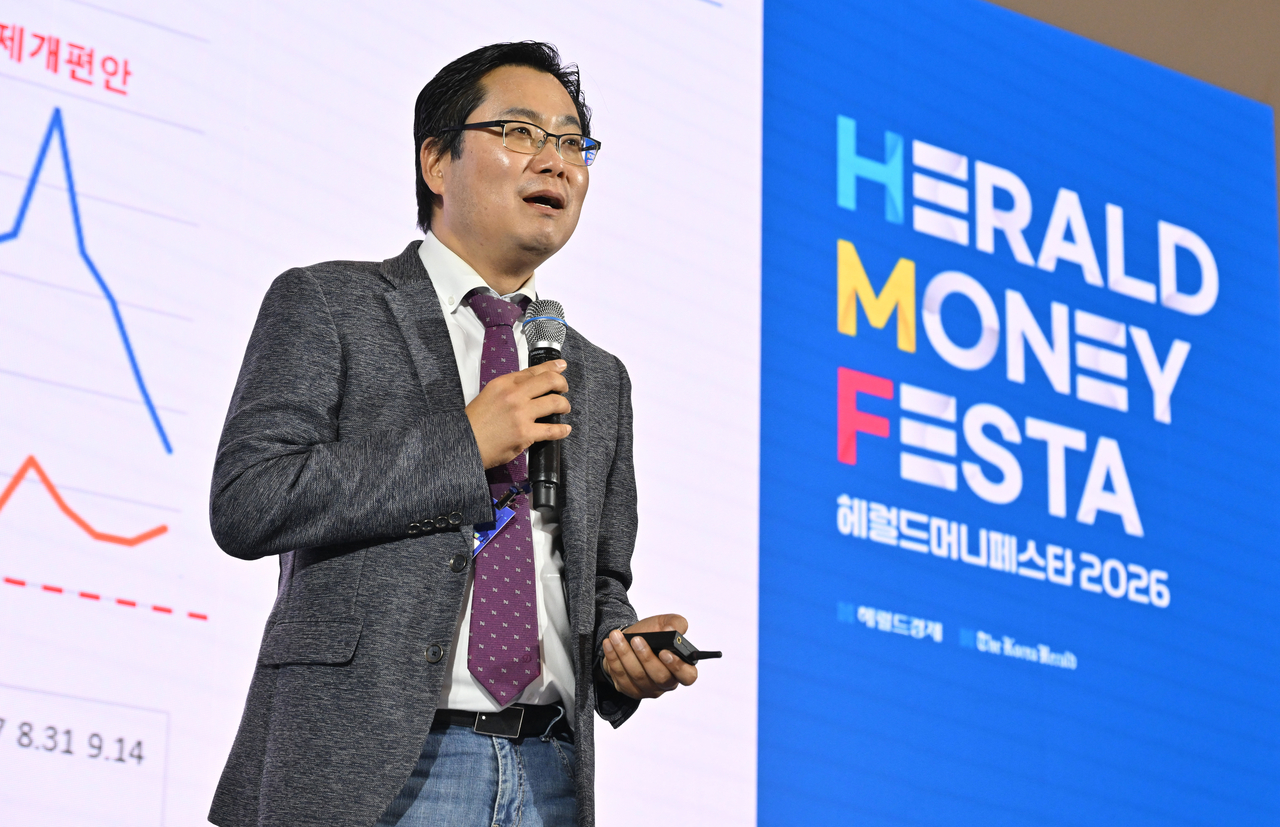
Since the fourth quarter of last year, Seoul's outer districts and Gyeonggi Province have been leading the rise in housing prices. End-users struggling with the jeonse and monthly rent crunch are being bounced outward like popcorn. The trend of the 'less-than-prime single property' will continue through next year.
Kim In-man, head of Kim In-man Real Estate Economic Research Institute, made the remarks Friday at Herald Money Festa 2026, held at Dongdaemun Design Plaza in Jung-gu, Seoul. "If investment demand drove the price surge during the 2021 housing boom, the market has now been restructured around end-users," he said.
Kim, one of the country's leading real estate market experts and a professor in the real estate department at Seoul Digital University, delivered a lecture at the event on the theme "The standard for the 'one solid property' is changing."
On the direction of the real estate market, Kim said the Gangnam area of Seoul is showing signs of a "temporary decline," with distressed listings emerging as a result of the tax reform. In contrast, he said other areas — particularly the outer districts — continue to rise, driven by end-user buying demand.
He attributed the trend to sweeping regulatory policies covering loans and taxation. Under the Aug. 3 tax reform package, long-term owner-occupants — especially retired elderly homeowners — have been opting to sell for tax-saving purposes, pushing asking prices lower, he explained.
Kim defined the targets of the government's tax reform package as homes valued at 3.5 billion won ($2.57 million) or more, non-owner-occupied single homes, multi-home owners and long-term holders. "If the reform is implemented as proposed, the tax burden on high-priced homes will increase three to four times by 2028 and five to six times by 2030," he said. He added that "Gangnam will remain weak through the first half of next year," and predicted that "once June 1 next year — the property tax assessment date — passes, those who want to sell in Gangnam will have sold, and wealthy buyers with cash will move in, turning an already affluent neighborhood into an even wealthier one."
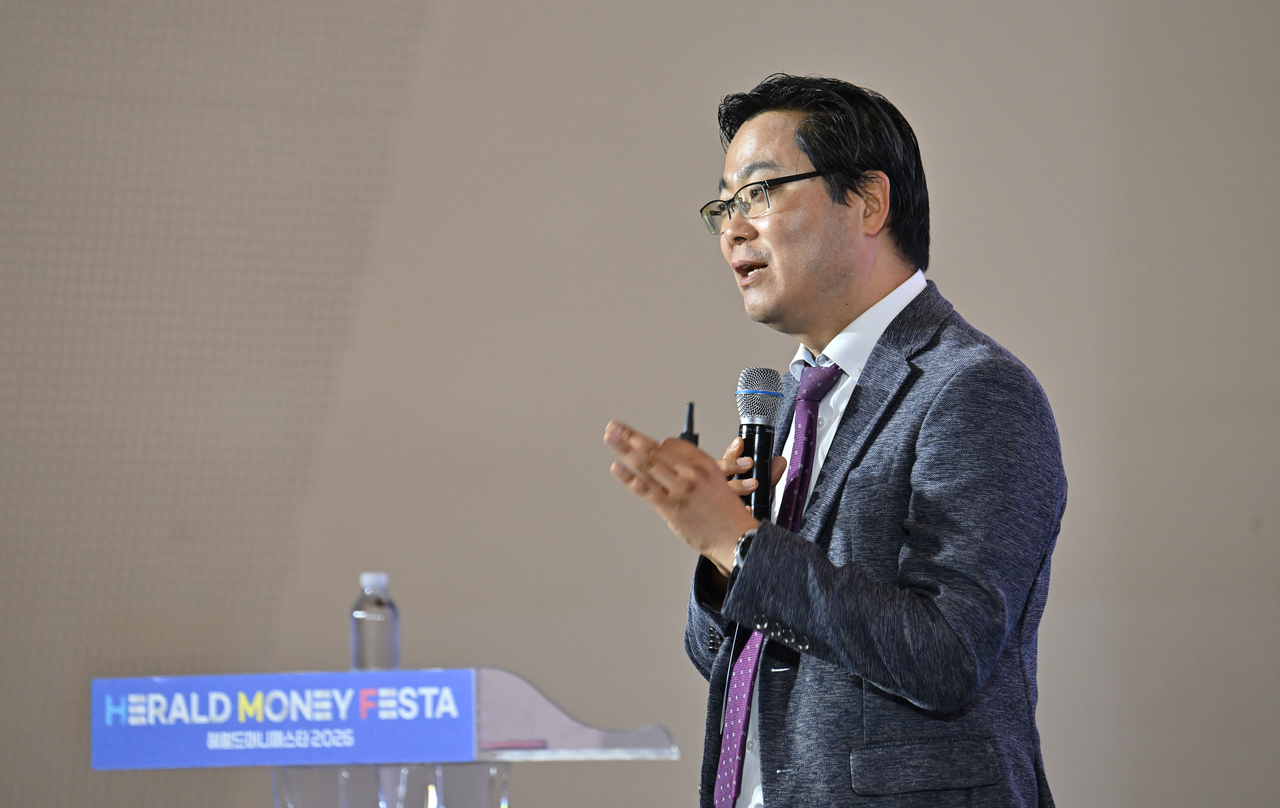
Unlike the Gangnam area, where high-priced homes are concentrated, Seoul's outer districts and Gyeonggi Province are seeing price gains driven by "survival buying" from end-users squeezed out by the jeonse and monthly rent crunch, Kim said.
"The Oct. 15 measures placed all of Seoul under land transaction permit zones, and the combined effect of lease renewal rights, owner-occupancy requirements and the ban on jeonse loans conditional on ownership transfer has all but eliminated jeonse listings from the market," Kim said. "End-users who can no longer endure the jeonse and monthly rent crunch are turning to homes in Seoul's outer districts and Gyeonggi Province at price points they can access through loans."
He forecast that the "less-than-prime single property" trend will remain the dominant theme in the real estate market for now. In the ultra-high-end segment, he said buyers will shift their attention to Han River belt complexes priced below 3 billion won, where the comprehensive real estate tax burden is lighter. Apartments in Seoul's outer districts and the greater metropolitan area priced below 2 billion won are expected to attract concentrated demand from newlyweds, downsizers and survival buyers. He also noted that a price-leveling effect will emerge among metropolitan-area apartments that have yet to recover their previous peaks.
"Once prices have risen all the way out to Incheon, Anseong, Uijeongbu, Pocheon and other parts of northern Gyeonggi Province, Gangnam will rise again around 2028 to 2029," he said, adding "if lending is tightened further than it is now, survival buying will expand even more into the southwestern Gyeonggi Province and northern Incheon areas."
Kim also offered strategies for both non-homeowners and existing homeowners navigating a real estate market centered on the less-than-prime single property and end-user demand. For those without a home, he recommended survival buying within the limits of available financing.
"Supply in Seoul is difficult to expand," he said. "Those without a home who need one should buy — whether in Seoul's outer districts, Gyeonggi Province or a redevelopment villa — within their financial means."
For homeowners affected by the Aug. 3 tax reform, Kim offered tailored advice broken down by situation: owners of three or more homes should reduce their holdings to two; owners of two homes should consider gifting one if both are prime properties, or selling the lower-value property if only one is prime; single-home owners with large long-term capital gains should sell and trade up in 2027, while elderly long-term holders in the same position should sell in 2027 and move to a retirement community; those who have not lived in a home priced below 3 billion won should establish residency there; and owners of high-priced homes burdened by holding taxes should consider renting out the property and living elsewhere.
The lecture drew about 100 visitors ranging from young adults to the elderly, filling the seminar hall. More than 10 attendees stood at the back due to a shortage of seats, and many took notes or photographed the presentation slides throughout the talk. Even after the lecture ended, dozens lined up to ask questions, keeping the energy high.
A man in his 50s who attended said he had long been interested in trading up as a single-home owner. "The lecture title caught my eye, so I came," he said. "After listening, I feel I need to time the distressed listings well before June 1 next year."
Now in its third year, Herald Money Festa is running Friday and Saturday under the theme "Money Rebalancing: Recalibrating the Weight of Your Assets." The two-day event features lectures spanning shares, ETFs, real estate, gold and virtual assets, as well as asset management, tax planning and inheritance — offering attendees a chance to reassess their investment portfolios and track the flow of money in a rapidly shifting environment.

hwshin@heraldcorp.com