On display through Nov. 1 at the Eunpyeong History and Hanok Museum, the exhibition recreates the Geungnakjeon Hall of Seongbulsa Temple using AI technology and traditional woodworking techniques.
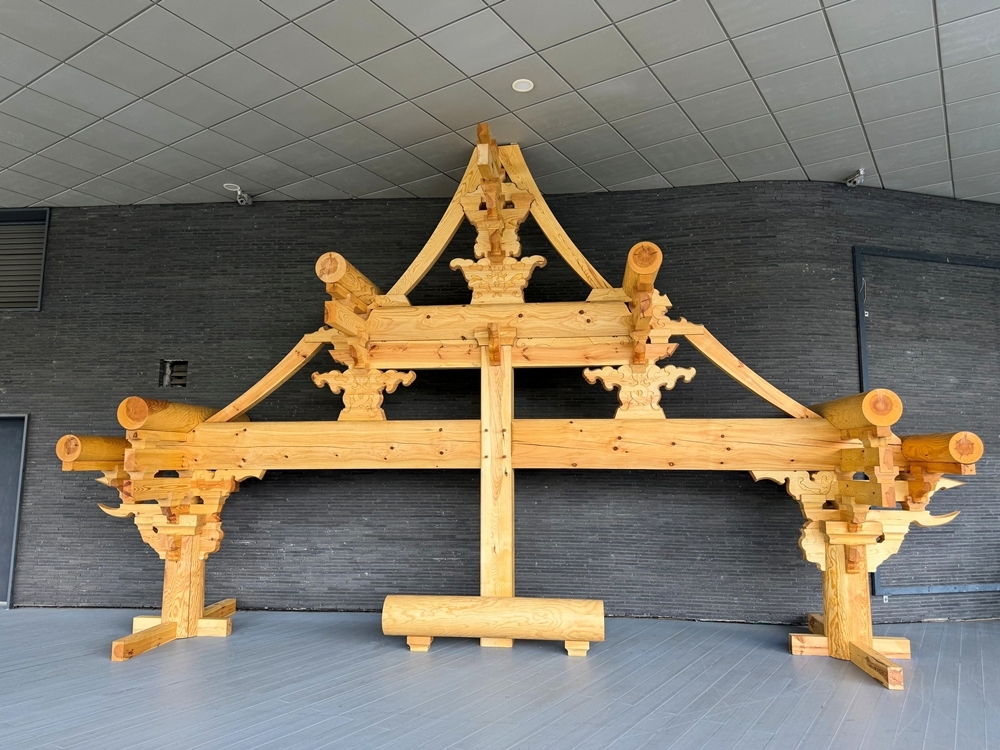
Eunpyeong-gu in Seoul will host an outdoor exhibition titled "Goryeo Architecture Revived Through Digital Technology: Geungnakjeon Hall of Seongbulsa Temple in Hwanghae Province" at the Eunpyeong History and Hanok Museum from Tuesday through Nov. 1.
The exhibition presents the Geungnakjeon Hall of Seongbulsa Temple — a piece of North Korea's traditional architectural heritage that is difficult to access directly — through a combination of digital technology and traditional woodworking techniques.
Seongbulsa Temple sits at the foot of Jeonbangsan Mountain in Hwanghae Province and is known as the oldest surviving Buddhist temple in North Korea. It is also famous as the setting of the Korean art song "Night at Seongbulsa Temple." The Geungnakjeon Hall is believed to have been built in the late Goryeo period; it was destroyed during the Korean War and restored in 1955.
The exhibit reconstructs the hall's major structural elements, including its beams and columns. Researchers used glass-plate photographs taken during the Japanese colonial period and historical blueprints as source material, applying AI technology to estimate the original form before craftsmen built the structure using traditional woodworking methods.
The exhibition is a collaborative project under an MOU the Eunpyeong History and Hanok Museum and the Architectural Institute of Korean Architectural History signed in June. Korea University's Architectural Heritage Research Lab, Wizcore Co. and Danhanok also participated. Kim Bu-seop, head of Danhanok and a certified master carpenter recognized as a national intangible heritage practitioner, oversaw the fabrication and installation.
"We have recreated North Korea's historic architectural heritage beyond the constraints of time and space by combining AI technology with the traditional techniques of master craftsmen," said Pyo Mun-song, director of the Eunpyeong History and Hanok Museum. "We hope this becomes an opportunity for citizens visiting Eunpyeong Hanok Village to see and feel firsthand the value of traditional hanok architecture."
Further details about the exhibition are available on the Eunpyeong History and Hanok Museum's website or by phone.
seouldream01@heraldcorp.com