Loan delinquency rate among bottom 30% income earners reaches 2.13%; outstanding debt hits record 154 trillion won
Debt owed by self-employed aged 60 and older reaches 407 trillion won, nearly quadrupling in a decade
A 0.25-percentage-point rate hike would add 1.1 trillion won in annual interest for multi-debt borrowers
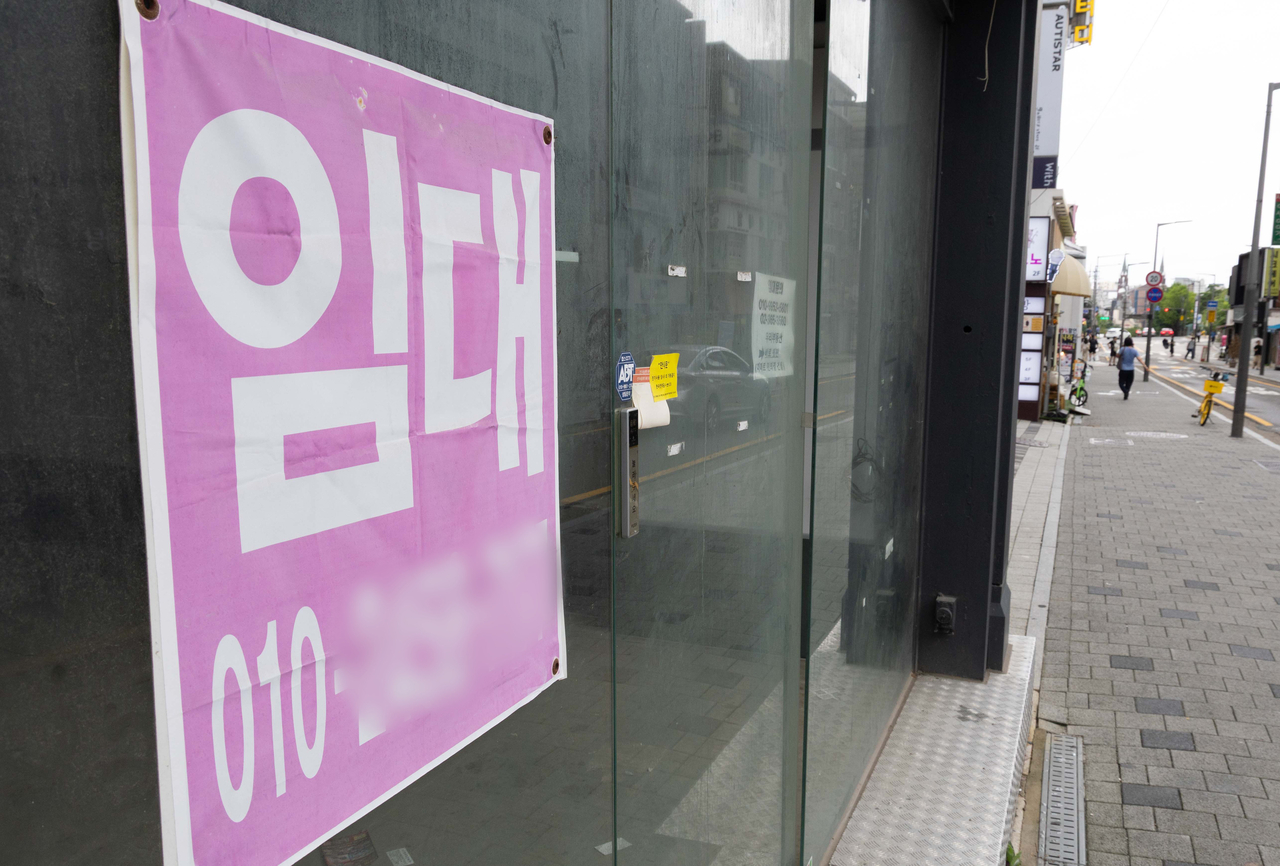
The loan delinquency rate among low-income self-employed workers has soared to its highest level in 10 and a half years, while their outstanding debt has swelled to a record 154 trillion won ($113 billion). Concerns are mounting over rising insolvency risks, particularly as debt held by self-employed workers aged 60 and older has nearly quadrupled over the past decade.
According to data that People Power Party lawmaker Park Sung-hoon, a member of the National Assembly's Political Affairs Committee, obtained from the Bank of Korea, the loan delinquency rate among self-employed workers in the bottom 30 percent of the income bracket stood at 2.13 percent at the end of the second quarter this year.
The figure was unchanged from the previous quarter but marked the highest reading since the fourth quarter of 2015, when the rate was 3.88 percent — a gap of 10 years and six months. The all-time high since records began in 2012 was 4.62 percent, recorded at the end of the first quarter of that year.
The delinquency rate among low-income self-employed workers had fallen below 1 percent in 2021 and 2022, immediately following the COVID-19 pandemic. It then climbed to 1.15 percent in the first quarter of 2023 and continued rising, crossing the 2 percent threshold in the first quarter of last year when it reached 2.04 percent.
Outstanding loan balances have also continued to grow. The total debt held by low-income self-employed workers reached 153.9 trillion won at the end of the second quarter this year, an all-time high. Analysts warn that repayment capacity is flashing red as financially vulnerable borrowers take on more debt while delinquency rates remain elevated.
By income bracket, middle-income self-employed workers posted the highest delinquency rate. The rate for those in the 30th to 70th percentile stood at 3.46 percent at the end of the second quarter this year — lower than the 3.84 percent recorded a year earlier and the 3.64 percent at the end of the first quarter this year, but still above both the low- and high-income groups.
Among high-income self-employed workers — those in the top 30 percent — the delinquency rate was 1.58 percent, up 0.19 percentage points from 1.39 percent a year ago. However, it edged down 0.02 percentage points from 1.60 percent in the previous quarter.
By age group, self-employed workers in their 40s and 50s had the highest delinquency rate at 2.15 percent. Those aged 30 and under came in at 1.91 percent, while those aged 60 and older stood at 1.78 percent.
The surge in outstanding debt has been concentrated among older self-employed workers. The total loan balance held by self-employed workers aged 60 and older reached a record 407.4 trillion won at the end of the second quarter this year, up 1.7 trillion won from the previous quarter and 19.7 trillion won from the same period last year.
Compared with 105.2 trillion won at the end of the second quarter of 2016, the figure has grown 3.9 times over a decade. The share of total self-employed loans held by those aged 60 and older also rose 14.8 percentage points over the same period, from 22.3 percent to 37.1 percent — meaning more than 37 won out of every 100 won in self-employed loans is now held by someone aged 60 or older.
In contrast, outstanding loan balances for self-employed workers aged 30 and under and those in their 40s and 50s fell slightly from a year earlier, to 99.7 trillion won and 591.4 trillion won, respectively. The diverging trend — younger borrowers paying down debt while older ones accumulate more — has drawn attention from analysts.
If lending rates rise further, the burden on self-employed borrowers who hold loans at multiple financial institutions is expected to grow.
The Bank of Korea estimates that a 0.25-percentage-point increase in lending rates would add a total of 1.1 trillion won to the annual interest burden of self-employed multi-debt borrowers, or an additional 670,000 won per person per year.
A 0.50-percentage-point rise would push the total additional interest burden to 2.2 trillion won, with each borrower facing an extra 1.34 million won annually.
The estimates are based on outstanding loan balances at the end of the second quarter this year, assuming that variable-rate loans account for about 68 percent of self-employed lending and that all variable-rate products move by the same margin. Experts say preemptive debt restructuring and measures to ease repayment burdens are needed before delinquencies become prolonged, as lower-income and older self-employed workers are more vulnerable to rate increases.
attom@heraldcorp.com