Samsung Futures sets base year-end gold price forecast at $4,550
Fed hold in September could push gold above $4,700
US-Iran truce and Strait of Hormuz normalization may test $5,000
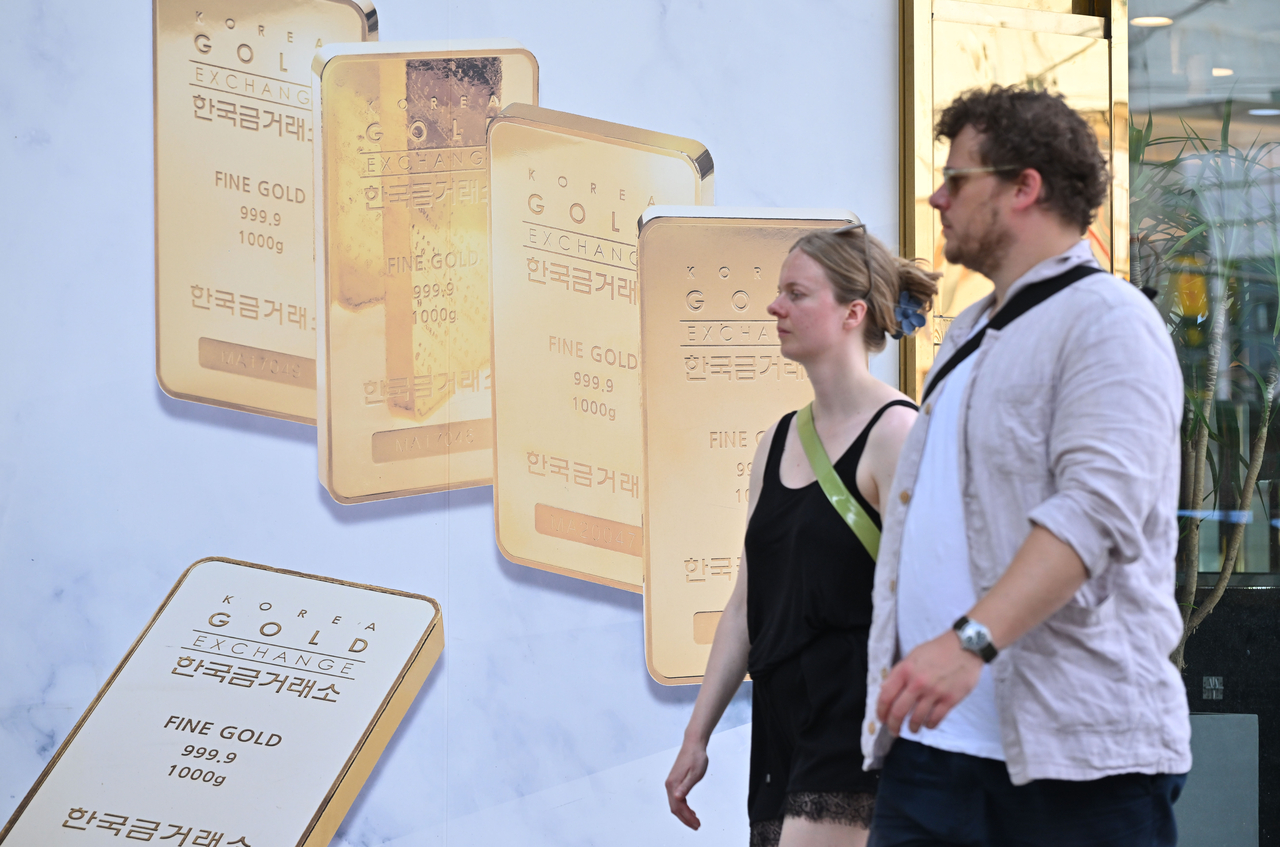
Gold prices could climb above $4,700 or even test the $5,000 mark by year-end if the Federal Reserve holds interest rates despite inflation pressure or if a US-Iran truce normalizes traffic through the Strait of Hormuz, according to a new forecast.
Samsung Futures said in a report titled "Recent Gold Price Trends and Outlook" that it expects gold to trade in a range of $4,100 to $4,750 through year-end, with a closing price of around $4,550. The brokerage left open the possibility of a significant departure from that base case depending on Fed policy decisions and the trajectory of global oil prices.
Samsung Futures said gold could surpass $4,700 if the Fed opts to hold rates in September despite ongoing inflation pressure.
Markets are currently pricing in a 72.5 percent probability of a 0.25 percentage point rate hike at the September FOMC meeting, with a 27.6 percent chance of a hold, the report noted. August nonfarm payrolls came in at 162,000, well above market expectations, and the producer price index rose 5.4 percent year-on-year, making it difficult to dismiss inflationary pressures.
Samsung Futures said the political burden of midterm elections in November makes it hard to predict the rate path with certainty. If the Fed were to hold rates in that environment, markets would likely read the move as a signal beyond simple monetary easing — raising concerns that the central bank is prioritizing other objectives over taming inflation and undermining confidence in its commitment to price stability.
In that scenario, an unusual dynamic could emerge in which US government bond yields rise alongside gold prices. Investors worried that inflation will not be brought under control may sell long-term bonds, pushing yields higher, while simultaneously buying gold to hedge against prolonged inflation and a weakening dollar.
Samsung Futures identified "bond market instability stemming from a loss of confidence in dollar assets and the Fed" as one of two key forces that will drive gold prices for the rest of the year. Such instability could boost demand for gold as an alternative to dollars and Treasuries, the brokerage said.
The scenario in which gold tests $5,000 hinges on a US-Iran truce and the effective reopening of the Strait of Hormuz. Geopolitical tensions and conflict are typically seen as factors that lift gold prices as a safe-haven asset.
This year's Middle East conflict, however, has produced the opposite dynamic. What matters more for gold than the war itself is how the conflict moves oil prices, inflation and interest rates.
When oil prices surge, energy-driven inflation pressure intensifies and expectations grow that the Fed will keep rates higher for longer or raise them further — reducing the investment appeal of gold, which pays no interest.
In practice, as reduced traffic through the Strait of Hormuz was compounded by concerns over crude export disruptions via the Red Sea, Brent crude and West Texas Intermediate both topped $100 a barrel — and gold and silver prices actually fell. Samsung Futures said "the pattern of Middle Eastern conflict dragging gold lower has been repeating itself."
If the current Middle East stalemate persists, oil is unlikely to fall below $90 a barrel, and gold could face renewed pressure each time oil rises, through the channel of inflation and tightening fears, Samsung Futures said.
Conversely, a US-Iran ceasefire and a genuine reopening of the Strait of Hormuz could bring oil back to the $70s. While easing geopolitical tensions would normally weaken safe-haven demand for gold, Samsung Futures argued that in the current environment — where oil prices, inflation and the interest rate path are the dominant drivers of gold — the disinflationary effect of lower oil and the retreat of rate-hike fears would carry more weight.
Lower oil prices would ease inflation pressure and reduce the need for further Fed tightening. As expectations for additional rate hikes fade, the opportunity cost of holding non-yielding gold also declines. Samsung Futures said the "lower oil → easing inflation → retreat of tightening fears" channel would have a greater impact on gold than the "war easing → reduced safe-haven demand" channel.
Central bank buying is also providing a floor for gold prices. According to the World Gold Council, global central banks bought a net 288.9 tonnes of gold in the second quarter of this year, up 62 percent from a year earlier and the largest second-quarter total on record. Central banks were buying gold at record volumes even as the metal posted its biggest quarterly decline since 2013.
China's purchases have been particularly notable. The People's Bank of China added 640,000 troy ounces, or about 20 tonnes, to its gold reserves in July and followed that with another 650,000 troy ounces in August, extending its buying streak to 22 consecutive months. Monthly purchases have been growing — from 160,000 troy ounces in March to 480,000 in June and higher still in recent months. Although Russia has been selling gold and foreign currency to cover fiscal shortfalls, demand from China and other emerging economies has more than offset those sales.
"If the Fed ignores inflation pressure and chooses to hold in September, it could be interpreted as a signal that it has in effect deprioritized its inflation-control mandate," said Ok Ji-hoe, a researcher at Samsung Futures. "In that case, US Treasury yields could spike on concerns about damaged Fed credibility, and gold prices would likely rise above $4,700." She added that "if a US-Iran truce leads to a genuine normalization of the Strait of Hormuz, oil prices could return to the $70s and gold could test $5,000 or above."

th5@heraldcorp.com