Parents do not need to spend tens of millions of won on English-language preschools to give their children meaningful exposure to the language — YouTube can do the job at home, an early-childhood English education expert said Saturday. The key to early English learning, he argued, is not the price tag of the program but whether parents create an environment where children feel comfortable and enjoy the language.
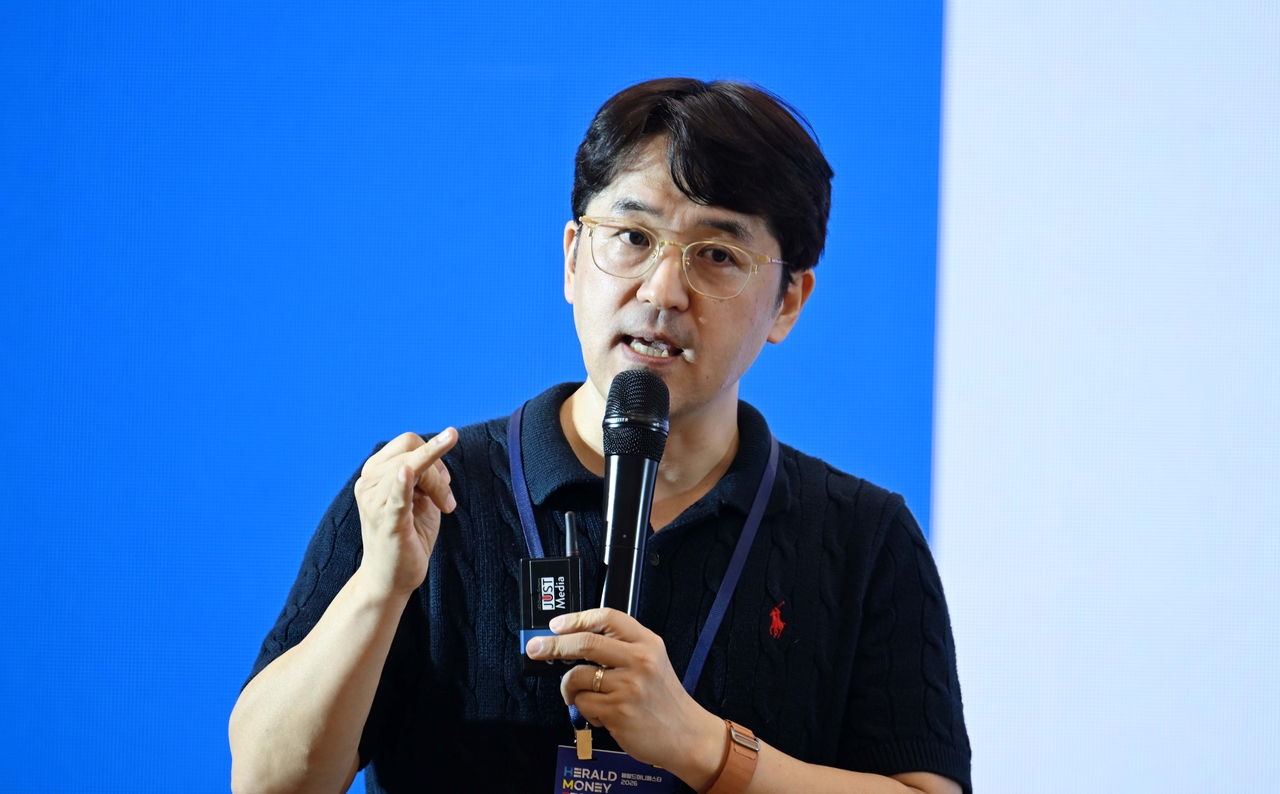
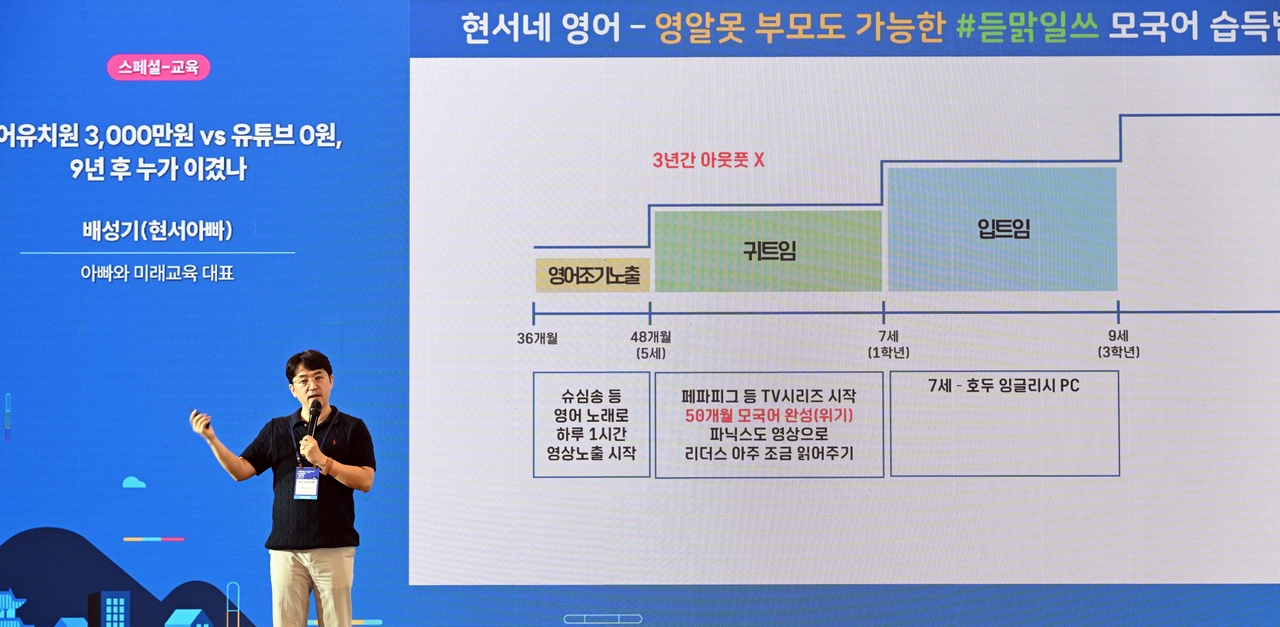
Bae Seong-gi, head of Dad and Future Education, made the remarks at a session titled "English preschool: 30 million won ($22,100) vs. YouTube: 0 won — who won after nine years?" at the Herald Money Festa 2026, held at Dongdaemun Design Plaza in Seoul. "Ask your child, 'How much do you like English?' and have them rate it from one to five," he said. "A score of four or five means the child has a positive attitude toward English. A score of three or below — the cause is the mother."
"In most cases, the first person to introduce English to a child is the mother," he added. "She has likely made the child perceive English as something scary and difficult."
Bae said English preschools work precisely because they immerse children in the language for hours at a time. "The reason parents send their children to English preschools is the expectation of several hours of daily English exposure — and it does work," he said.
However, he said YouTube and similar platforms now make it possible to replicate that environment at home. "Since YouTube became widely available in 2017, parents have been able to use high-quality content at home to create a good English environment," he said.
He cautioned against introducing media too early. "Before 23 months, children should not be exposed to screens — they need to hear a lot of their native language," he said. "Starting English video exposure around 36 months is appropriate."
Throughout the process, Bae said, parents should resist the urge to treat English as a subject to be studied and instead let children encounter it naturally.
"The question is not how to make your child speak English quickly, but how to create an environment at home where the child can make mistakes and still feel happy, confident and bold," he said. "Parents want to accelerate learning. There is a belief that struggling is what builds skill — that difficulty equals progress. That is not true."
"The only way to acquire a language is through comprehensible input in a low-anxiety environment," he said. "A low-anxiety environment means watching fun videos on TV with mom, relaxed and comfortable."
Simply turning on videos is not enough, he stressed. "You cannot just put on a video and walk away," he said. "Parents need to keep observing — what the child likes, what they dislike, what captures their attention."
Bae advised tailoring the content and approach to the child's age. "Year one is the early exposure stage. The ideal window is 26 to 48 months, and the goal at this point is simply to become friends with English," he said. "The core task is learning around 300 high-frequency words — emotions, animals, fruit — over the course of a year."
"Around 36 months, showing song videos for about an hour a day will get a child to roughly 300 words," he said. "Around age four, when children's ears start to open up, there is no need for formal study — just an hour of a TV series a day, or videos related to whatever the child is interested in. Going through that process, a child will pick up around 1,000 words."
"In years two and three, the goal is to get comfortable with story-based content," he said. "The key is videos set in everyday life with plenty of conversational expressions."
"Ultimately, children need to speak. Listening to nursery rhymes alone will not get them into a conversation," he said. "Content like 'Peppa Pig' is full of everyday situations children actually experience — conflicts with friends, for instance. When children see something that happened to them playing out on screen, and hear the English expressions used in that situation, they understand naturally."
"From age seven onward, keep up the hour of English video a day while also stimulating output — reading and speaking," he said. "From around fourth grade in elementary school, it is good to add more structured study alongside that."
"Watching an hour of video a day works out to learning roughly one new word a day," he said. "After three years, a child has had about 1,000 hours of exposure and knows around 1,000 words. I think this is the easiest method in the world."
On writing in English, Bae stressed the importance of native-language ability. "An essay is about expressing your thoughts in an introduction, body and conclusion," he said. "Parents say, 'My child cannot write in English' — but in many cases the child also struggles to write their own thoughts logically in Korean."
"When teaching English, fluency matters more than accuracy," Bae said. "Fluency does not mean speaking well — it means English has become part of you and comes out naturally."

th5@heraldcorp.com
moon@heraldcorp.com