Yu Dong-won, head of global asset allocation at Yuanta Securities Korea
AI cycle to last at least through 2030
Korea's semiconductor weighting should not be cut easily
US, Korea and Taiwan the markets to watch over next 4-5 years
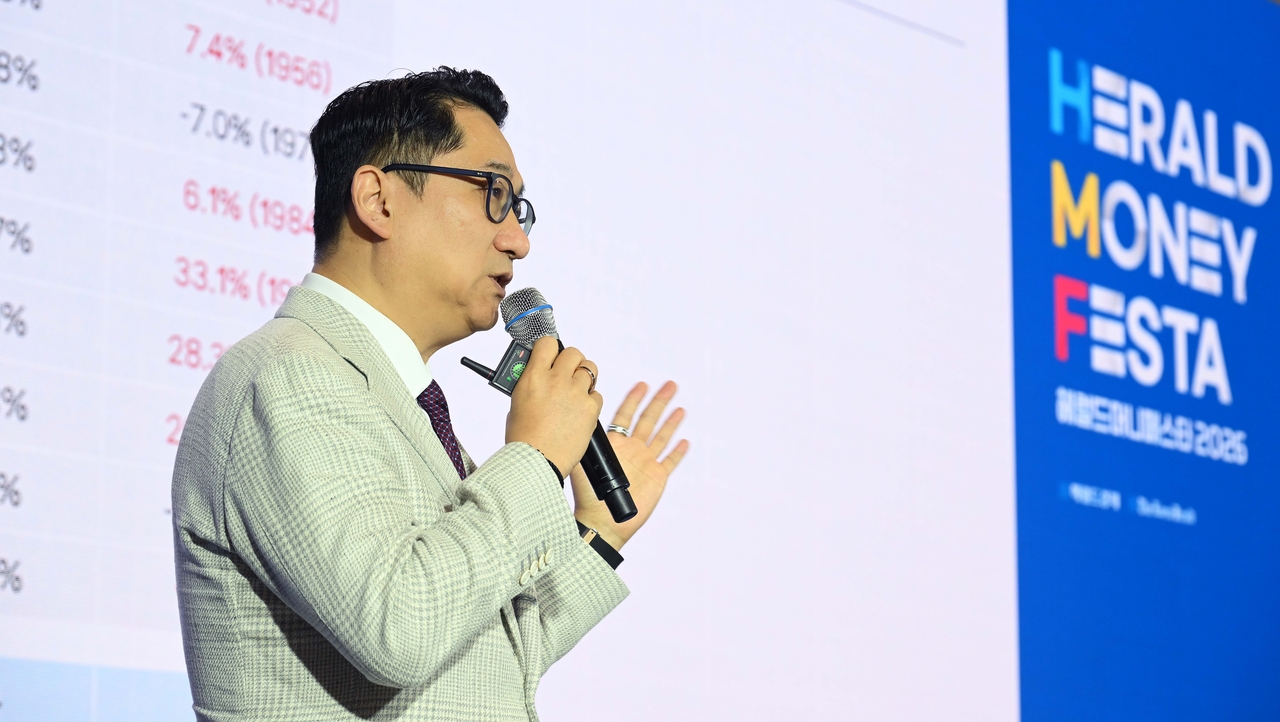
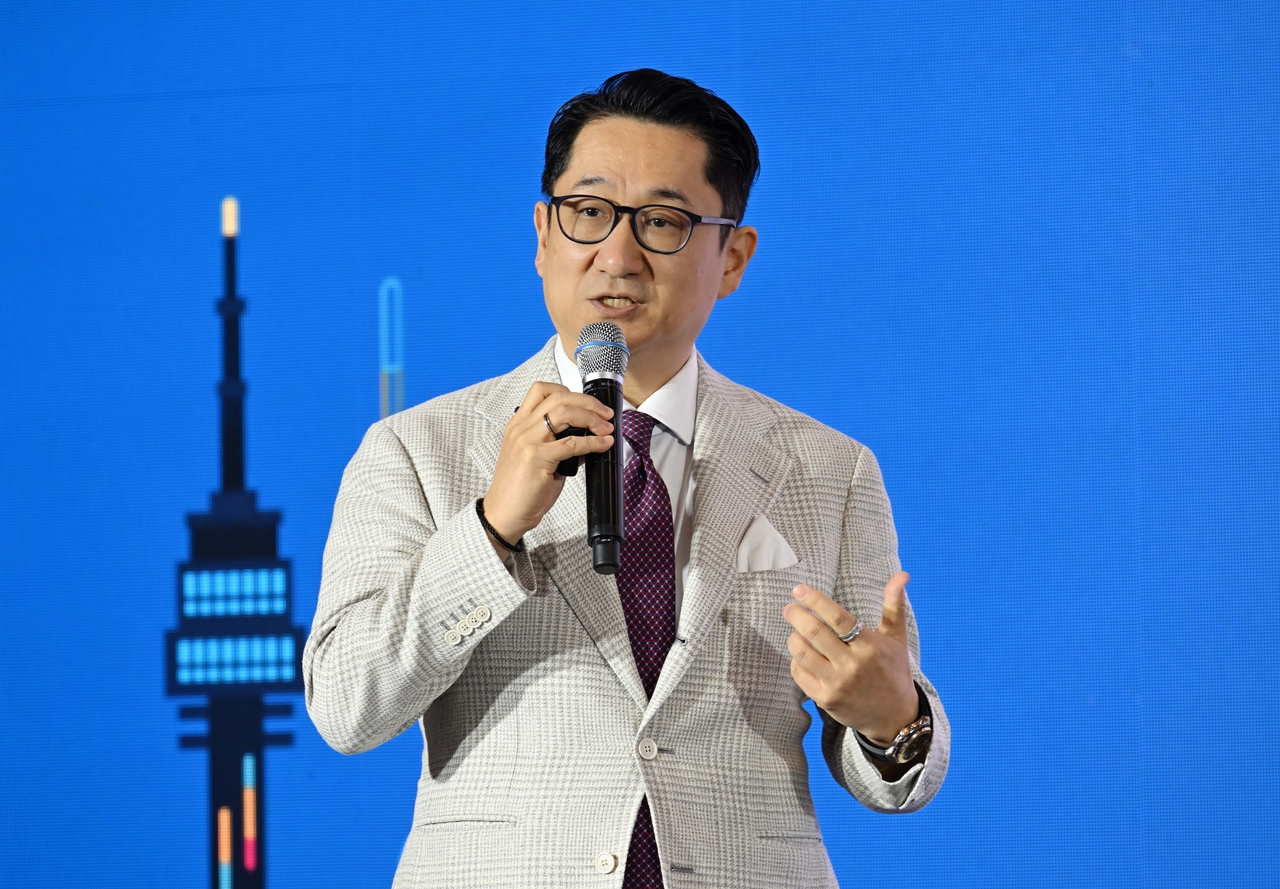
Yu Dong-won, head of global asset allocation at Yuanta Securities Korea, said investors should not sell AI-related stocks — including Samsung Electronics and SK hynix — simply out of concern over a short-term peak. With AI adoption and productivity gains likely to continue at least through 2030, he advised long-term investment focused on the US, Korean and Taiwanese markets over the next four to five years.
Speaking Friday at the Herald Money Festa 2026 at Dongdaemun Design Plaza in Seoul, Yu said during a lecture titled "New Opportunities and Promising Sector Outlook in Global Stock Markets" that selling Samsung Electronics and SK hynix now could leave investors "bitterly regretting" the decision two to three years later. He added that investors should continue holding AI-related positions, as he believes the cycle has yet to reach its peak.
Yu said investors should not cut their semiconductor exposure in the Korean market too aggressively. "Even if you broaden your investment scope beyond semiconductors, you should be thinking about how much less of it to hold — not about abandoning semiconductors altogether and moving into other sectors," he said. "Among Korean industries, semiconductors have the lowest debt ratios, the highest growth potential, the strongest ties to US consumption and the largest export volumes."
Yu also drew a line against bubble theories surrounding AI. "Talk of an AI bubble has been circulating for two years now, but with a new industry it is very hard to judge in real time when the bubble will peak," he said. "Looking back at the internet cycle, if share prices recovered to their previous highs within six to nine months of a decline, it is difficult to say that cycle was over."
According to Yuanta Securities Korea, the NASDAQ rose 1,489 percent during the internet cycle from October 1990 to March 2000. By comparison, the AI cycle's gain since the emergence of ChatGPT stood at 164 percent as of the time the data was compiled. The current AI server adoption rate was estimated at around 14 percent.
"It took about 30 years for the internet to spread globally, but AI is expanding at a far faster pace," Yu said. "I believe the AI cycle will continue at least through 2030."
Yu forecast that over the next two years the impact of AI adoption will begin to show up meaningfully in corporate earnings. He said companies are moving beyond using AI to cut costs and are now generating new revenue streams, meaning productivity gains will translate into profit growth.
On that basis, he identified the US, South Korea and Taiwan as the top global investment destinations. "As AI drives productivity growth above wage growth, investors should raise their equity weighting relative to bonds," Yu said. "The next four to five years are a period to focus squarely on the US, Korea and Taiwan." Yuanta Securities Korea's country portfolio is allocated 75 percent to the US, 13 percent to Korea, 10 percent to Taiwan and 2 percent to China.
Yu named the NASDAQ 100, Kospi and Taiwan's Weighted Index as the benchmark indexes to watch. "If you believe the AI cycle can generate high compounding returns, you should invest time in that cycle rather than trade in and out of it," he said. Among AI-related sectors, he said he is watching memory chips, semiconductor optics and power. For investors who find it difficult to pick individual stocks, he added that S&P 500 and NASDAQ 100 exchange-traded funds are a viable option.
Yu said productivity and fundamentals are the core criteria for long-term investing. "The keyword for global investment is productivity," he said. "You need to find companies that sustain long-term growth while continuously improving productivity."
"Rather than agonizing over when to buy and sell, it is far better to think about how long a company can keep building its future," he added. "The time to sell is when the fundamental story disappears." He said the Korean market's shift in attention from Samsung Electronics to SK hynix was driven by a change in competitiveness in the HBM market.
Yu cautioned, however, that investors should not buy every company simply because it operates in a growth industry. "If you are investing in Korea, you need to look rigorously at corporate debt ratios," he said. "When a company with a low debt ratio invests well, that translates into profit growth and returns for investors."
Yu said the risk of a recession disrupting the global market's upward trend remains low for now. "The most important things investors need to watch going forward are whether inflation stays in the 2 to 3 percent range and whether a recession arrives within the next one to two years," he said. "I do not expect a recession in Korea within the next one to two years, and I believe the probability is even lower for the US."
"If inflation remains stable and a recession does not materialize, this is a time for active equity investment regardless of interest rate levels," he added. "Productivity growth is higher now than at any point in the past, so the question investors should be asking is how to invest for the long term — not how to time their trades."

th5@heraldcorp.com
hajun825@heraldcorp.com