
From Hongcheon River water to fermentation and aging, 4 million bottles a day
Quality checks for foreign matter and volume even at 1,000 bottles a minute
Empty bottles reused 5-7 times, waste heat recovered in eco-friendly process
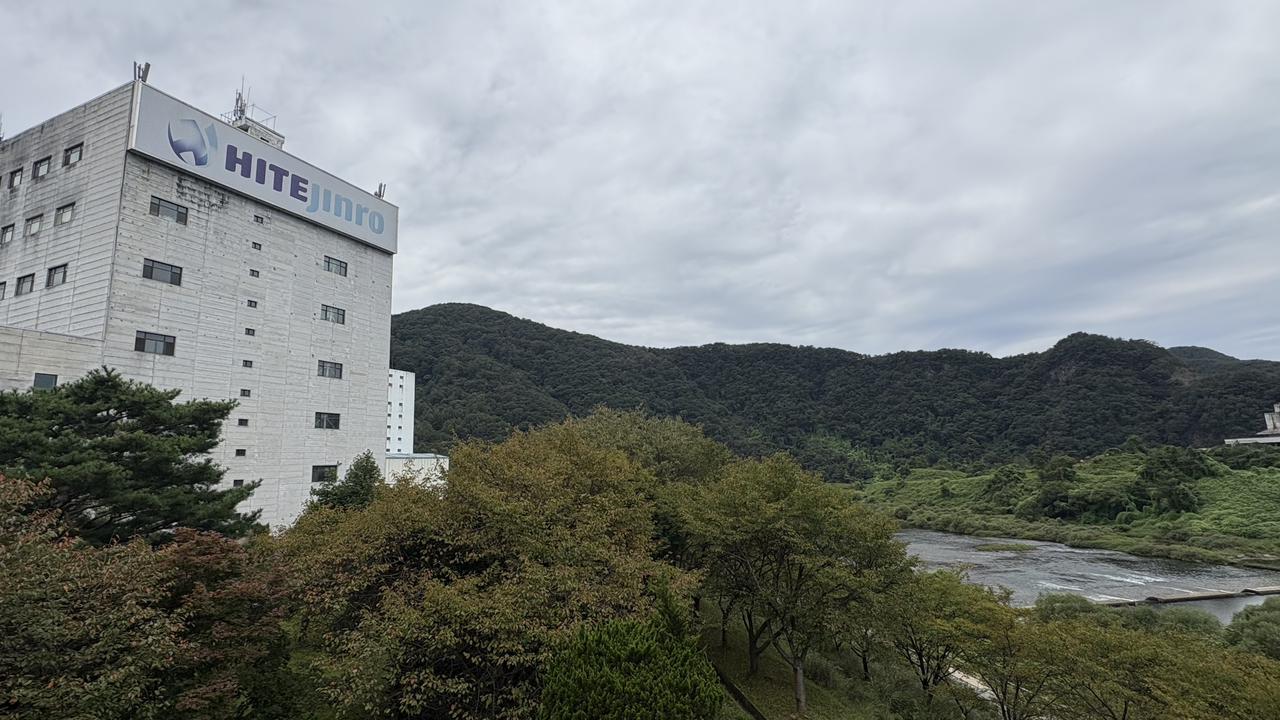
"We draw water that determines the taste of beer from the Hongcheon River, then use it as brewing water after special treatment and filtration processes," said Kim Tae-hwan, head of Hite Jinro's quality control team.
At Hite Jinro's Gangwon Province factory in Hongcheon-gun, Gangwon Province, visited on Sept. 10, a vast river came into view just before entering the plant grounds — the Hongcheon River, the foundation of Terra and Kelly beers. The Gangwon factory, the largest of its kind in the country, draws water from this river to produce an average of 4 million bottles of beer per day. The taste of Terra and Kelly, it turns out, comes from nature itself. From raw material selection to recycling, the process is eco-friendly from start to finish.
The inside of the factory was spotless. Stepping into the mashing room revealed rows of brew kettles and mash tanks lined up side by side. Here, water, malt and hops are mixed to create wort. Malt is boiled with water to extract sugars, then hops are added to enhance aroma and bitterness. The resulting wort moves on to the next stage: filtration.
What stood out in the filtration room was the "double mixing prevention valve," pricey equipment that costs more than 50 million won ($37,400) apiece. The double-locking valve prevents different liquids used in the production process — such as raw materials and washing water — from mixing. Filtration takes place in three stages. The final stage, a micro filter, allows only particles one 2-millionth the width of a human hair to pass through.
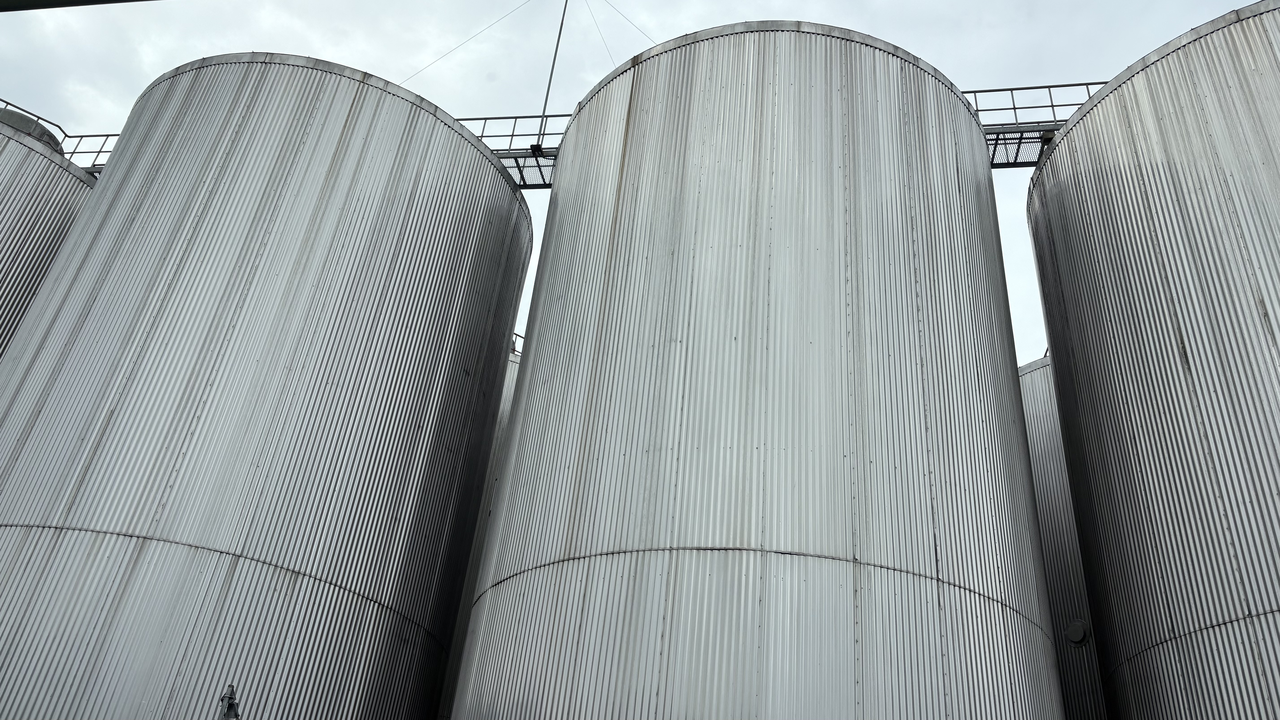
Once filtered, the beer moves to fermentation. Massive fermentation tanks stretched out in endless rows, too large to take in at a glance even when looking up. The Gangwon factory has 108 storage tanks. Each holds 600,000 liters — enough for one person to drink 10 bottles a day for 330 years. Fermentation and storage take at least 20 days, more than five times longer than the typical four-day storage period for European beers. The factory maintains this extended storage period to achieve optimal flavor.
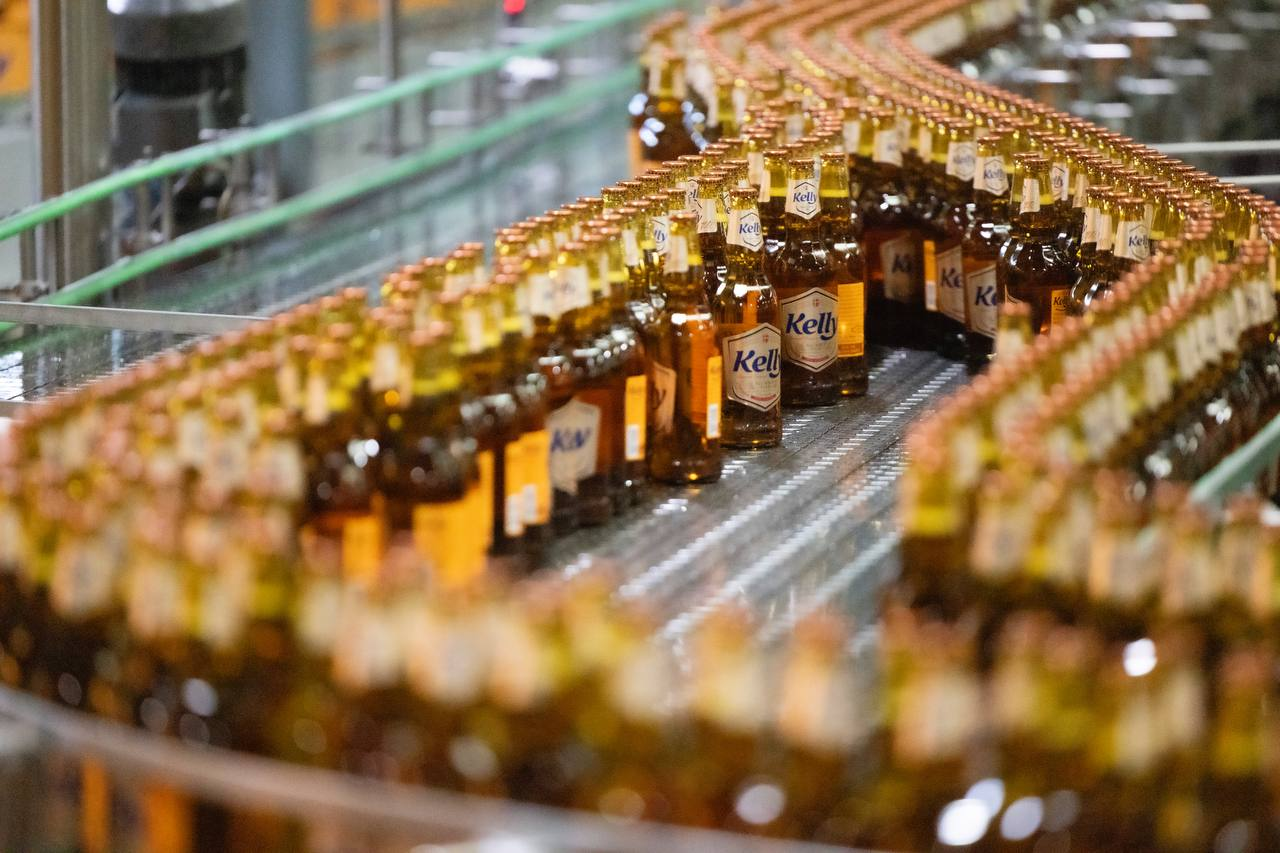
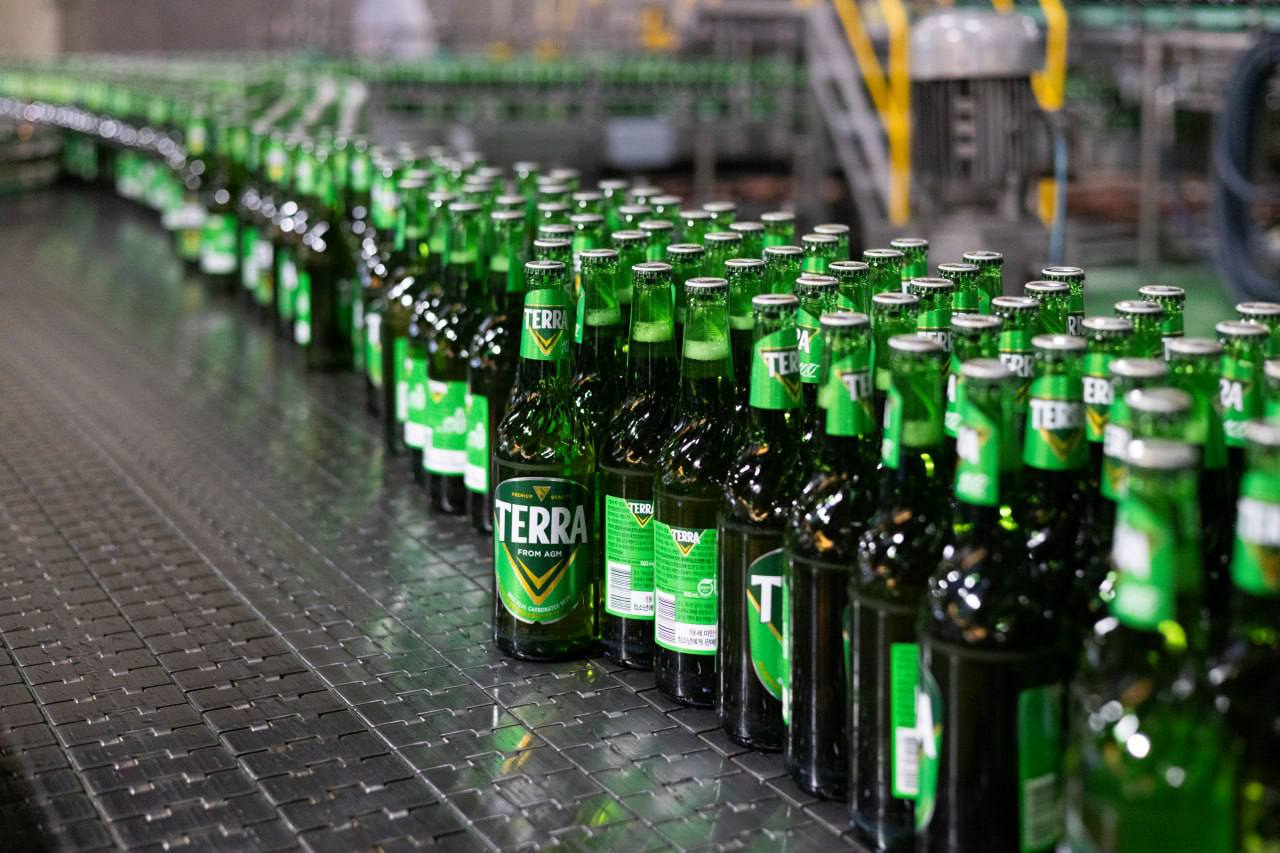
The finished beer is then bottled in the packaging building. Green Terra and brown Kelly bottles moved along the conveyor belt without pause, filling the space with the clinking sound of glass bottles knocking together.
Bottling speed reaches about 1,000 bottles per minute, too fast to track with the eye. Despite the pace, quality checks remain rigorous. Inspection machines scan bottles in real time as they pass along the conveyor belt, catching foreign matter or insufficient volume. The defect rate stands at just four bottles per 1 million.
The packaging building handles not only bottling but also the process of preparing empty bottles for reuse. Collected empty bottles are first sorted to prevent mixing with competitors' products. Damaged or unusable bottles are filtered out. The remaining bottles undergo about 35 minutes of washing and sterilization in a high-temperature, high-pressure special washer, which removes labels and foreign substances before the bottles return to the production line. Depending on the bottle, they are reused about five to seven times.
Bottles are not the only thing recycled — energy generated during manufacturing is reused as well. The Gangwon factory is the first in the country to adopt a "heat recovery system," an energy-saving approach that captures and reuses heat energy that would otherwise be wasted during production.
Workers were hard to find on the factory floor, as most production processes have been automated. Rather than having staff stationed throughout the production line, the entire process is monitored around the clock from a control room. During the visit, three employees in the control room watched monitors, tracking the movement of the production line.
"Beer is most affected by outside light and temperature," said Kim, the quality control team head. "Since the taste can vary depending on distribution and storage conditions, we consider quality control to be the most important factor."
siuu@heraldcorp.com



