
- Holds Energy Materials Analysis Conference with National NanoFab Center
Experts from Korean industry, academia and research institutes came together to share advanced analysis technologies and research know-how for examining materials down to the nanometer and atomic scale. These materials determine the performance of next-generation solar cells, secondary batteries and hydrogen fuel cells.
The Korea Institute of Energy Research said it held the 2026 Second Energy Materials Analysis Conference together with the National NanoFab Center on Thursday and Friday.
The event was designed to share cutting-edge analysis technologies and research know-how in the field of energy materials. It also aimed to strengthen researchers' capabilities in using advanced research equipment and interpreting data. The conference was also intended to promote joint use of national research facilities and equipment and expand cooperation among industry, academia and research institutes.
Researchers and electron microscopy analysis experts from universities, research institutes and companies took part, including those from KAIST, Pusan National University and the Korea Institute of Energy Technology.
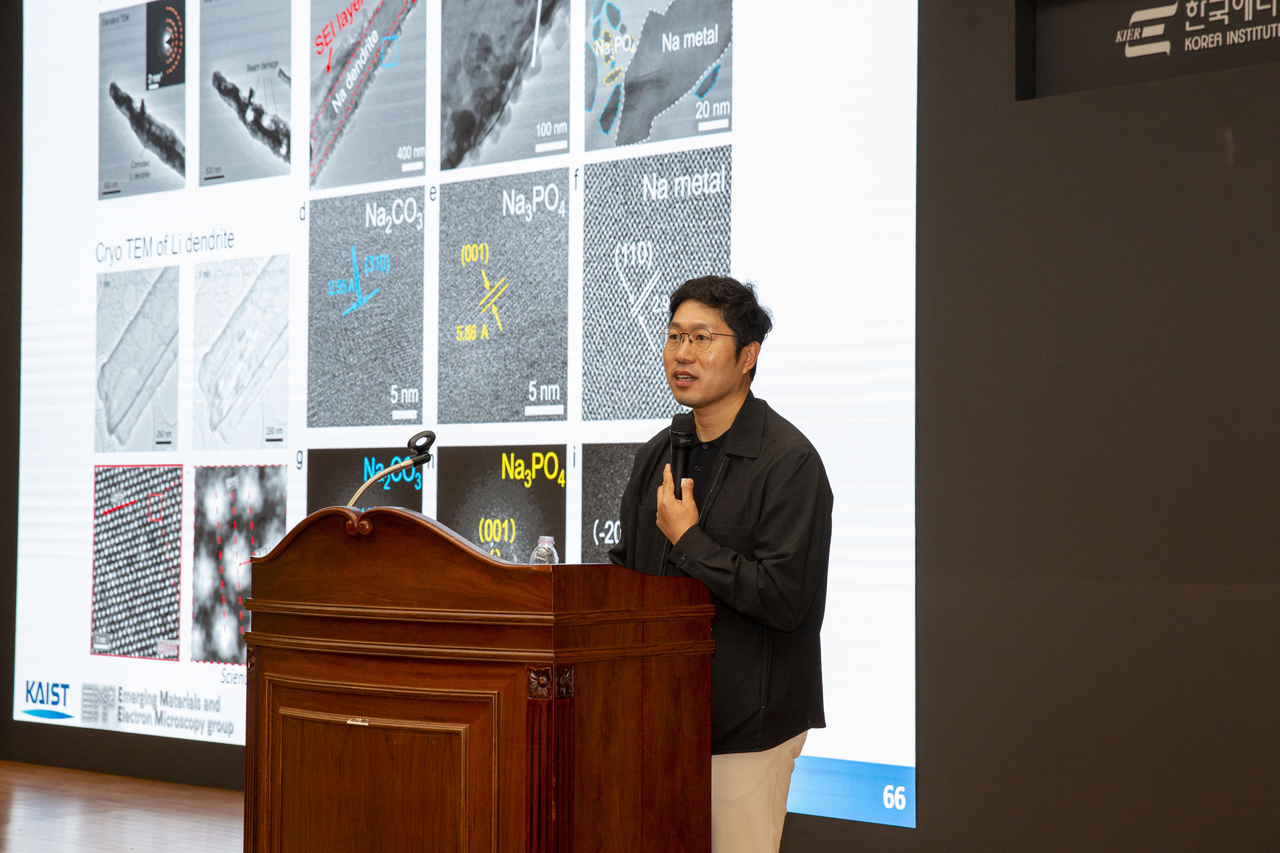
A seminar featuring invited experts was held Thursday at the Korea Institute of Energy Research's headquarters in Daejeon. Park Yun-chang, a center director at the National NanoFab Center, KAIST Professor Yang Yong-su and Pusan National University Professor Koo Gun-mo presented advanced transmission electron microscopy, or TEM, analysis techniques. They also shared the latest research cases used in next-generation energy material research.
TEM is an advanced analysis instrument that passes an electron beam through a sample to observe its internal structure and composition at the nanometer and atomic scale. It plays a key role in identifying the interfaces, defects and chemical states of materials used in next-generation solar cells, secondary batteries and hydrogen fuel cells.

On Friday, hands-on training using actual advanced analysis equipment took place at the National NanoFab Center. Participants practiced basic TEM techniques and learned 4D-STEM, or four-dimensional scanning transmission electron microscopy, analysis firsthand.
4D-STEM is a technique that collects two-dimensional electron diffraction patterns from each point on a sample and reconstructs them into four-dimensional data, allowing precise analysis of a material's structure and deformation.
"In energy material research, advanced analysis is an important starting point that scientifically identifies how a material performs and why it degrades, pointing the way for future research," said An Byung-sun, head of the Test and Analysis Center at the Korea Institute of Energy Research. "As energy technology advances, the ability to precisely measure small changes at the nanometer and atomic scale and interpret the resulting data will determine research competitiveness."
"I hope this becomes an opportunity to further expand cooperation among industry, academia and research institutes, centered on the advanced research facilities and equipment our institutions hold," said Park Yun-chang, a center director at the National NanoFab Center.
Building on the conference, the Korea Institute of Energy Research plans to expand the spread of advanced analysis technologies specialized for energy materials. It also aims to broaden joint use of national research facilities and equipment.
nbgkoo@heraldcorp.com




