
KIGAM signs MOUs with four academic societies to expand data-driven convergence research
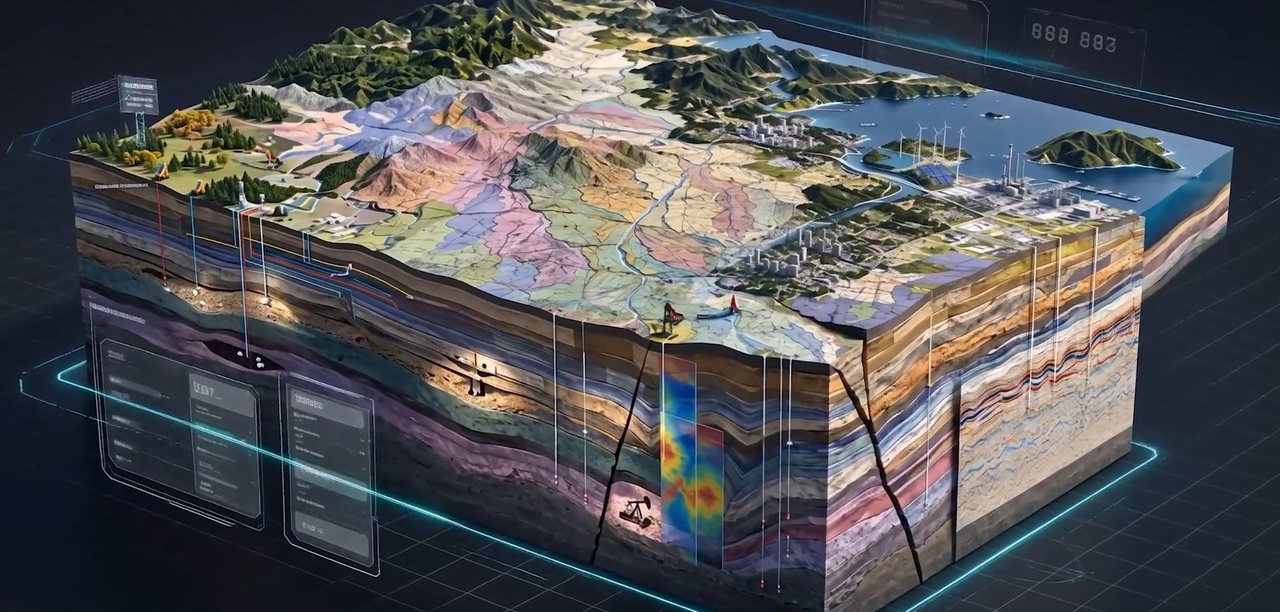
More than a century's worth of geological survey, resource exploration and mineral analysis data is set to be systematically connected for use in AI research. A coordinated effort is now underway to share and standardize geoscience data scattered across individual researchers and academic institutions, making it available for applications ranging from critical mineral exploration to geological hazard analysis.
The Korea Institute of Geoscience and Mineral Resources (KIGAM) announced Friday that it signed memorandums of understanding with four geoscience academic societies at the 2026 Fall Joint Conference on Geosciences, held Thursday at the Yeosu Convention Center, to build a research data sharing, utilization and open research ecosystem.
The four signatories are the Geological Society of Korea, the Korean Society of Mineral and Energy Resources Engineers, the Korean Society of Economic and Environmental Geology, and the Korean Association of Geoscience.
In the geoscience and mineral resources field, long-accumulated research data — including geological maps, field survey records, drill cores and mineral analysis results — are core assets. The data has been dispersed across research institutions and individual researchers, however, limiting its reuse in other studies and its application to AI analysis.
The MOUs focus on interconnecting this data and improving the verification and reproducibility of research outcomes.
KIGAM and the four academic societies will jointly expand the deposit and registration of source research data linked to academic papers, and pursue data standardization and the development of a citation framework.
In particular, they plan to use Digital Object Identifiers (DOIs) and International Geo Sample Numbers (IGSNs) to systematically manage the provenance of research data and geological samples, and to lay the groundwork for linking data across different institutions.
With the Geological Society of Korea, KIGAM will share foundational geological data covering geological maps, stratigraphy and paleontology. With the Korean Society of Mineral and Energy Resources Engineers, KIGAM will strengthen the industrial application of data related to resource exploration, drill cores and critical mineral supply chains.
With the Korean Society of Economic and Environmental Geology, KIGAM will expand data use in geological hazard and geoinformatics fields, while with the Korean Association of Geoscience it will build a broad data cooperation framework spanning the geosciences.
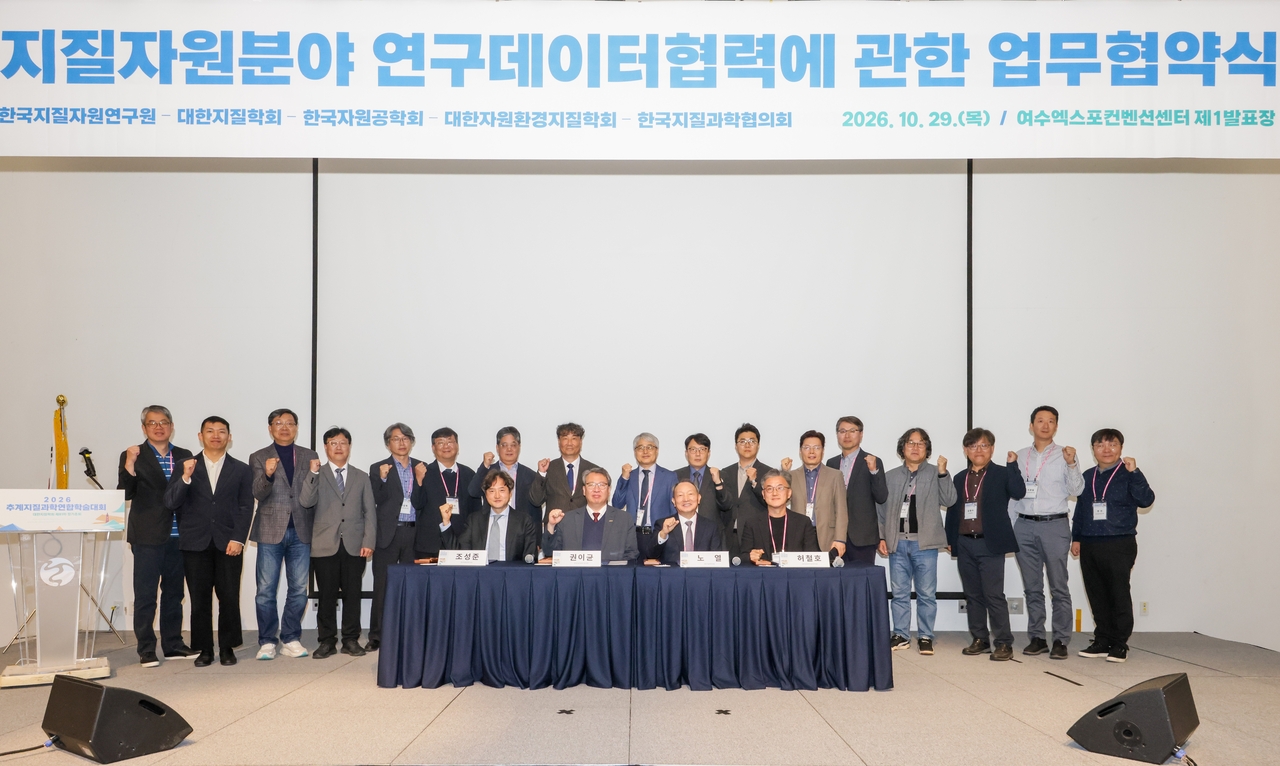
The collaboration also carries significance for its alignment with the Act on the Management and Promotion of Utilization of National Research Data, enacted last June, which calls for more systematic management and open access to research data.
KIGAM has operated the Geoscience Data Repository (GDR) and the GeoBigData Open Platform, drawing on more than a century of accumulated research.
More recently, the institute has been working to build "AI-Ready" datasets — refining and structuring existing data so that AI systems can use it directly for analysis.
With the MOUs now linking source data from academic papers to these platforms, KIGAM expects the arrangement to support not only the verification of research outcomes but also convergence research combining data from different fields, and the development of AI-based geoscience analysis technology.
Alongside this, KIGAM signed separate MOUs with Korea National Oil Corporation and 18 domestic universities in the geology and mineral resources fields, agreeing to pursue joint use of exploration data and research equipment, training of specialist personnel, and joint research on domestic continental shelves.
"Research data is a core asset for scientific and technological advancement and an important foundation for generating new research outcomes," KIGAM President Kwon Yi-kyun said. "We will connect the geoscience data accumulated over a century with the research capabilities of the academic community to build an open research data ecosystem suited to the AI era."
nbgkoo@heraldcorp.com




