Partnership targets clinical decisions, patient experience
Working group to form by end of month
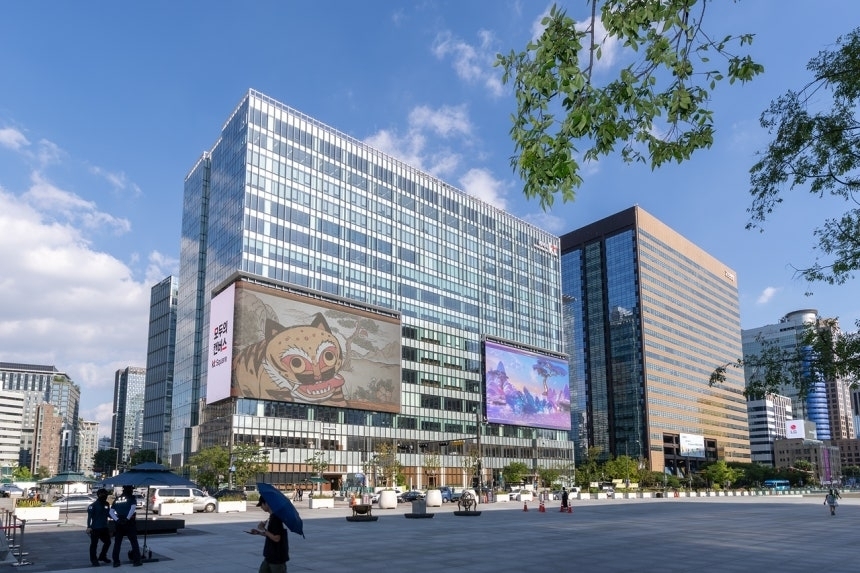
KT Corp said Thursday that it will partner with Asan Medical Center to build an artificial intelligence-powered hospital and jointly develop AI-based medical services for clinical use.
KT signed a memorandum of understanding with Asan Medical Center that day at KT's Gwanghwamun Building West in Jongno-gu, Seoul, to cooperate on AI transformation in the medical field.
The two organizations will work together to build an "AI hospital" in line with the government's AI-based primary care strategy. Once realized, the AI hospital would allow AI to assist with reading medical images and automatically collecting and analyzing health records scattered across multiple systems when patients visit Asan Medical Center.
This would enable medical staff to make faster, more accurate diagnoses, while patients would experience shorter wait times and better quality of care.
The two organizations aim to grow Asan Medical Center into a leading hub for testing and validating next-generation medical AI technologies. They will pursue the identification and application of AI transformation models in the medical field, including a next-generation hospital information system.
They also plan to cooperate on other challenges in the medical field, such as AI transformation-based clinical decision support and improving patient experience. KT will support the development of service models and technology verification using its core infrastructure and AI transformation platform capabilities. It will also take part in planning and developing AI medical services for clinical application.

Asan Medical Center will identify needs from clinical, treatment and research settings, and provide clinical advice and effectiveness evaluations during the development, testing and validation of AI services. The two organizations also plan to form and operate a working group starting late this month to continue pursuing detailed tasks. They will jointly explore ways to apply and expand medical AI technology in clinical settings.
"The future competitiveness of medicine depends on how safely and effectively data and AI can be integrated into actual clinical settings," said Park Seung-il, president of Asan Medical Center. "Through our cooperation with KT, Asan Medical Center will identify and apply AI medical services that can be validated in clinical settings, leading medical innovation that improves patient safety and treatment outcomes."
"KT plans to bring together core technologies and capabilities with Asan Medical Center to build an AI hospital, and to jointly develop AI medical services that can be applied in clinical settings," said Kim Bong-kyun, executive vice president and head of KT's Enterprise division. "Based on our AI transformation platform capabilities spanning AI, cloud and data, we will accelerate AI transformation innovation in medical settings and lead the future of medical AI."
Meanwhile, KT signed a separate MOU with Yonsei University Health System last month to strengthen the use of medical data. The two organizations agreed to expand the foundation for medical data standardization, upgrade data utilization infrastructure, research ways to apply AI-based medical services, and build a mid- to long-term cooperation framework to promote the use of medical data.
woo@heraldcorp.com