- K-STAR's five universities sign MOU with Paris-Saclay University for advanced science and technology cooperation
- Deal covers research internships and joint work by young scholars in AI, quantum tech, advanced biotech and new materials
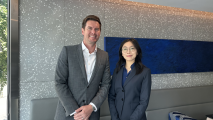
![KAIST Vice President for External Affairs Jeong Jae-min and Paris-Saclay University President Camille Galap pose for a photo after signing the MOU.[Courtesy of KAIST]](https://wimg.heraldcorp.com/news/cms/2026/09/09/news-p.v1.20260909.d727832dfbd7476b8b26bb71882f997b_P1.jpg)
Five of South Korea's science and technology-focused universities — KAIST, the Gwangju Institute of Science and Technology, the Daegu Gyeongbuk Institute of Science and Technology, the Ulsan National Institute of Science and Technology and Pohang University of Science and Technology — are launching joint research with a leading European research university. The partnership focuses on AI and quantum technology.
KAIST said it signed a memorandum of understanding with Paris-Saclay University in France on Monday (local time) to strengthen research cooperation. The university acted on behalf of K-STAR, an alliance of Korea's science and technology-focused universities.
K-STAR brings together the research capabilities and global networks of KAIST, GIST, DGIST, UNIST and POSTECH to jointly pursue international cooperation.
The agreement was arranged around President Lee Jae Myung's state visit to France. It follows up on discussions held at the ninth Korea-France Joint Committee on Science and Technology in Seoul in April. Those discussions explored ways to expand science, technology and talent exchanges between K-STAR and French universities.
Paris-Saclay University is one of France's leading research-focused institutions. It anchors a large research and education ecosystem that includes numerous universities and grandes ecoles as well as major research bodies such as the National Center for Scientific Research and the Alternative Energies and Atomic Energy Commission.
The university is recognized for strong research competitiveness not only in basic sciences such as mathematics and physics but also in AI, quantum technology, biotech and engineering.
The core aim of the partnership is to build a research ecosystem that goes beyond simple student exchanges and leads to actual joint research.
The two sides will run a research internship program that places undergraduate, master's and doctoral students directly in each other's laboratories. They will also expand exchanges between postdoctoral researchers and early-career faculty, laying the groundwork for next-generation researchers to carry out joint projects.
The joint research will focus on future core technology fields including AI, quantum technology, advanced biotech and new materials. The two universities also plan to jointly use their research infrastructure and hold regular workshops and symposiums to continually identify new joint research topics.
Going forward, the two sides will flesh out research internship and researcher exchange programs open to researchers and students from both institutions. They will also match research teams capable of collaborating, with the goal of turning those connections into actual joint research projects.
The partnership is also part of Global Connect, KAIST's global cooperation strategy. Rather than pursuing cooperation with overseas universities individually, the initiative aims to pool the research strengths of Korea's science and technology-focused universities to expand a global research network.
"Global cooperation should move beyond simple exchanges toward connecting each other's strengths to create new knowledge and talent together," said KAIST President Bae Chung-sik. "We will link the research capabilities of Paris-Saclay University and K-STAR to produce new research achievements in future core fields such as AI, quantum technology and biotech."
Paris-Saclay University President Camille Galap said, "K-STAR and Paris-Saclay University both have broad research capabilities spanning basic science to advanced technology, so the potential for cooperation is significant. We hope students and researchers from both countries will actively exchange with each other and create new scientific achievements together through joint research."
"This agreement is a starting point that connects the cooperation between Korean and French universities discussed at the ninth Korea-France Joint Committee on Science and Technology in April to actual research work," said KAIST Vice President for External Affairs Jeong Jae-min. "We will support students and researchers as they move between each other's laboratories to produce tangible results through joint research, papers and shared use of research infrastructure."
nbgkoo@heraldcorp.com