Reform maps eligible businesses to 727 subcategories, splitting similar industries
Theater groups included, dance troupes excluded; Korea Federation of SMEs flags equity concerns
Stricter family succession rules paired with expanded M&A support; Kibo launches matching system
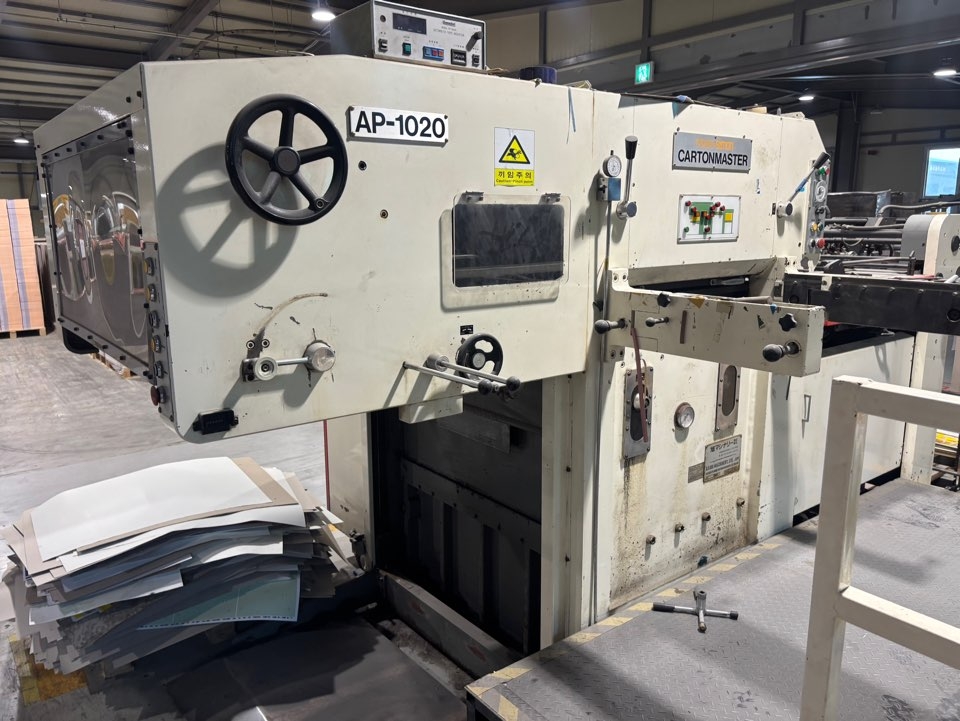
Person A has run a magazine publishing company for 25 years and plans to hand it down to his grown son, who joined the firm as an employee four years ago after graduating from university. The family had hoped to use the business succession deduction to ease the tax burden. Under the government's proposed tax reform, however, A's company does not qualify — book publishers are recognized as eligible family businesses, but magazine publishers are not.
Person B studied dance at university, following in the footsteps of her mother, who runs a dance troupe. B plans to eventually take over the organization. But her mother's dance troupe is also excluded from the deduction. Theater groups qualify under the proposed reform; dance and other performing arts groups do not.
Neither case is real. They are illustrative scenarios, but they highlight a consequential divide: if the government's tax reform bill — submitted to the National Assembly in September — passes as written, whether a company or organization falls inside or outside the eligible list could mean a significant difference in the inheritance tax it faces.
727 subcategories create winners and losers among similar industries
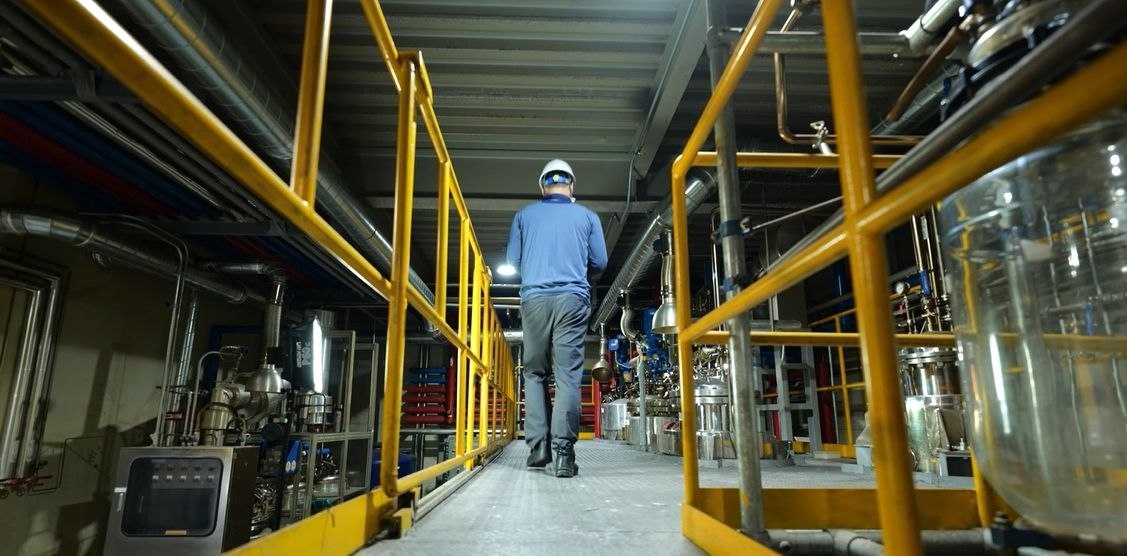
According to the small and medium-sized enterprise industry, the proposed reform would make building-equipment installation contractors eligible for the family business succession deduction while excluding electrical and telecommunications contractors. Specialty contractors in site preparation and structure construction are also left out. Though all fall under the same broad category of specialty trade contracting, eligibility varies by subcategory.
Publishing follows a similar pattern. Book publishers — including textbooks and comics — qualify, while newspaper, magazine and periodical publishers do not. In broadcasting, cable, satellite and other non-terrestrial operators are included, while terrestrial broadcasters are excluded. These distinctions arise because the government has decided to move away from broad industry classifications and instead define eligible businesses using the most granular subcategory level of the Korea Standard Industrial Classification.
The partial amendment to the Inheritance Tax and Gift Tax Act that the government submitted to the National Assembly in September reorganizes eligible business types into 727 subcategories under that classification system. Where the existing regime granted deductions based on broad upper-level categories, the revised approach determines eligibility at the finest subcategory level.
As a result, two companies in the same broad category can end up on opposite sides of the eligibility line simply because their subcategories differ. That is why theater groups (R90121) and dance and music groups (R90122) are treated differently, as are building-equipment installation contractors (F422) and electrical and telecommunications contractors (F423).
The government has said it intends to concentrate support on companies with specialized technology and management expertise. The stated aim is to prevent businesses from using the deduction primarily to avoid inheritance taxes and to realign the system with its original purpose. Supermarkets, bus and taxi operators, parking lot operators, warehouse operators, hospitals and pharmacies are also among the businesses the government is considering removing from the eligible list.
The small and medium-sized enterprise sector, however, argues that accumulated technology and know-how cannot be judged by industry classification alone. In practice, companies said, long-standing client relationships, construction experience, skilled workers and brand value are all important management assets — and drawing a uniform line across them can produce unreasonable outcomes.
The Korea Federation of SMEs submitted a written opinion to the government raising these concerns. "Even among similar businesses within the same broad category, eligibility is divided without clear criteria, creating equity problems between industries," the federation said.
The situation is more complicated for small and medium-sized enterprises that operate in both manufacturing and construction. The glass and window industry is a prime example: a manufacturer producing high-performance glass qualifies for the deduction, but a contractor that installs glass in buildings does not. For companies that handle everything from glass production and processing to installation under one roof, claiming the deduction becomes difficult.
The scope of the deduction also changes for companies operating across multiple industries. Under the current system, a company running both an eligible primary business and an ineligible secondary business can apply the deduction to all business-use assets if it meets certain conditions. The proposed reform would limit the deduction to the portion of assets attributable to the eligible primary business, calculated on the basis of sales and similar metrics.
The reform bill is currently under review by the National Assembly's Strategy and Finance Committee. If it passes as proposed, the new rules would apply to inheritances commencing on or after July 1, 2027.
Government shifts focus from family succession to M&A-based business transfers
The government's decision to tighten family succession requirements reflects a broader view that passing businesses down to children has reinforced the intergenerational transfer of wealth. As an alternative, the government is orienting its policy around mergers and acquisitions — transferring businesses to employees or third parties rather than family members.
The Ministry of SMEs and Startups announced a plan last December to build the institutional foundation for M&A-based succession of small and medium-sized enterprises and is pursuing special legislation to support it. The core aim is to give companies without heirs, or whose children do not want to take over, a path to transferring the business to a new owner rather than shutting down. According to the ministry, the share of manufacturing SME CEOs aged 60 or older rose from 14.1 percent in 2012 to 44.8 percent in 2024. With more companies unable to find successors as their owners age, the government has concluded that family succession alone cannot sustain the small business sector.
Korea Technology Finance Corporation, known as Kibo, has also stepped in. In August, Kibo launched a business succession M&A matching system to connect companies looking to sell with those looking to buy. The system identifies small and medium-sized enterprises seeking succession, links them with professional intermediaries and supports the transaction process. Kibo also provides acquisition financing guarantees and technology protection support.
A business succession consulting program is also in operation. This year, the goal is to support around 140 companies — 100 through basic consulting and 40 through comprehensive consulting. Basic consulting targets companies that want to sell but have not yet found a buyer, while comprehensive consulting assists companies that have a prospective buyer with valuation, due diligence and contract work.
The government also plans to introduce new tax incentives to encourage third-party business transfers. Under the proposal, a majority shareholder aged 60 or older who has run an eligible small or medium-sized enterprise for at least 20 years would receive a 20 percent reduction in capital gains tax when transferring the business to a qualified third party. The acquiring company would also receive a 10 percent reduction in income and corporate taxes for five years. The government is pursuing a 2028 start date for these incentives.
hong@heraldcorp.com