
Incheon City Council's education committee questions budget priorities in supplementary spending plan; asbestos removal underfunded while unvetted outdoor learning site earns hundreds of millions of won
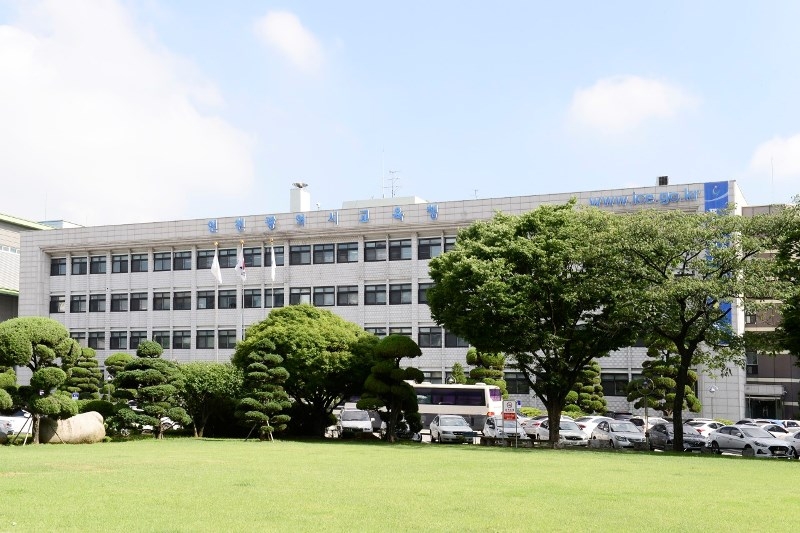
The Incheon Metropolitan Office of Education has drawn sharp criticism from city council members over its 94.5 billion won ($69.7 million) supplementary budget proposal, with lawmakers saying the office is prioritizing the superintendent's campaign pledges and legacy projects over more pressing needs.
Critics pointed to a particularly glaring imbalance: while funding for urgent areas such as student safety and teacher protection remains thin, hundreds of millions of won have been earmarked upfront for an outdoor learning facility at the Nanjeong Peace Education Center — a project whose plans have yet to be finalized.
The Incheon Metropolitan Council's education committee recently convened its second session of the 313th extraordinary session to review the Incheon Metropolitan Office of Education's second supplementary budget for 2026.
Following its review, the committee cut 1.14 billion won from nine budget items — including education policy promotion — and added 644.37 million won to 10 items, among them improvements and expansion of school cafeteria facilities. The revised supplementary budget of 94.46 billion won was passed as amended.
The outdoor learning facility project at the Incheon Nanjeong Peace Education Center emerged as a central point of contention.
The education office had allocated 568.65 million won for land acquisition for the outdoor learning site and 300 million won for a research contract covering preliminary surveys and educational space planning.
The core problem, lawmakers said, was that the land acquisition cost had been included in the supplementary budget before any research contract had been conducted to determine how the space would actually be used or configured.
The education committee said the sequencing appeared to be reversed compared with standard administrative procedure, which calls for a thorough review of a project's necessity, feasibility, and appropriate land and space use before any site is secured.
Education Committee Chair Jeong Jong-hyeok raised the issue during the review. "It is unusual to include land acquisition costs in a second supplementary budget," he said. "Normally, a research contract comes first and then plans are drawn up — you don't rush to buy land."
The education office cited the need for an outdoor learning space that would keep students safe and sheltered from the weather.
Jeong pushed back. "The education office always says it is acting for students, yet it makes sure to fund legacy projects and the superintendent's campaign pledges," he said. "It feels like students are being used as hostages."
He went on to say the office should instead secure funding that genuinely benefits students or improves teacher welfare, adding, "The education office needs to ask itself who it actually exists to serve."
Concerns about the office's budget priorities extended beyond the Nanjeong Peace Education Center project.
Education Committee Vice Chair Kang Jeong-seon raised the issue of asbestos in Incheon schools.
Asbestos remains in 72 schools across the city, and fully removing it would cost more than 15.5 billion won — yet the supplementary budget allocates only 1.1 billion won for the work.
The committee said the education office's budgeting philosophy needed to be reexamined, particularly regarding whether asbestos removal — which directly affects the safety of students and staff on school grounds — should take precedence over creating new educational spaces.
"Can any budget item take priority over children's safety?" Kang said. "Funding to replace asbestos in schools must be secured first."
Lawmakers also said stable funding for programs protecting teachers' educational activities needed to be secured.
Education committee member Jeong Chae-hun raised questions about the teacher protection mutual aid program, noting that while coverage limits had been expanded, it was unclear whether support could be sustained if an accumulation of incidents drained the reserve fund.
He said the office should draw up a plan to ensure a stable, long-term funding base for teacher protection.
The committee's broader message was that student safety and teacher protection represent the fundamental infrastructure of education, and that budgets should prioritize areas with immediate, tangible impact on school communities over one-off or high-visibility projects.
gilbert@heraldcorp.com




