Spend-based carbon estimates create structural contradiction for fast-growing Korean biotech firms, Walker says
Localized logistics network cuts $3 million in shipping costs, proving sustainability and efficiency can coexist
Songdo hub set for 2027 operation to recycle 60–80% of process water; PFAS-free products and plastic circularity accelerate
Interview with Ryan Walker, Senior Director of Sustainability Programs at Cytiva
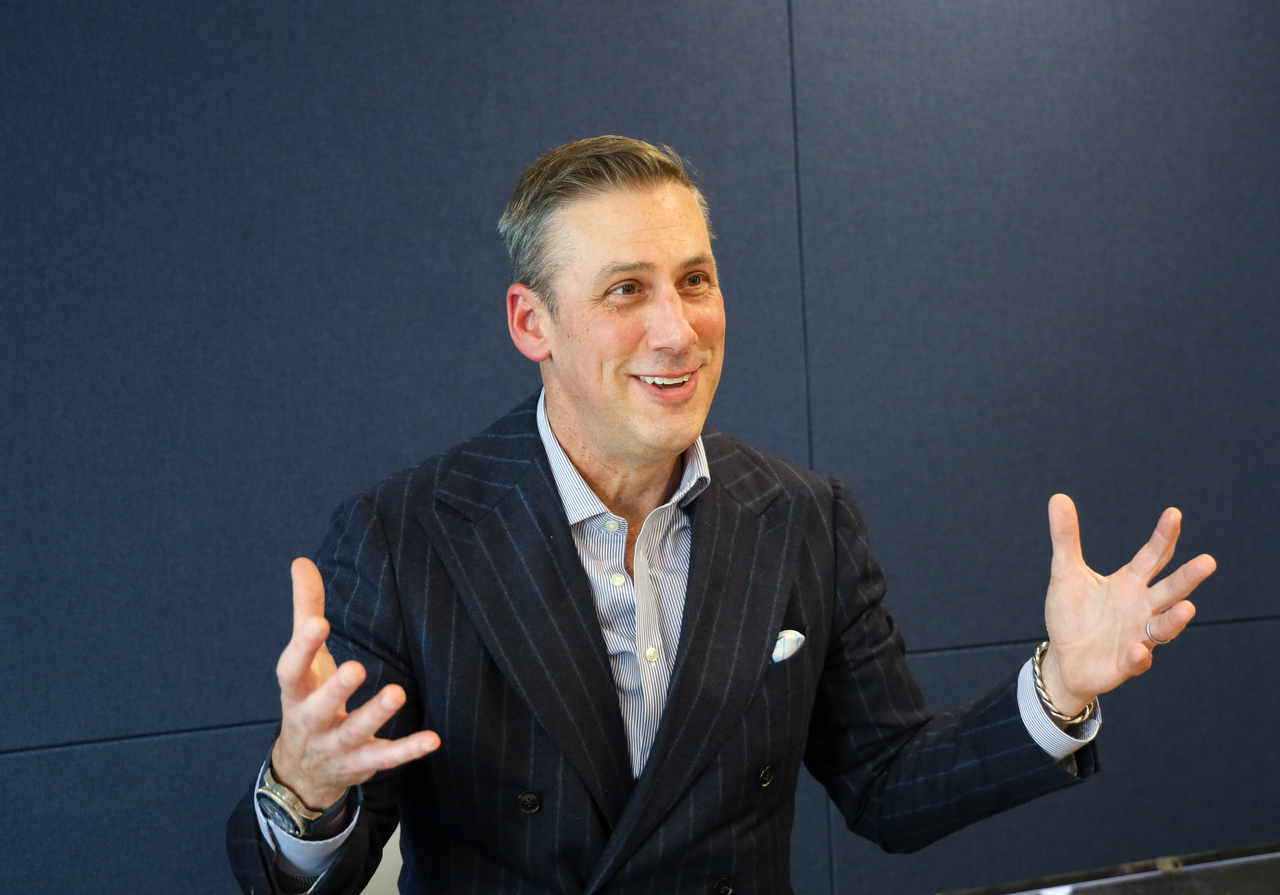
"The era of setting and declaring sustainability targets is over. We are now in an era of execution — where carbon reductions must be demonstrated with real data."
— Ryan Walker, Senior Director of Sustainability Programs, Cytiva
Ryan Walker, senior director of sustainability programs at global life sciences leader Cytiva, laid out a survival strategy for South Korea's biopharmaceutical industry amid rapidly shifting global standards — including the revision of the Science Based Targets initiative's net-zero framework — in an exclusive interview on Tuesday.
Walker said Korean biotech companies posting double-digit annual sales growth face a structural contradiction when relying on spend-based carbon estimates: the only way to reduce emissions under that method is to spend less. He said acquiring and sharing precisely measured product carbon footprint (PCF) data is the key to navigating the rising tide of global net-zero standards.
Cytiva is a global company supplying the raw materials, technology and analytical solutions essential to every stage of biopharmaceutical development and manufacturing. It was formally established in 2020 when the Danaher Group acquired GE Healthcare's life sciences division, but it carries more than 300 years of bioprocess technology heritage — including Whatman, founded in 1733; ÄKTA, the global standard for protein purification; and HyClone, a leader in cell culture. The company employs more than 15,000 people in over 40 countries, and the majority of FDA-approved biopharmaceuticals are produced using Cytiva technology. Each year, about 400 million patients receive treatments for more than 200 diseases manufactured with Cytiva's technology.
Walker, who oversees Cytiva's decarbonization roadmap, SBTi implementation and sustainable product design, has an unusual background. A former US Marine Corps officer, he was deployed to South Korea in 2004 and conducted joint exercises with the Republic of Korea Marine Corps. After leaving the military, he joined Bayer before moving to GE — Cytiva's predecessor — in 2007, where he spent more than 13 years leading commercial distribution networks and customer partnerships across the United States and Canada. Walker is recognized for translating sustainability strategy into measurable operational objectives through the lens of business management, cost and process yield — not abstract environmental slogans.
Returning to South Korea for the first time in 22 years, Walker said in the interview: "Just as the US and Korean Marines conducted closely coordinated joint operations back then, net zero can never be achieved by any single company acting alone. The entire supply chain — from raw material suppliers to biopharmaceutical manufacturers — must be tightly connected through data."
'End the spend-based contradiction': measured PCF data will decide who wins contracts
Walker described the practical impact of the SBTi standard revision — the finalization of Version 2.0 and the start of full verification — as a shift toward data precision. For years, the industry focused on announcing ambitious targets; now, with 2030 and 2035 near-term milestones approaching, concrete implementation plans and verifiable data assurance have become non-negotiable requirements.
"Until now, companies have been tackling the relatively straightforward task of reducing carbon within their own operations — Scope 1 and 2," he said. "But we have entered a phase where no single company can achieve net zero on its own, because raw material suppliers, customers and global end-clients are all linked in one chain."
In the biopharmaceutical industry, 90 to 95 percent of greenhouse gas emissions originate across the value chain — in raw material procurement, logistics and other Scope 3 activities. Cytiva has moved swiftly on Scope 1 and 2, cutting emissions at its own facilities by 55 percent against a 2021 baseline by 2025 and introducing 100 percent renewable electricity at 96 percent of its manufacturing sites. The time has now come to fundamentally overhaul how value-chain emissions are calculated.
"Most of the industry currently estimates supply-chain emissions by multiplying raw material procurement spending by a carbon emission factor," Walker said. "The fatal flaw of this spend-based calculation is that the only way to reduce emissions is to spend less money."
He added that demanding companies spend less and shrink their business is not an option for fast-growing Korean biotech firms posting double-digit annual growth. "Three years ago, Cytiva stopped using estimated figures and began physically measuring the carbon actually generated in product manufacturing and processing — transitioning to what we call physical data," he said.
Walker said the top request from key customers he met during this week's visit was for Cytiva to share its measured PCF data. "Only by securing precise PCF data can Korean companies transparently understand their supply-chain emissions and proactively respond to the rigorous supply-chain due diligence demanded by global big pharma," he said. In the coming global competition for biotech contracts, the speed and accuracy with which a supplier can provide measured PCF data will become the defining differentiator and a critical barrier to entry, he added.

'Sustainability being costly is a misconception': logistics shift saves $3 million
Walker was equally direct in pushing back against concerns raised in parts of the biopharmaceutical industry about the cost of transitioning to greener processes — the so-called green premium — and the burden of GMP revalidation. "The idea that sustainability adds costs and conflicts with business is a clear misconception," he said. "What is good for business is good for the environment, and the two can be a complete win-win."
"Sustainability is not complicated. It comes down to two principles: do less and do better," he said. "Using fewer resources and less energy cuts costs and reduces supply-chain risk, building resilience. Innovating smarter designs means you can deliver safe treatments to patients faster with fewer resources."
Real cost savings back up the argument. Walker said Cytiva worked with a global customer to restructure its logistics network, shifting raw material procurement away from distant factories to the nearest regional manufacturing hub. "Through that collaboration, the customer saved more than $3 million in shipping costs and simultaneously eliminated thousands of tons of carbon emissions," he said.
Cytiva is also making technical breakthroughs on process waste and chemical regulation. On single-use plastics — widely used in bioprocessing given the paramount importance of sterility and safety — Walker said they remain environmentally superior to stainless steel when washing water, chemicals and power consumption are factored in, but that plastic waste cannot simply be left unaddressed.
Cytiva is running a near-term program with specialist firm Polycarbin to collect and recycle laboratory plastics regardless of manufacturer. It is also conducting joint research with the University of Wisconsin-Madison on solvent-targeted recovery and precipitation, or STRAP, technology — an advanced recycling method that chemically breaks down used plastics layer by layer and reconstitutes them to their original structure, with the goal of enabling an infinite circular cycle for bioprocess plastics.
On per- and polyfluoroalkyl substances, where regulation is tightening in Europe and the United States, Walker said Cytiva has commercialized a PFAS-free lineup including Supor Prime, a new filter product for sterile environments. "Just as quality, safety and data security passed through years of cost debate before becoming table stakes in business operations today, sustainability will also move beyond short-term cost arguments to become the baseline standard that determines whether a bio business survives," he added.
Songdo hub to recycle 60–80% of process water: 'Korean bio must lead the global supply chain'
Cytiva's Korea Innovation Hub, a 6,100-square-meter facility under construction in Songdo, Incheon, is the strategic anchor where the company's global net-zero framework takes concrete shape on Korean soil. The Songdo hub has applied the company's rigorous "net-zero environmental impact" standards from the design stage, including maximizing energy efficiency and achieving zero landfill waste.
"Korea is one of Cytiva's three key global strategic markets and its fastest-growing," Walker said. "The Songdo hub is being built with an eco-friendly water treatment facility that will purify and recycle 60 to 80 percent of the water used in filter production on-site. It will serve as a model showcase for sustainable manufacturing across the Asia-Pacific region."
When the Songdo manufacturing center begins full-scale production of filtration products for biopharmaceuticals — a core raw material — in the first half of 2027, Korean and Asian biotech companies will be able to source those materials locally rather than depending on long-haul air freight. That is expected to directly reduce customers' Scope 3 carbon emissions while dramatically improving supply-chain stability and resilience.
As global sustainability standards and requirements continue to rise, Walker urged Korean biopharmaceutical and contract development and manufacturing organization companies to move beyond being passive followers and become global agenda-setters.
"Six years ago, sustainability discussions were driven by large pharmaceutical companies in Europe and the United States, and Asian companies barely registered on the radar," he said. "In just four to five years, Korean companies — led by Samsung Biologics — have been at the forefront of raising supply-chain standards."
"Korean biotech companies must never underestimate the strong influence they hold within the global sustainability framework," he added. "They should demand more forcefully from global raw material suppliers like Cytiva — asking for 2035 and 2050 reduction roadmaps and measured data — and proactively propose joint projects that deliver real, on-the-ground carbon reductions."
"In a world where the sustainability landscape is changing rapidly, if Korean companies set high standards and take the lead, that will become the most powerful weapon for securing an unassailable competitive edge in the global market," Walker said.
silverpaper@heraldcorp.com