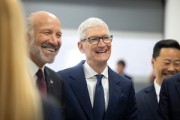
National Assembly forum on online retail industry holds policy debate
Participants discuss challenges as AI shopping reshapes the competitive landscape
![Participants pose for a photo at a policy forum hosted by the National Assembly's Online Retail Industry Development Forum at the National Assembly Members' Office Building on Tuesday morning. The event was held under the theme "The Future of Korea's Online Retail Industry and Global Competitiveness in the Age of AI Transformation." [Provided by the Korea Online Shopping Association]](https://wimg.heraldcorp.com/news/cms/2026/09/01/news-p.v1.20260901.66473954a80b4641935f1ec63f3dd71f_P1.jpeg)
Lawmakers have called for a policy framework to support the AI transformation of South Korea's online retail industry as artificial intelligence takes on a growing role in searching, comparing, recommending and even completing purchases on behalf of consumers.
The National Assembly's Online Retail Industry Development Forum held a policy debate Tuesday morning at the National Assembly Members' Office Building under the theme "The Future of Korea's Online Retail Industry and Global Competitiveness in the Age of AI Transformation." The event was organized by the Korea Online Shopping Association and co-sponsored by the Ministry of Trade, Industry and Energy and the Ministry of SMEs and Startups, drawing experts from academia, industry and government.
Forum Representative Lawmaker Kim Sung-won said in his opening remarks that "the industrial foundation must be built so that new technological innovation can translate into growth for the online retail industry and help domestic companies and brands enter overseas markets." Korea Online Shopping Association President Jo Sung-hyun said the very way companies and brands compete will change in the age of AI shopping, and called for policy support to ensure the industry's AI transition leads to corporate innovation and the global growth of K-brands.
Choi Jeong-hye, a Yonsei University professor who presented at the forum, said that in AI shopping, "AI interprets consumer needs and assembles candidate products and purchase pathways." She said companies are entering an era where they must build the competitiveness to be included in AI recommendations before consumers ever make a choice.
She said securing "AI discoverability" is critical — ensuring that product information including benefits, ingredients, specifications, pricing, inventory, delivery details, certifications and country of origin is structured so AI can read and understand it. Her proposed policy agenda included building "AI-Ready" product data, providing phased support for companies undergoing AI transformation, offering on-site assistance for small businesses and other operators less equipped for AI, strengthening transparency in platform recommendations and exposure, and establishing a clear accountability framework for the AI shopping process.
Ju Yun-hwang, a Jangan University professor who delivered the second presentation, said existing export support policies for small and medium-sized enterprises have focused on securing listings on overseas platforms and boosting short-term sales. He proposed a shift toward branding-centered export support that makes global consumers and platforms seek out Korean companies and brands on their own.
To that end, the forum proposed a set of policy measures: sustained support for K-brands, region-specific local brand development, assistance for entering overseas content commerce channels, linking market validation through reverse direct-purchase exports with full-scale export support, intellectual property support tied to brand value, and stronger responses to unauthorized overseas trademark registration.
Discussion at the forum converged on the need to build product data infrastructure suited to the AI shopping era while also establishing an export support framework that allows brand and customer data to accumulate. Participants broadly agreed that rather than treating AI-era product data competitiveness, K-brand development and reverse direct-purchase logistics infrastructure as separate policy areas, the goal should be an integrated export support system in which branding, logistics and data are organically connected.
Jeon Sung-min, a Gachon University professor, said "AI-Ready product data needs to be built not as an individual company problem but as public infrastructure," and called for a shift in export support policy toward cultivating brand assets — such as brand recognition, repurchase rates and customer data — that accumulate continuously within companies.
The government also signaled its commitment to actively supporting the online retail industry's AI transformation and global expansion. Ministry of Trade, Industry and Energy Minister Kim Jung-kwan said in a written congratulatory message that the government would develop online retail as both an export platform and an AI-based advanced industry, and would work to resolve barriers in payments, certification and customs clearance while advancing AI-based logistics automation and expanding and standardizing retail logistics data.
Noh Yong-seok, acting minister and first vice minister of the Ministry of SMEs and Startups, said the ministry would support small and medium-sized enterprises and small business owners in expanding their online-based overseas presence through AI-powered identification of overseas markets and buyers, as well as assistance with global platform listings, marketing and logistics.
![Panelists take part in a discussion at a policy forum hosted by the National Assembly's Online Retail Industry Development Forum at the National Assembly Members' Office Building on Tuesday morning. The event was held under the theme "The Future of Korea's Online Retail Industry and Global Competitiveness in the Age of AI Transformation." [Provided by the Korea Online Shopping Association]](https://wimg.heraldcorp.com/news/cms/2026/09/01/news-p.v1.20260901.093fd30274814c87be7937ab916472b0_P1.jpeg)
spa@heraldcorp.com