Budget of 8.26 trillion won ($6.02 billion) marks 10.8% rise — largest increase since ministry's 2013 relaunch; Arctic route development, fisheries restructuring and first-ever dried seaweed stockpiling among key priorities
South Korea's Ministry of Oceans and Fisheries has proposed a 2027 budget of 8.26 trillion won ($6.02 billion), a 10.8 percent increase from this year — the largest year-on-year rise since the ministry was relaunched in 2013. The government plans to concentrate investment on opening Arctic shipping routes and developing a maritime hub zone, overhaul fisheries management around a total allowable catch system, and sharply reduce the size of the coastal fishing fleet. A first-ever dried seaweed stockpile will also be introduced to boost exports and stabilize domestic prices.
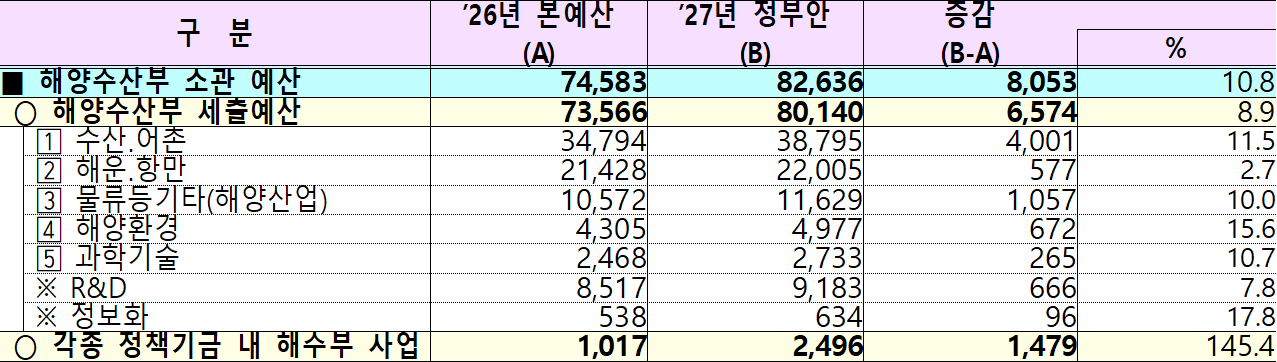
The ministry announced the 2027 government budget proposal on Tuesday. Next year's allocation of 8.26 trillion won represents an increase of 805.3 billion won from this year's 7.46 trillion won. The budget has risen steadily — from 6.71 trillion won in 2024 to 6.86 trillion won in 2025 and 7.46 trillion won this year — and will exceed 8 trillion won for the first time next year.
By sector, fisheries and fishing villages account for the largest share at 3.88 trillion won, up 11.5 percent from this year. Shipping and ports will receive 2.2 trillion won, a 2.7 percent increase, while the maritime industries sector rises 10 percent to 1.16 trillion won and the marine environment sector climbs 15.6 percent to 497.7 billion won. The research and development budget grows 7.8 percent to 918.3 billion won. Funding for ministry projects allocated through policy funds such as the Future Response Fund surges 145.4 percent, from 101.7 billion won to 249.6 billion won.
Two areas stand out in next year's budget: Arctic shipping routes and the maritime hub zone. The ministry will direct a combined 622.8 billion won to major projects related to the maritime hub zone. Of that, the "preparing for the future Arctic era" budget — covering Arctic route development and related initiatives — rises 24.1 percent to 98.3 billion won from 79.2 billion won this year.
New projects will support preparations for Arctic route trial voyages, data collection and international cooperation. Investment will also go toward building polar-capable vessels such as icebreakers and ice-strengthened ships, and developing icebreaking container ship technology. A newly allocated 12.1 billion won will support shipping companies relocating to the maritime hub zone in building eco-friendly vessels. Another 9.8 billion won will fund technology demonstration for Arctic route-related industries and the development of future talent in the sector.
The ministry is also accelerating the AI transformation of ports. Some 7.4 billion won will be newly allocated to demonstrate physical AI applications in port cargo handling and transport equipment, while the smart port operations technology development budget more than doubles from 9.4 billion won to 18 billion won. A further 2.9 billion won has been set aside for a new program to roll out autonomous navigation systems on Korean-flagged vessels, and the budget for developing Level 4 — fully unmanned — autonomous navigation technology expands from 6.3 billion won to 15.7 billion won.
In fisheries, the ministry is concentrating fiscal resources on the transition to a total allowable catch management system centered on how much is actually landed. New measures include catch verification at the landing stage, inspection of landing ports, operation of a fisheries information management center, and loans for fishers who comply with the new obligations. The total new investment tied to this transition amounts to 105.5 billion won. The budget for resource assessment and quota-calculation systems needed to support full TAC implementation also jumps from 900 million won to 6.7 billion won.
Fleet restructuring is also being pushed forward. The budget for decommissioning coastal and offshore fishing vessels rises from 203.7 billion won this year to 348.8 billion won next year, an increase of 145.1 billion won. The number of offshore vessels to be decommissioned expands from 74 to 200. At the same time, 45.2 billion won has been newly allocated to a modernization fund for aging offshore vessels, with a plan to support the upgrade of 48 vessels over the next 10 years.
The seaweed industry will receive investment aimed at both expanding exports and stabilizing domestic prices. The ministry will designate export-oriented "K-GIM leading zones" and build smart aquaculture farms and land-based lease aquaculture facilities. Some 24.2 billion won has been newly allocated for dried seaweed stockpiling — the first time the ministry has undertaken such a reserve. The budget for developing overseas markets for fishery products also expands from 77.8 billion won to 88 billion won.
Smart technology adoption in aquaculture and processing will be strengthened as well. Investment in smart aquaculture innovation zones and clusters more than doubles from 15.2 billion won to 32.6 billion won, and 6 billion won has been newly set aside to mechanize what is currently a labor-intensive aquaculture sector. Another 12 billion won will be newly invested in making seafood processing factories smarter, while loans for processing facilities increase from 29.4 billion won to 90 billion won.
A public ferry service for island residents will also launch next year, guaranteeing mobility for communities on remote islands. The government will directly deploy passenger vessels to be operated by a public institution across 11 routes, with 9.6 billion won newly allocated for the program. Fishing village internship programs and a direct payment scheme for inland aquaculture compound feed will each be introduced for the first time as well.
In the marine environment sector, the ministry will expand marine litter collection zones and deploy collection robots for the first time. Coverage will be extended to more than half of the roughly 3,824 kilometers of vulnerable coastline nationwide, with the related budget rising from 10.2 billion won to 17.5 billion won. Some 3.5 billion won has been newly allocated to introduce marine litter collection robots at 10 sites. Another 5.7 billion won will go toward building a GIS-based management system for continuous monitoring of illegal occupation and use of public waters.
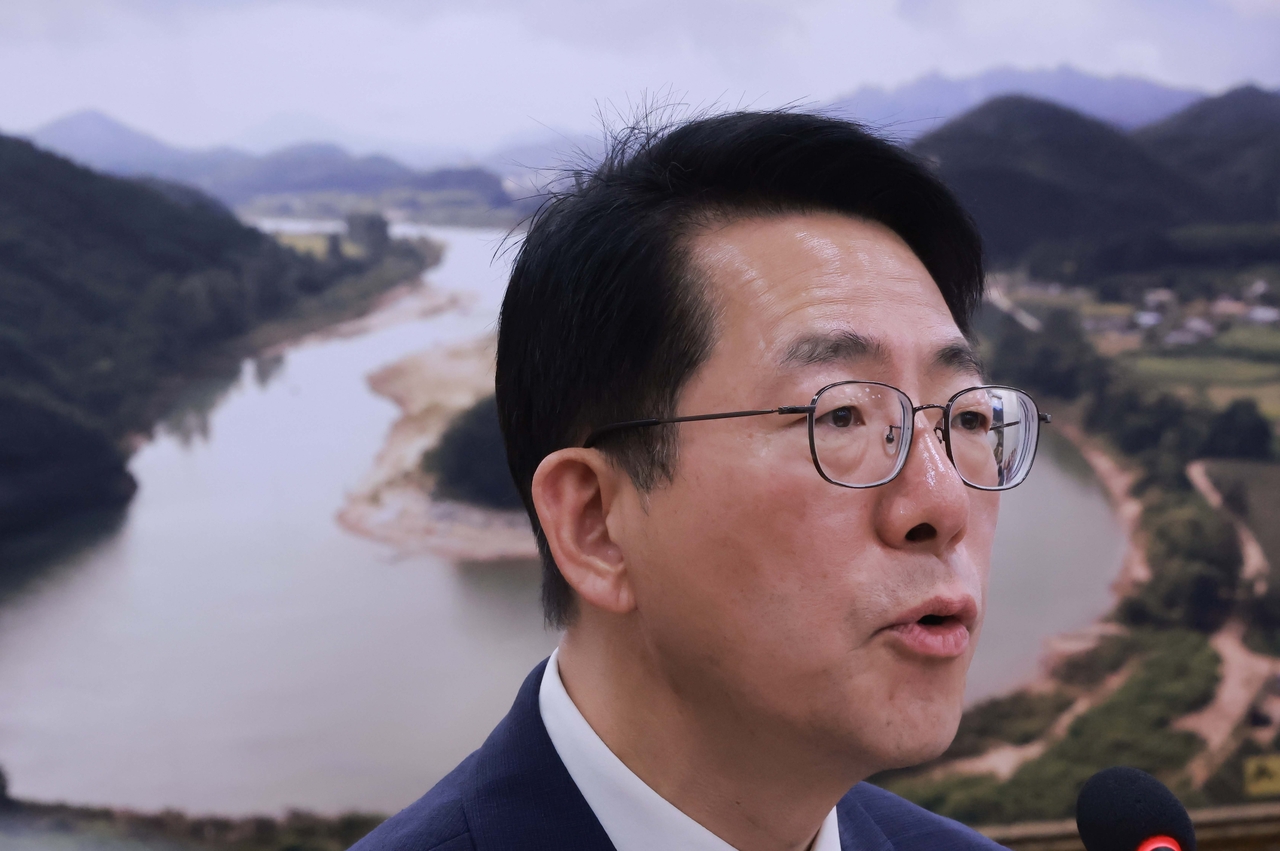
"Next year's budget is focused on transforming the growth paradigm for the oceans and fisheries sector — including fostering the maritime hub zone and overhauling the fisheries industry — and on investing heavily in projects that the public can feel directly," Minister Hwang Jong-woo said. "We will do our utmost to prepare for the National Assembly's budget deliberations so that the ministry can support the great transformation and leap forward of our economy."
adastra@heraldcorp.com