Seodaemun-gu residents in 14 neighborhoods identify welfare needs for 2027–2030 village plans; Nowon-gu combines community festivals with general assemblies; Seongdong-gu holds assemblies across 17 neighborhoods to decide 2027 projects
Seoul's autonomous districts are raising the bar on resident self-governance, giving communities a direct say in local welfare programs and neighborhood projects.
The shift moves away from the traditional model in which government agencies design programs and deliver them to residents. Instead, residents themselves identify local problems and devise solutions — an approach aimed at uncovering community-specific initiatives while making self-governance more meaningful in practice.
Residents in Seodaemun-gu's 14 neighborhoods have gone a step further, not only spotting welfare gaps but also drawing up their own remedies.
Because the hardships residents face differ from neighborhood to neighborhood, so do their welfare needs. Seodaemun-gu announced that community welfare councils in each of its 14 neighborhoods have identified neighborhood-specific welfare priorities to be pursued from 2027 to 2030, based on local characteristics and residents' needs.
The defining feature of this round of welfare agenda-setting is that residents — not administrators — made the decisions. Neighbors discussed together what difficulties exist in their community, who needs help, and what can be done locally, then chose the programs they want to run.
The resulting agendas reflect the demographic makeup and welfare demands of each neighborhood, taking on a distinct shape in every case.
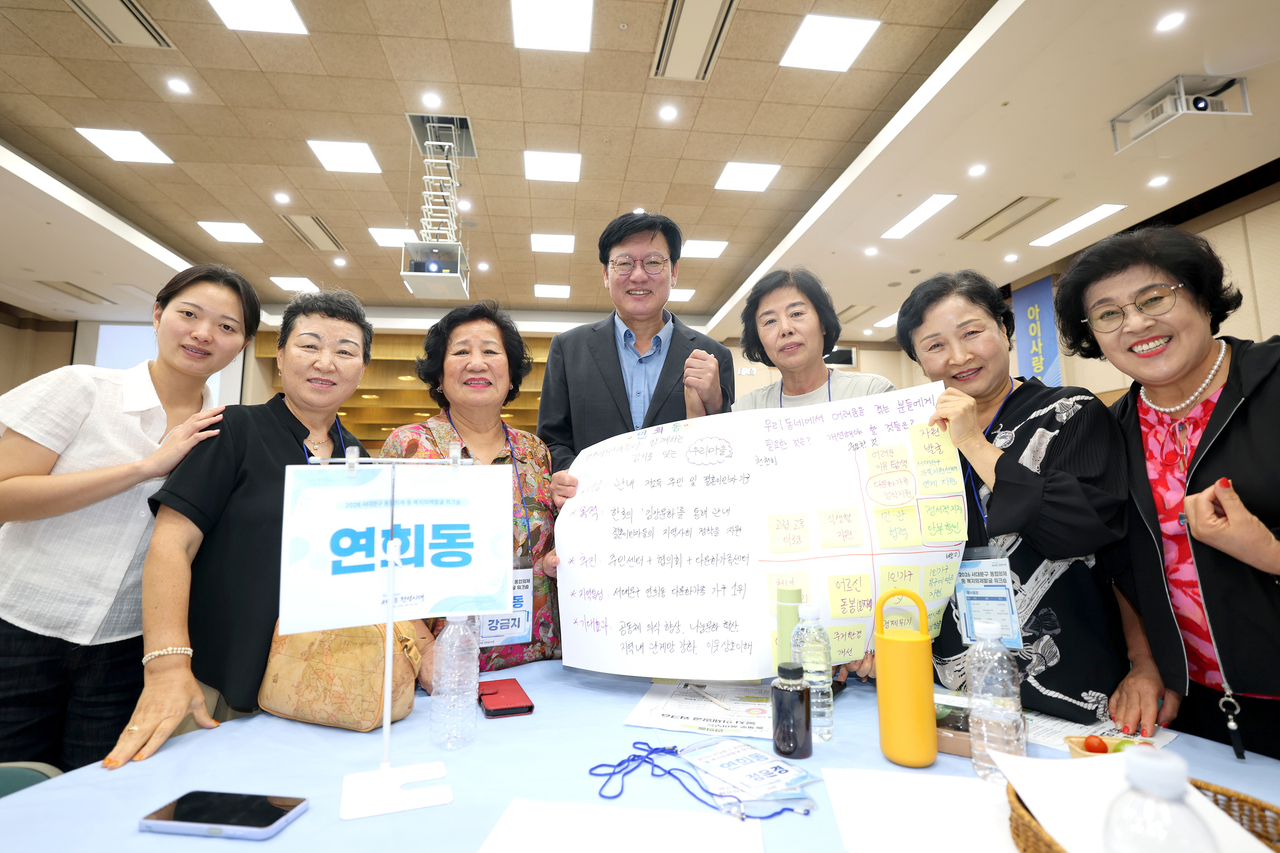
Yeonhui-dong focused on helping marriage immigrants settle into the community and build neighborly ties. Through a program called "Our Village Connected by Kimchi with Marriage Immigrants," participants make kimchi together with local residents and share it with those in need.
Hongje 3-dong addresses meals and well-being checks for low-income middle-aged residents. Its "Hongsam Healthy Table" program delivers a monthly food package worth 30,000 won ($22) per recipient, while community welfare council members also check in on participants' daily lives.
Bukgajwa 2-dong runs a health and culture club that pairs low-income elderly residents with neighbors to build social networks. The program brings seniors and local residents together through health, cultural and hobby activities, helping them form natural bonds with those around them.
Other neighborhoods have also built programs around welfare needs their residents identified on the ground. Chunghyeon-dong supports meals and dental health for low-income elderly people living alone and middle-aged residents; Cheonyeon-dong delivers food packages to single-person households of young and middle-aged adults living in goshiwon rooms. Bukahyeon-dong and Hongeun 1-dong both look after meals and well-being for elderly people living alone and single middle-aged residents.
The agendas residents identified will not remain one-off ideas. Seodaemun-gu plans to use them as foundational material for a four-year village welfare plan starting next year, developing them into programs tailored to each neighborhood's conditions and residents' needs.
"The residents who live there know best what welfare their neighborhood needs," Seodaemun-gu District Mayor Park Un-gi said. "Residents looking out for their neighbors and building solutions together — that is the strength of Seodaemun's village welfare."
Nowon-gu is pairing its village festivals with general assemblies so residents can engage with local issues and community decision-making while enjoying the festivities.
Nowon-gu will hold its "2026 Village Festival and Residents' General Assembly" across 19 neighborhoods from Saturday through Oct. 31.
Linking the festival and the general assembly is the key feature: residents can take part in local deliberations and decision-making naturally, in a festive atmosphere.
The range of residents taking part in self-governance is also widening. In July, Hagye 1-dong's residents' council became the first in the country to establish a subcommittee for people with disabilities, while Wolgye 1-dong and Gongreung 1-dong operate youth subcommittees. The district plans to continue expanding its inclusive self-governance model so that people with disabilities, young residents and other diverse groups can directly propose and decide on local agendas.
Seongdong-gu is holding general assemblies across 17 neighborhoods to let residents decide directly on projects for next year.
Seongdong-gu will hold its "2026 Residents' General Assembly" from Wednesday through Sept. 10 at community centers and other venues across 17 neighborhoods, giving residents a direct hand in proposing and deciding on projects their communities need.
Any resident who lives in or is registered in a given neighborhood may attend. The assembly is the core decision-making body of local democracy, where residents share and finalize self-governance projects and participatory budget proposals for the following year.
Ahead of the formal assemblies, Seongdong-gu is also running online and in-person early voting to capture input from as many residents as possible.
Online early voting runs from Aug. 3 through Sept. 7, while in-person early voting takes place at designated locations in each neighborhood from Aug. 11 through Sept. 7 — allowing residents to participate at a time and place that suits them.
Residents choose directly from a range of proposals, from pressing everyday issues to projects that reflect each neighborhood's character. Self-governance plans and projects finalized through the general assemblies will go through the relevant procedures before taking shape as actual programs in each neighborhood in 2027.
seouldream01@heraldcorp.com