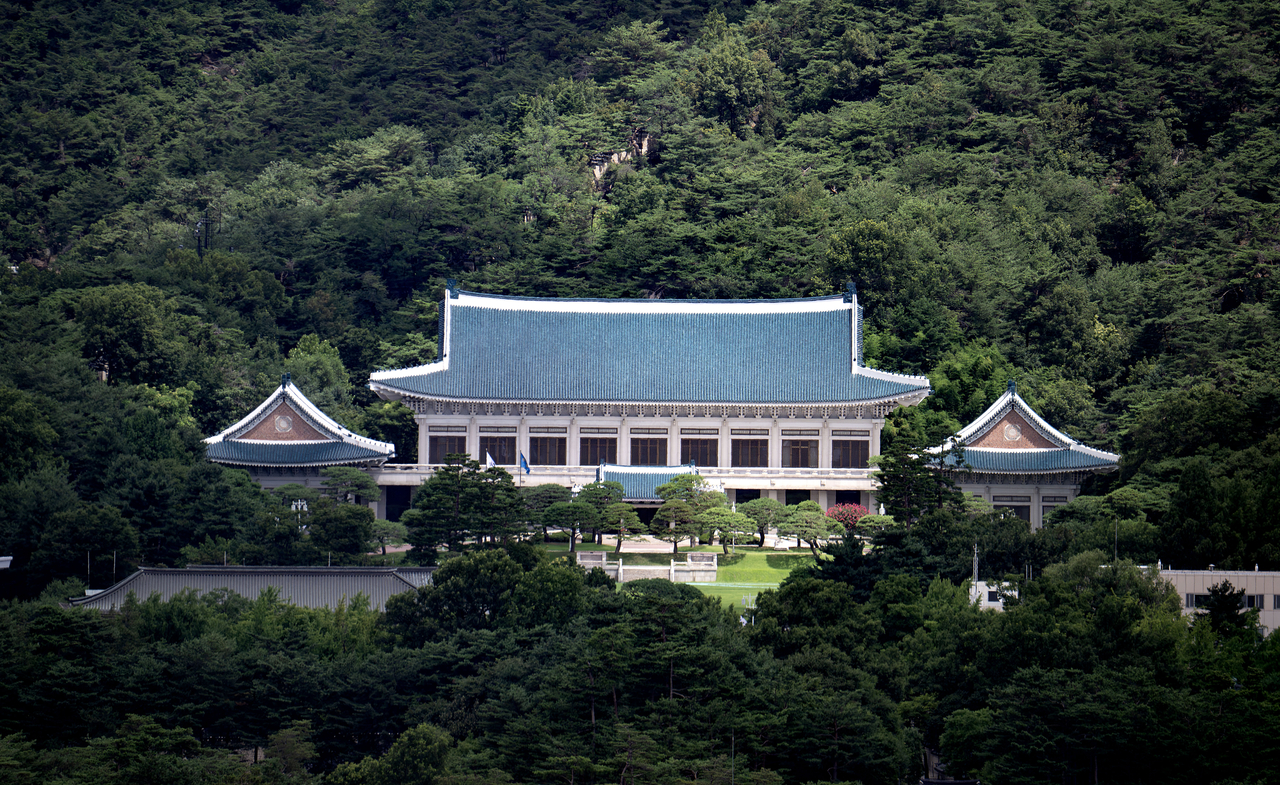
Cheong Wa Dae said Wednesday that the Ministry of Land, Infrastructure and Transport is conducting social consultations — including coordination with relevant agencies and gathering public opinion — on proposals to use the Yongsan Park site in Seoul as land for new rental housing.
A Cheong Wa Dae official drew a line, however, saying "the specific methods, parties and timing for gathering public opinion, including polling, have not yet been decided."
The clarification came amid a standoff between the government, which has signaled its intent to use Yongsan Park as a rental housing site, and the Seoul Metropolitan Government, which has voiced opposition — with nothing finalized on either side.
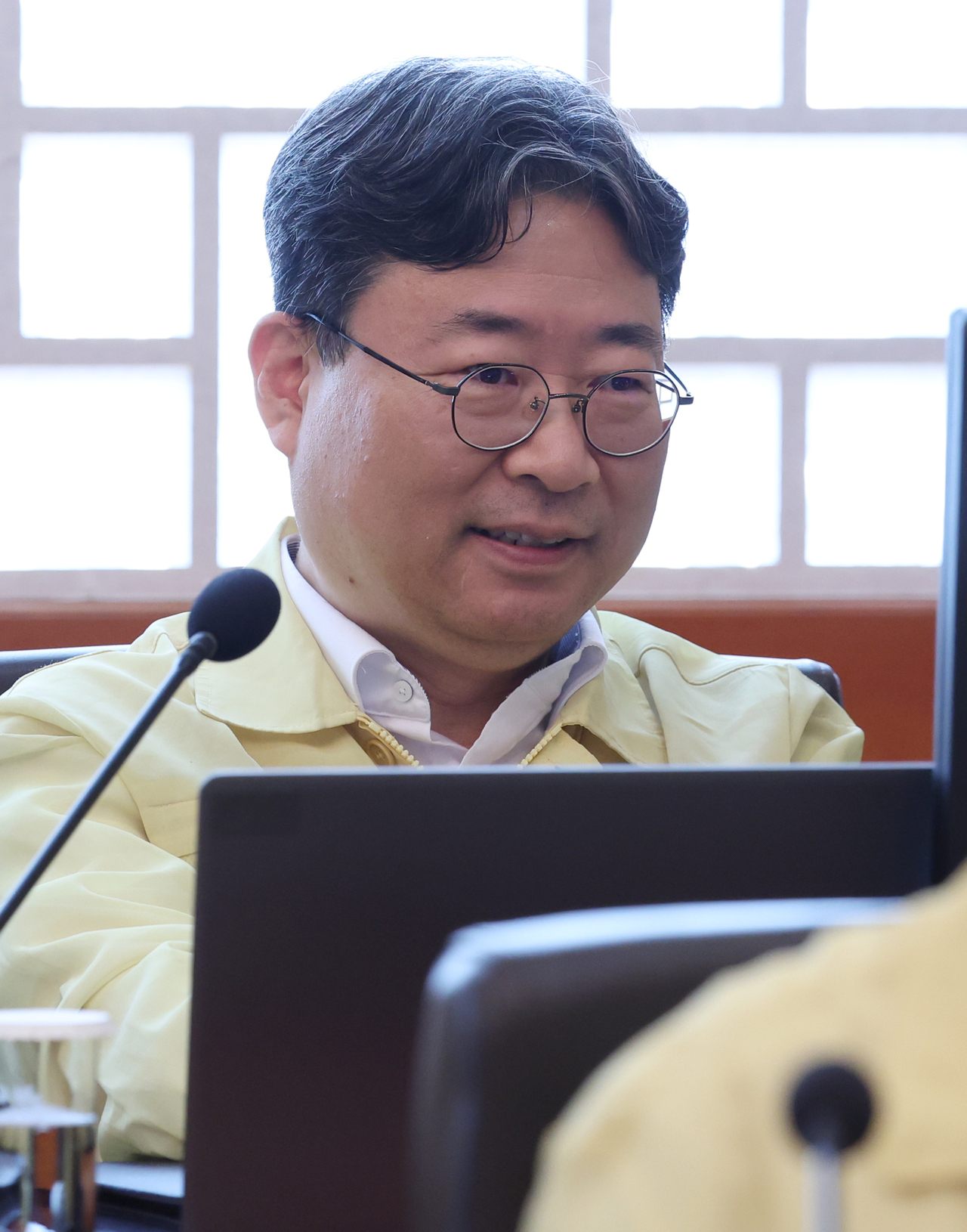
Ha Jun-kyung, Cheong Wa Dae's senior secretary for economic growth, suggested in a TV Chosun interview that day that even if the Yongsan Park site were used, it would likely take the form of public rental housing — such as youth housing — rather than a private-sector arrangement.
Ha said the site is too large to function purely as a park, noting security concerns and soil contamination issues that make management difficult.
"We need to have a discussion about what the best use of this place is," he said. "A park is fundamentally meaningful when many people use it, but if you go to the Yongsan Children's Garden area right now, there are hardly any visitors."
He added that it was important to make good use of "this prime piece of land." "If we decide to use part of it for housing, we would have to dig up the ground. By excavating and removing the soil elsewhere, we can carry out decontamination work," he said.
"Building housing there does not mean we won't build a park," he said. "A park with good accessibility and an appropriate scale sees far higher usage. We can think of it as a way to pass on both good living spaces and a good environment to future generations."
Asked directly whether rental housing would be built on the Yongsan Park site, Ha said, "We are thinking of it as youth housing, and it would be difficult to simply sell the land off to the private sector and divide it up. We regard it as a kind of public asset." The remarks were widely read as indicating that, if use of the site is confirmed, a public housing supply model would be adopted.
Ha also addressed the disagreement between President Lee Jae-myung and Seoul Mayor Oh Se-hoon over reconstruction and redevelopment at a Cabinet meeting Tuesday. "We are not opposed to reconstruction and redevelopment," he said.
"The current package includes many measures that offer incentives for speeding up reconstruction and redevelopment," he said. "Deregulation is essentially a request to improve project viability, and improving project viability will inevitably have some effect of pushing up housing prices — I think that is the point that was raised."
He went on to say that "reconstruction and redevelopment fundamentally take a very long time, the interests involved are complex, and there are views that the number of new housing units created is not all that large. That is why we are also talking about new housing sites — in the sense that we need to consider all options."
On the observation that the Special Act on Yongsan Park, enacted during the Roh Moo-hyun administration, contains a provision prohibiting changes to the designated use, Ha said, "If there is a significant public interest purpose, one could consider adding a clause allowing partial exclusion through deliberation. This too would of course need to go through social discussion and reach a consensus."
Ha also rebuffed criticism that the "Youth Future Bogeumjari Loan," announced alongside the government's tax reform package, had sparked controversy by limiting loan support to non-apartment housing. "It is simply giving one more option on top of the various existing policy loan products," he said.
"This is absolutely not about telling people not to buy apartments and to buy villas instead. Those who want an apartment can still use the existing Bogeumjari Loan or Dimdol Loan," he said. "For those who find that burdensome, we are providing an option that is still easier to use. Some may worry that taking out this loan — the Youth Future Bogeumjari Loan — could put them at a disadvantage when buying an apartment later, but we have eliminated all such penalties," he added.
On criticism that landlords could pass higher tax burdens from the tax reform package on to tenants through jeonse and monthly rent increases, Ha acknowledged that "supply has fallen sharply, so it is true that there are various pressures on the jeonse and monthly rent market," adding that the government "is exploring ways to increase supply quickly in the short term."
"Whether taxes get passed on is somewhat complicated," he said. "When designing the tax, we structured it so that the burden would actually decrease for properties valued at around 3.2 billion won or below. The degree to which costs are passed on to jeonse and monthly rent will differ depending on the type of housing."
He went on to say that "supply is the priority. We believe that if there is enough of it, problems get resolved — so we are currently pushing ahead with various forms of public rental housing, publicly supported private rental housing, and general housing that can be supplied quickly. On the jeonse side, we have also introduced a 'jeonse safety trust' scheme to address jeonse and monthly rent mismatches," he added.
moone@heraldcorp.com