Seoul's Yongsan-gu district office convened an emergency response meeting following the issuance of a severe heat wave alert, announcing it has significantly strengthened its heat response framework with a focus on expanding cooling shelter operations and protecting vulnerable residents.
When Seoul came under a severe heat wave alert at 11 a.m. Tuesday, the district immediately convened an emergency meeting of its disaster safety response headquarters. The meeting addressed enhanced on-site inspections of key facilities — including construction sites and welfare facilities — strict verification of heat safety protocols, and measures to expand cooling shelters and protect heat-vulnerable residents.
The district has activated its heat response system, with 10 task teams across 24 departments monitoring the operational status of cooling shelters and stepping up guidance for vulnerable residents on how to use them.
Beyond the existing 85 cooling shelters, the district has extended hours or added 43 locations — including the district office building, community service centers, libraries, social welfare centers, senior centers, rest facilities for mobile workers and emergency accommodation — so residents can safely escape the heat even during the most dangerous hours of the day.
Notably, 24-hour emergency refuges are being piloted from Wednesday through Friday at "Achimae Manna" (47-1 Huam-ro 57-gil) and Garwol Comprehensive Social Welfare Center, in addition to the district office building. Community service centers have also extended their weekday hours to 9 p.m. and opened on weekends and public holidays to improve access for residents.
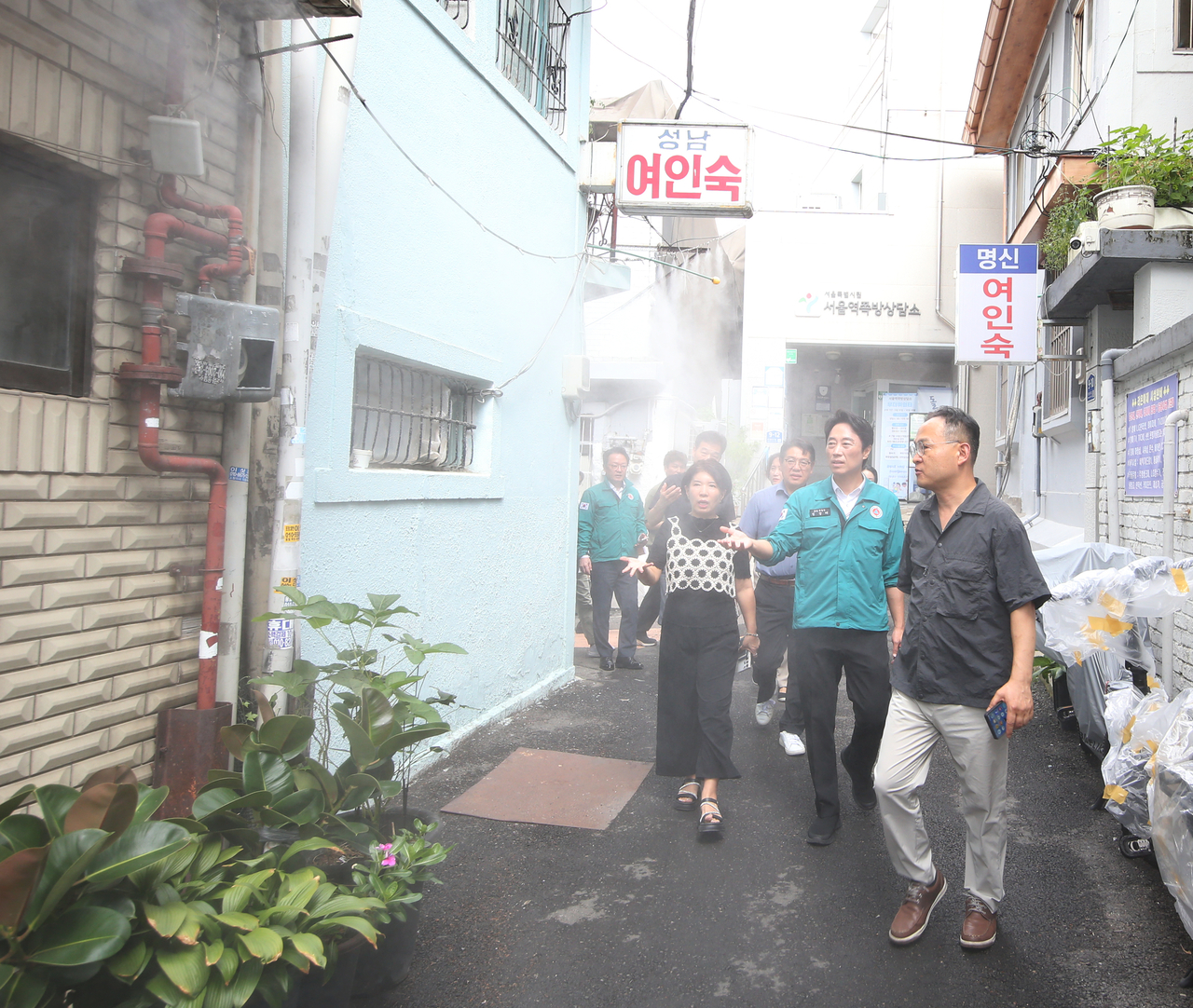
District Mayor Kim Kyung-dae personally visited several sites Wednesday, including the Seoul Station Jjokbangchon Counseling Center, the "Mannasaem" cooling shelter, the "Achimae Manna" 24-hour emergency refuge and Namyeong Senior Center, to inspect operations firsthand. He checked the condition of cooling facilities including shower rooms, alley mist-spray systems and ice makers, and assessed the safety of residents in the low-income rooming-house neighborhood. He also listened to concerns from elderly visitors at the senior center as part of his field-focused heat response effort.
The district is also concentrating its administrative resources on protecting heat-vulnerable residents. Officials have made in-person visits to 1,635 people — including elderly individuals living alone, people with disabilities and those with chronic illnesses — and checked on the welfare of 14,298 others by phone or text message. The district has also conducted 336 inspection visits to cooling shelters and is running patrols in jjokbangchon areas and zones with high concentrations of homeless people, while providing bottled water and temporary housing support.
Alongside this, the district is continuing safety inspections to protect construction workers, road water-cleaning operations and the operation of cooling facilities to minimize heat-related harm.
Going forward, the district will monitor heat conditions in real time, expand cooling shelter and heat-mitigation facility operations, and intensify protection for vulnerable groups — including elderly people living alone, people with disabilities, jjokbangchon residents and outdoor workers — to prevent heat-related harm.
"With heat waves becoming a daily reality due to climate change, the most important things are swift, field-centered responses and protecting vulnerable residents," district Mayor Kim said. "We will operate cooling shelters and emergency refuges without any gaps, and do our utmost to look after every resident struggling in the heat so that everyone in the district can get through the summer safely."
seouldream01@heraldcorp.com