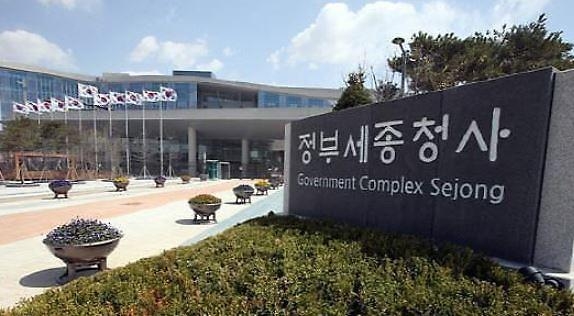
As the government prepares to announce its second round of public institution relocations this month, concerns are growing inside and outside government circles that the move will only deepen an awkward dual-structure arrangement and further erode administrative efficiency.
Ministries already based in Sejong — including the Office of the Prime Minister — all maintain separate Seoul offices, creating a split operational structure. The practice has even spawned its own bureaucratic slang: "road director" and "road deputy director," terms for officials who constantly travel the Seoul-Sejong corridor for National Assembly appearances, meetings and briefings.
According to government sources, the administration plans to announce the second public institution relocation plan this month.
A senior official at one ministry said the Financial Services Commission and other agencies are likely to move to Sejong, while public institutions are expected to be redistributed to local governments with regional balance in mind.
Earlier, the government's "Second-Half 2026 Economic Growth Strategy," jointly announced by related ministries on July 14, committed to releasing specific plans for merging or abolishing public institutions with overlapping functions, as well as relocating agencies from the Greater Seoul area to the regions.
Land, Infrastructure and Transport Minister Kim Yun-deok said in a broadcast appearance on June 27 that he hoped to wrap up the plan around August, with September as the hard deadline. He added that much of the groundwork had been completed and that he planned to brief the president as soon as the outline was finalized.
President Lee Jae Myung made "completing Sejong as the administrative capital" a campaign pledge in last year's presidential election. On April 14, he expressed his desire to hold his farewell ceremony in Sejong and ordered construction of a presidential office there to proceed without delay. The government plans to complete the move-in by August 2029 so the president can conduct official business from Sejong. Under the plan, a roughly 350,000-square-meter site in Sejong-dong, Sejong — at San 307 — would be developed into a "National Symbol Zone" combining presidential office space with public areas.
Officials in Sejong's government circles warn, however, that unless Cheong Wa Dae and the National Assembly also fully relocate to Sejong, each ministry will simply end up with yet another Seoul office. That would trap civil servants who have moved to Sejong in a cycle of frequent trips back to the capital, dragging down efficiency.
Since central government ministries began relocating to Sejong in 2012, concerns about administrative inefficiency from constant Seoul travel and declining morale in the civil service have persisted. Most ministries now based in Sejong continue to operate Seoul offices, including suites for their ministers and vice ministers. Officials whose families remain in Seoul routinely schedule Friday meetings in the capital as a pretext to make the trip home.
As a result, critics say the ministries that have relocated to Sejong are locked into an awkward dual structure straddling the two cities — one that generates administrative inefficiency without meaningful benefit.
"The ministries that moved to Sejong are running Seoul offices complete with suites for ministers and vice ministers," a Sejong government official said. "It is obvious that any ministry or agency included in the second relocation announcement will end up split the same way."
"Ultimately, the administrative inefficiency will mean the costs clearly outweigh the gains," the official added. "From the perspective of ordinary citizens, more civil servants and public institution employees shuttling back and forth to Seoul will only make it harder to book seats on the KTX and SRT."
oskymoon@heraldcorp.com