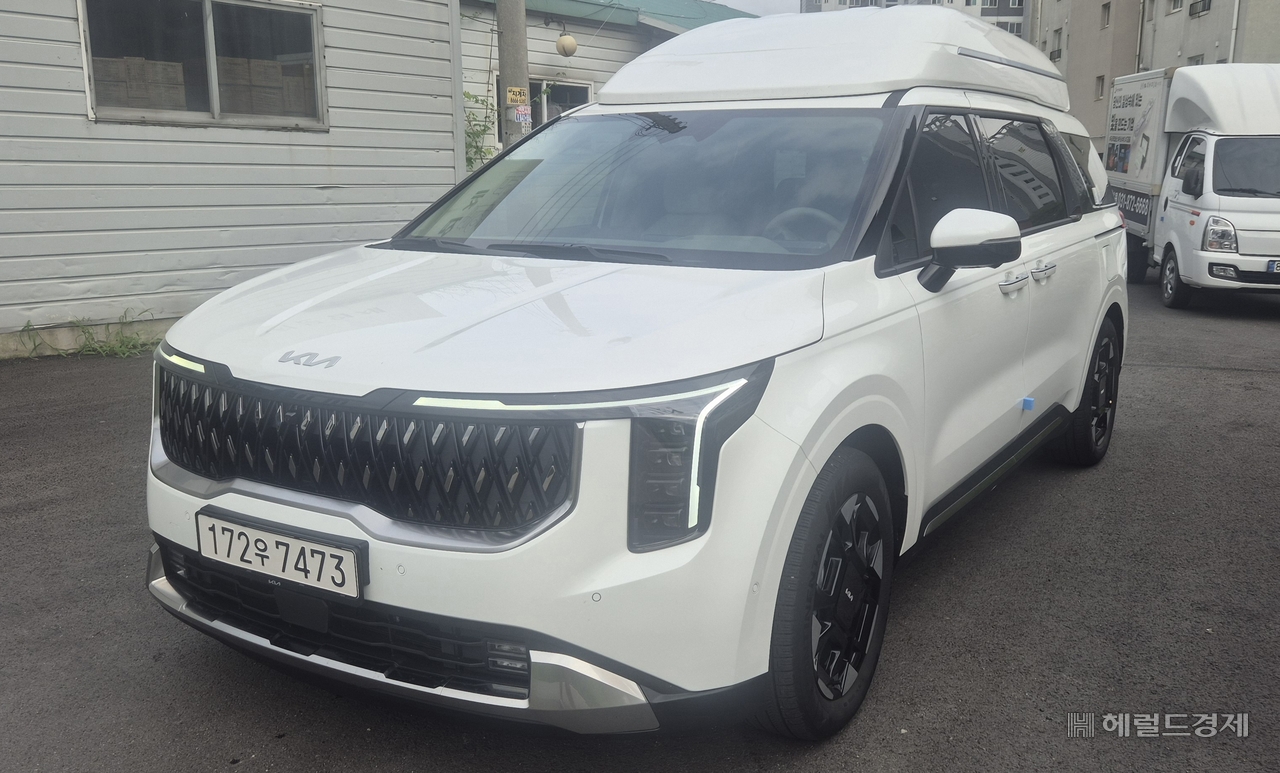
"Daddy, why is this car so big? There are seats here and seats over there too. Let's ride this one again next time."
On June 25, a four-year-old girl climbed into a Kia Carnival High Roof Hybrid 9-seater for the first time and spent a long moment looking around the cabin. She settled into the second row, turned to take in the third and fourth rows, and broke into a wide grin. "I love how big it is," she kept saying.
The day's agenda was ordinary enough — a grocery run and a drive around the outskirts of Gyeonggi Province — but traveling with a small child made it immediately clear why the Carnival High Roof exists. The practical convenience it offers parents in real caregiving situations turned out to be greater than expected.
The test vehicle was the Carnival High Roof 1.6 Turbo Hybrid 9-seater in Signature trim, fitted with the Style and Smart Connect, head-up display, Built-in Cam 2, Comfort, Bose Sound, and Drive Wise and Monitoring packages. The exterior was Aurora Black Pearl paired with a Cotton Beige interior.

'Why is the ceiling so high?' — the first thing she noticed
The Carnival High Roof stands 270㎜ taller than the standard Carnival. That figure may not sound dramatic on paper, but step through the sliding door and the difference is immediately apparent.
The moment she climbed in, the girl looked straight up at the ceiling. In the Kona, a child seat left her staring mostly at the front seatback or out the side window. In the Carnival, open space stretched all the way above her head.
Even buckling her into the child seat was easier. In the Kona, that means leaning deep into the cabin with a bent back to fasten the harness — a real strain when a child starts wriggling or playing around.
In the Carnival High Roof, it was possible to straighten a child's clothes and click the seatbelt without bending far at all. Picking up a dropped toy or slipping shoes back on small feet required no thought about bumping one's head on the ceiling.
Moving between the second and third rows inside the cabin no longer meant hunching over. The extra headroom did not simply add space — it made the physical movements of caring for a child noticeably more natural.
'Daddy, there are seats over there too' — the cabin becomes a playground
"Daddy, there are seats here too."
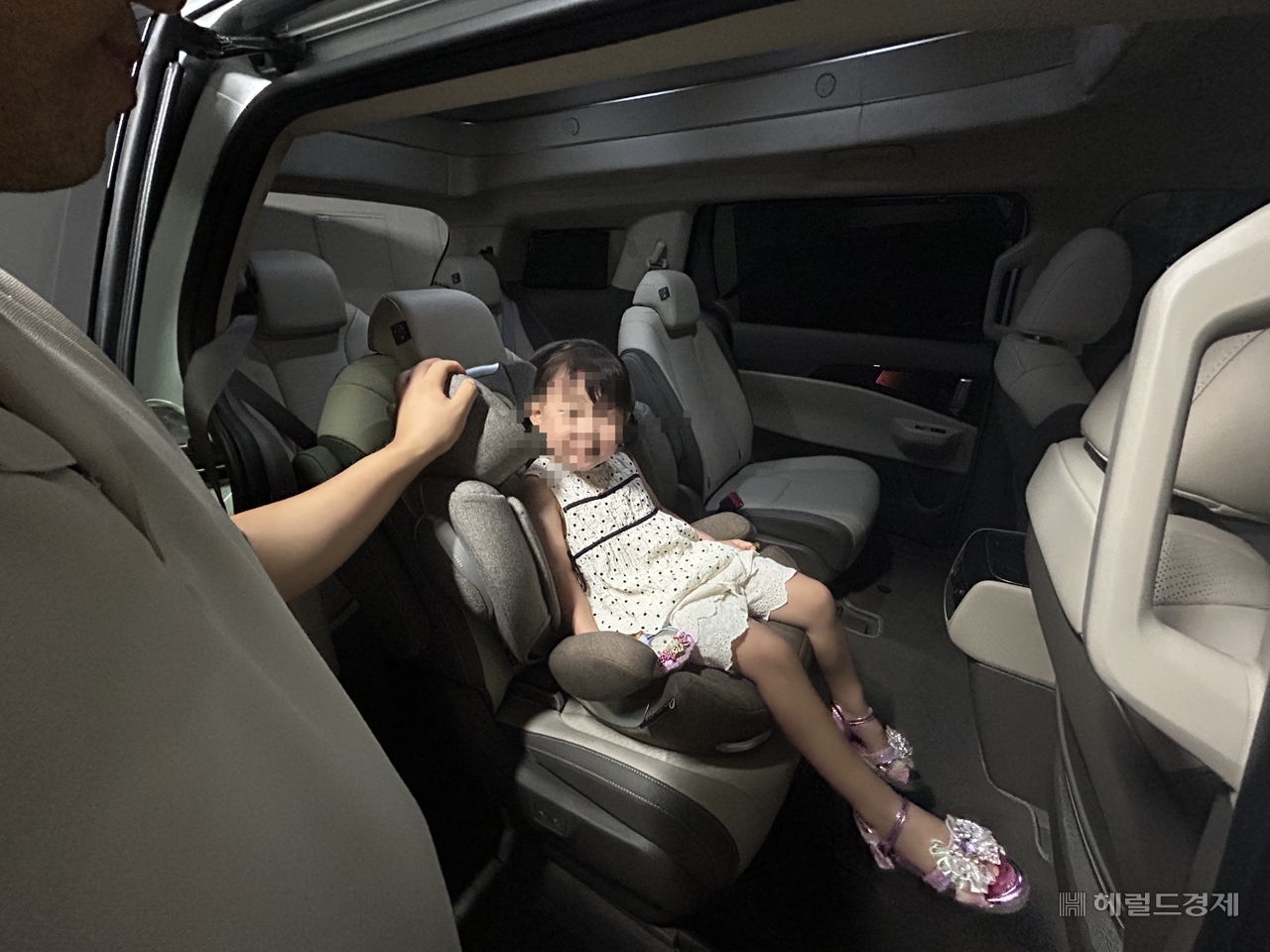
Sitting in the second row, the girl spotted the third row across the center aisle and pointed at it. A moment later she noticed the fourth row as well and laughed. "There are seats over there too." It was not a scene possible in the family's usual Kona.
After parking at the supermarket, she spent a while simply exploring the spacious interior. To her, the Carnival felt less like a vehicle and more like a small room.
With ample headroom, she never seemed cramped in the child seat. She had room to shift around during a long drive and never once demanded to get out early. If anything, she wanted to stay inside even after the test drive ended.
The second-row seats came with three-level ventilation and heating. Switching on the ventilation on a hot day brought an immediate reaction — she announced she felt cool right away. The Cotton Beige interior and ambient lighting made the wide cabin feel bright and relaxed.
The ceiling featured pop-down LED reading lights that extend when pressed. Combined with the suede headliner, they gave the cabin an atmosphere closer to a high-end limousine van. There was no large rear-seat monitor or starlight mood lighting, but for everyday family use the restrained setup felt tidy and unpretentious.
The Bose sound system filled the large cabin evenly. Music played at a moderate volume in the front row came through clearly enough in the rear seats.

'Hey Kia' heard clearly from the third row
The Carnival High Roof's spacious interior proved a good match for its voice-recognition system. Calling out "Hey Kia" from the third row drew an immediate response from the vehicle.
The ability for rear passengers to adjust climate settings and some vehicle functions without asking the driver each time was genuinely useful. As the child grows old enough to issue voice commands herself, the feature's value will only increase.
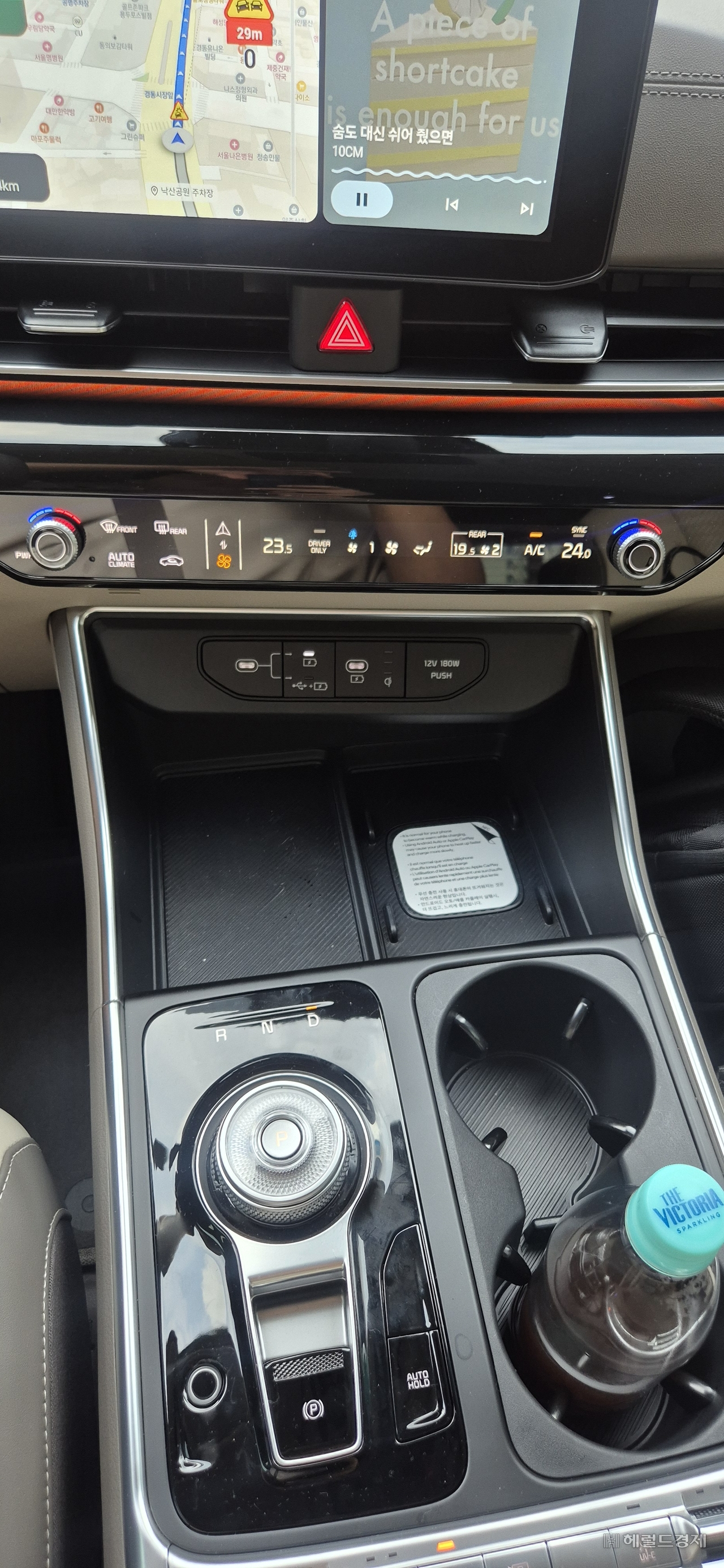
One minor frustration: the rear climate-control toggle was labeled only "REAR" in English, with no Korean equivalent — an odd omission in a vehicle marketed as a family car for all ages. Adding a label such as "뒷좌석" alongside the English would make the control more intuitive for everyone.
The ability to check from the front whether rear-seat passengers had fastened their seatbelts was another feature parents with young children will appreciate.
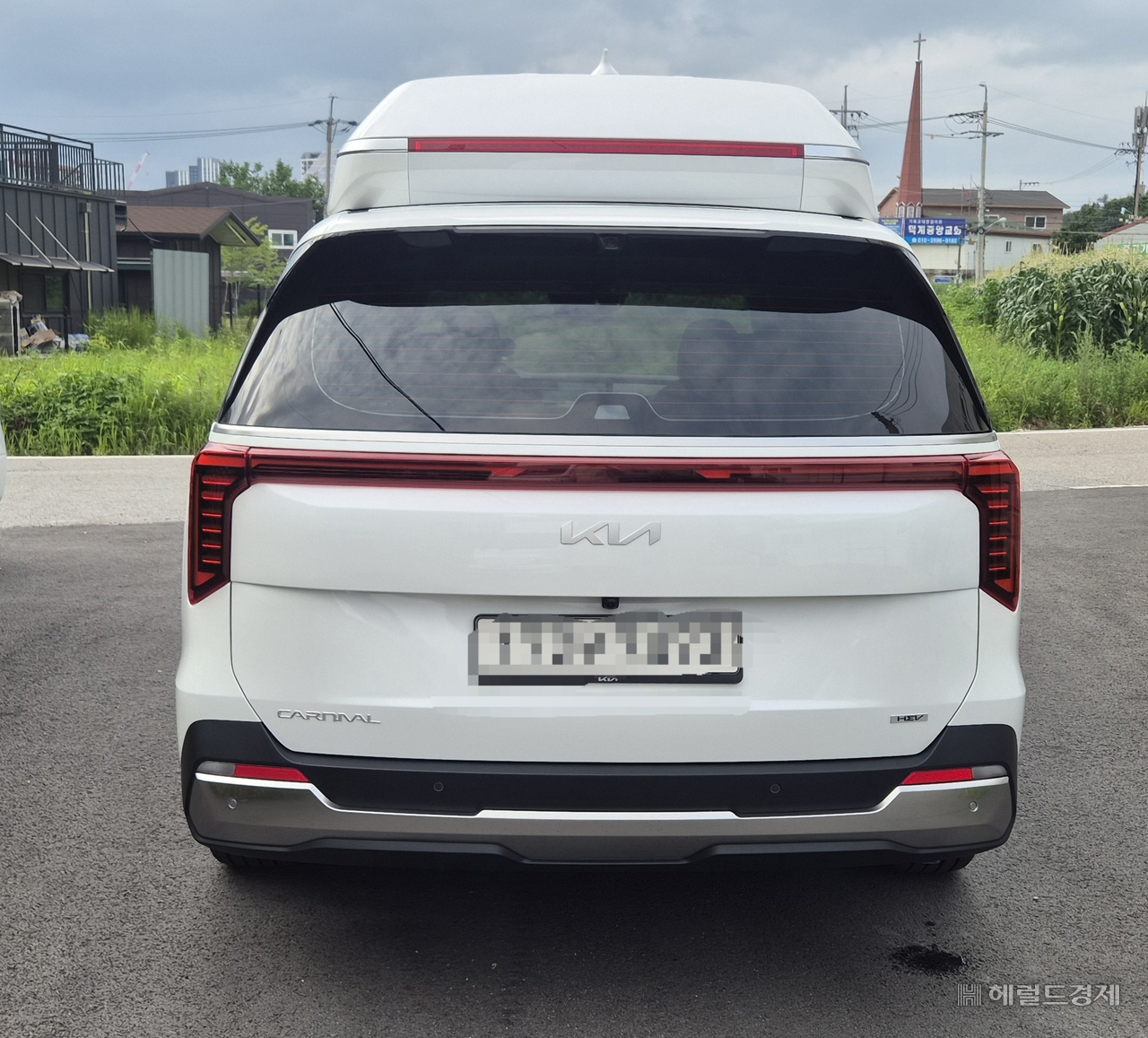
Far larger than the Kona, yet parking proved less daunting than expected
Before getting behind the wheel, the biggest concern was size. After six years driving a Kona, the prospect of suddenly piloting a Carnival through tight parking garages and narrow alleys felt intimidating.
The Carnival High Roof is, in fact, long and wide. From the driver's seat, the far corners of the vehicle felt distant in a way the Kona never did. Pulling into an underground supermarket parking garage for the first time meant repeatedly checking the gaps between pillars and neighboring vehicles.
The surround-view and monitoring system, however, took much of the stress out of the large footprint. A bird's-eye view of the vehicle's surroundings made it straightforward to align the wheels with the parking lines.
Front and side cameras also revealed pillars and low obstacles clearly. After a few attempts, the fear of driving a large vehicle faded quickly — even if slotting in as smoothly as the Kona remained out of reach.
Concerns about the tall body rolling heavily through corners also proved unfounded. Handling felt stable in everyday driving.
Speed bumps were absorbed with a single, gentle cushion rather than a sharp jolt. The ride was comfortable enough that there was no need to slow down dramatically when the child fell asleep in the back.
A full tank showed a range of 850 km
The 1.6 turbo hybrid system moved the large body more smoothly than expected. The electric motor contributed power from a standstill, pulling the vehicle away gently.
In stop-and-go city traffic, the engine frequently shut off and the car ran on the electric motor alone. Even through repeated stop-start cycles, engine noise and gear-change shocks were barely noticeable. The hybrid's characteristic quietness was particularly welcome after the child fell asleep.
Fuel economy during the test drive came to about 9 km/l in heavy city traffic and about 14 km/l on the freer-flowing roads on the outskirts of Gyeonggi Province. Given that the air conditioning ran continuously in summer heat and the vehicle is large, those figures are satisfying.
After a full fill-up, the instrument cluster showed an estimated range of about 850 km — a clear advantage on long family road trips, where frequent fuel stops become a thing of the past.
Nine seats on paper, but six passengers is the sweet spot
The Carnival High Roof 9-seater has seats across four rows. That said, it is not a vehicle where nine adults can travel comfortably over a long distance.
Leaving generous room in the second and third rows means the fourth row ends up with limited legroom. Adults sitting there require the seats ahead to be pulled well forward, which inconveniences everyone.
In practice, the most sensible arrangement is to fold the fourth row into a cargo area and split adults and children between the second and third rows. With around six passengers, both seating and storage space can be used comfortably.
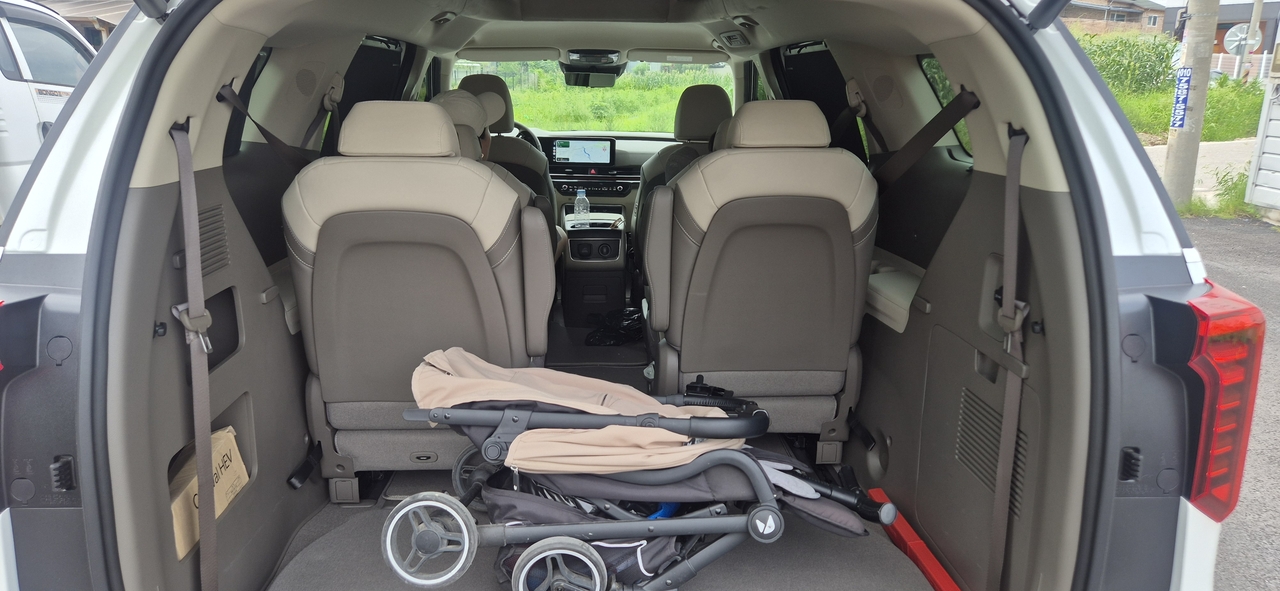
With the fourth row folded flat into the floor, there is ample room for supermarket shopping, a stroller and travel bags alike. Raising the folded seats back up did take noticeable effort, however. A power-assist mechanism for that action would have been a welcome addition.

Fewer luxury extras, all the headroom
The Carnival High Roof sits between the standard Carnival and the Carnival Hi Limousine. It shares the Hi Limousine's steel high roof but drops the premium rear-cabin features — the 21.5-inch rear monitor, starlight mood lighting and cooled-and-heated cup holders.
In effect, it delivers the Hi Limousine's vertical space at a lower price. For families where everyone uses their own smartphone or tablet, the absence of a fixed rear-seat monitor is hardly a drawback.
The test vehicle was priced at 67.11 million won ($46,600). That is not cheap, but for buyers who want the Hi Limousine's tall ceiling without paying for an elaborate rear-entertainment suite, the High Roof looks like a realistic choice.
kwater@heraldcorp.com