Commanding quietness and a supple ride
Generous space up front
Panoramic display puts all driving data in view
Rear cabin doubles as a VIP lounge
Up to 508 km on a single charge
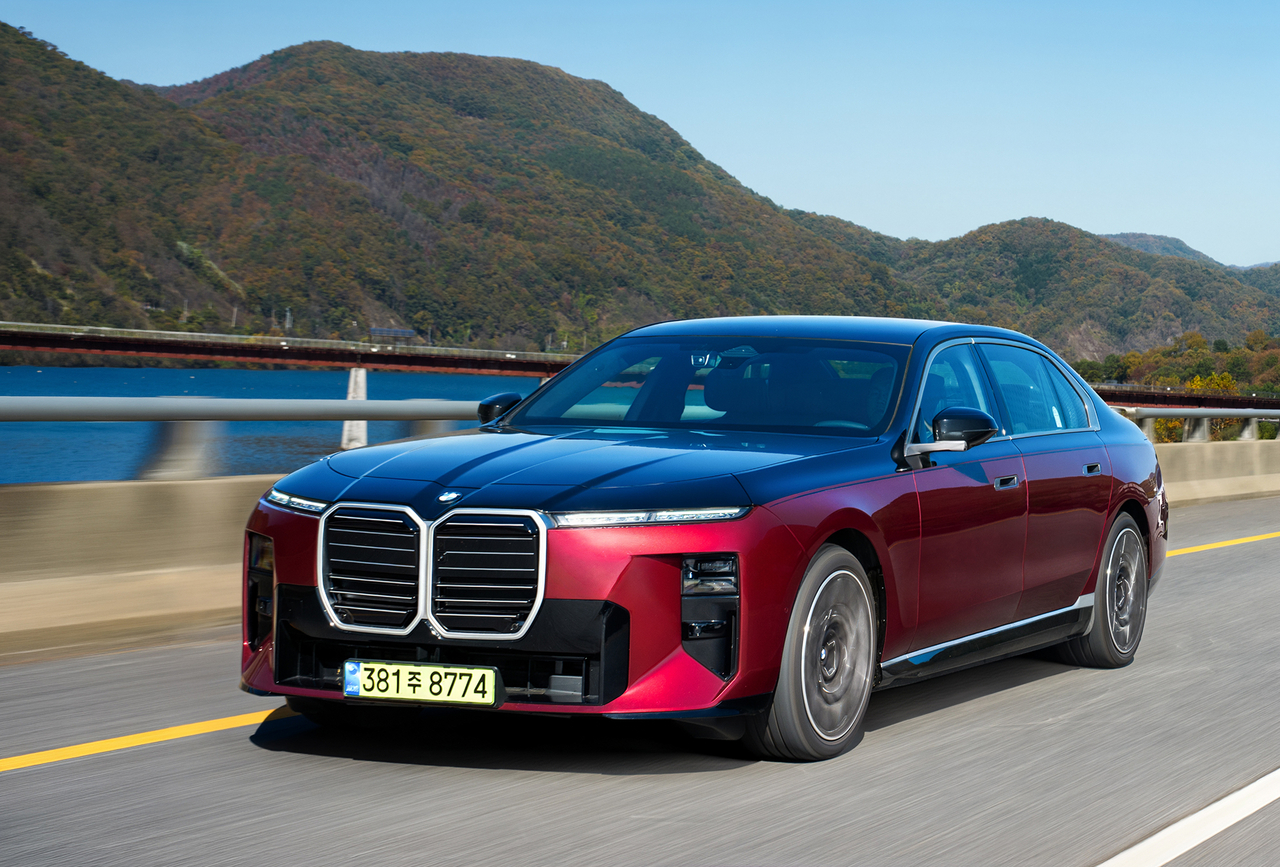
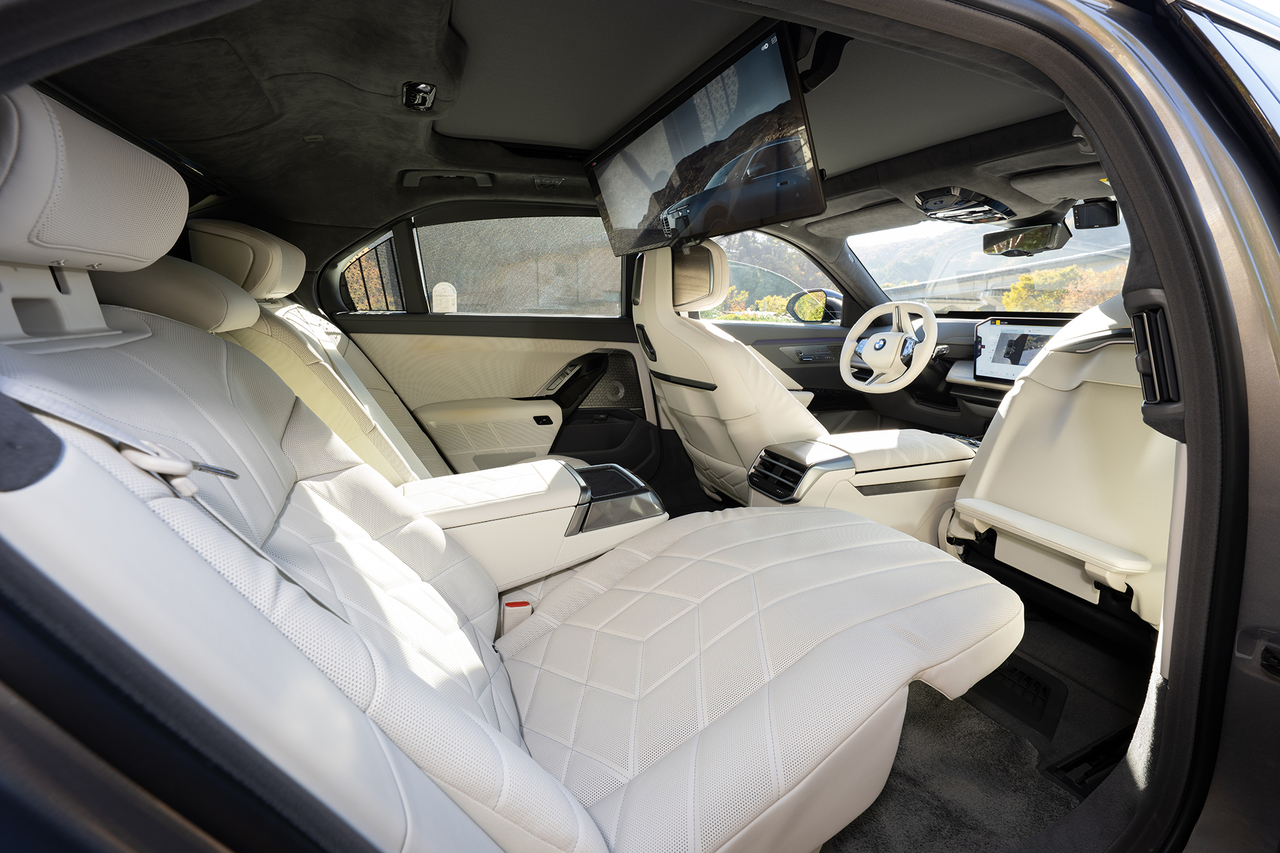
The driver's seat inspires quiet admiration. But the real surprise begins the moment you settle into the back. A 31.3-inch screen descends from the ceiling, the electric sunblinds draw themselves shut, the cabin lights dim, and the rear compartment transforms in an instant into a small movie theater.
Reclining into the seat, receiving a massage and watching a film, it is easy to forget entirely that the car is cruising down a highway. The BMW i7 is far more than a means of transport — it is a moving lounge.
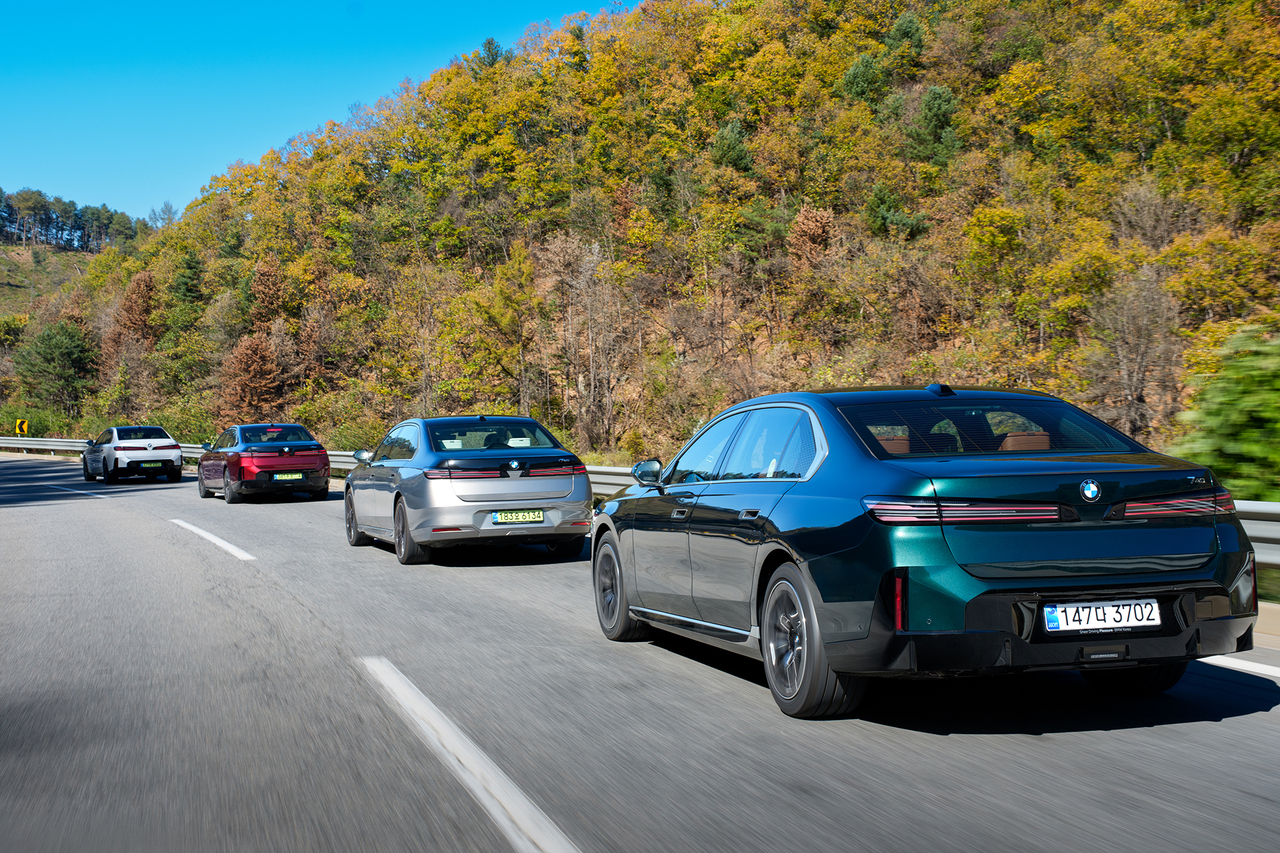
On Wednesday, the i7 — the fully electric variant of BMW's luxury flagship sedan, the new BMW 7 Series — was driven for roughly one hour from Gapyeong-gun in Gyeonggi Province to Gwangjin-gu in Seoul.
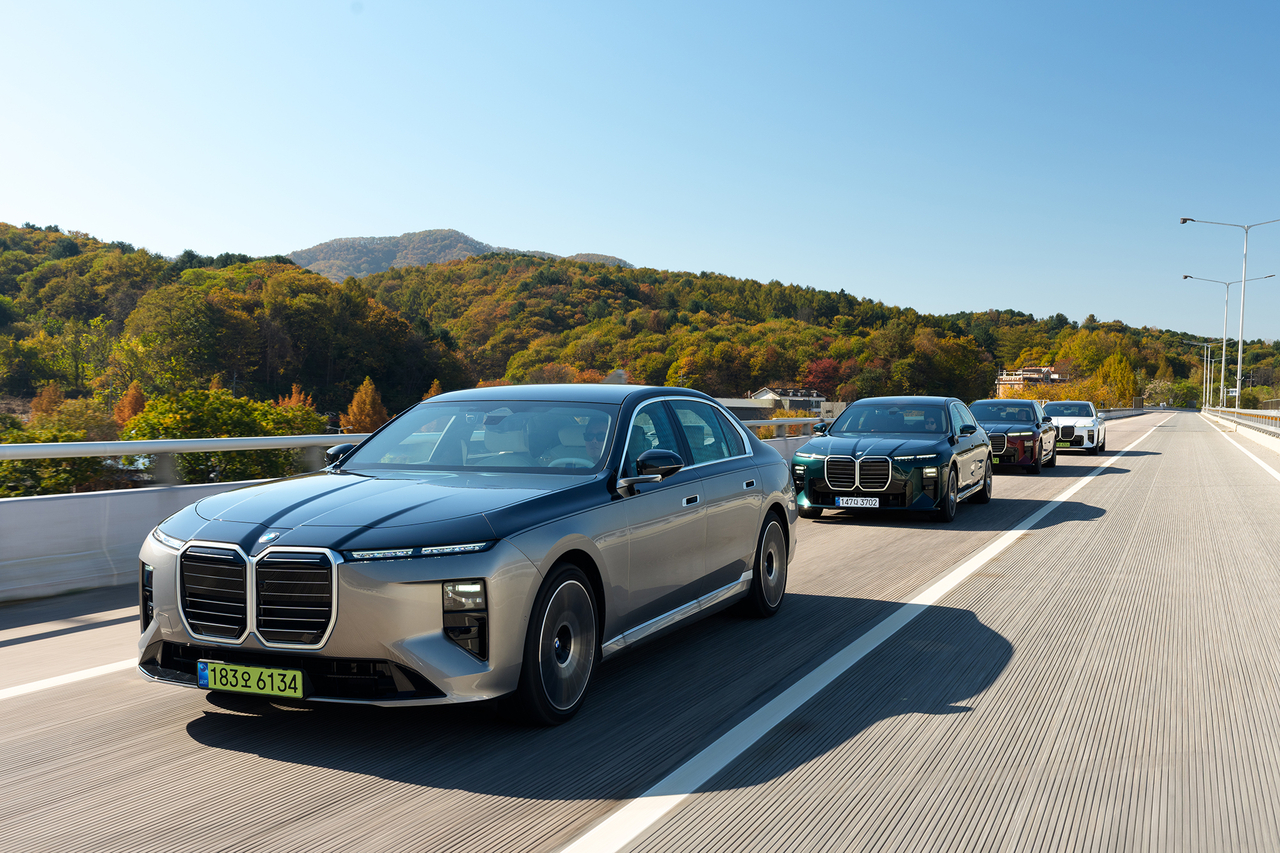
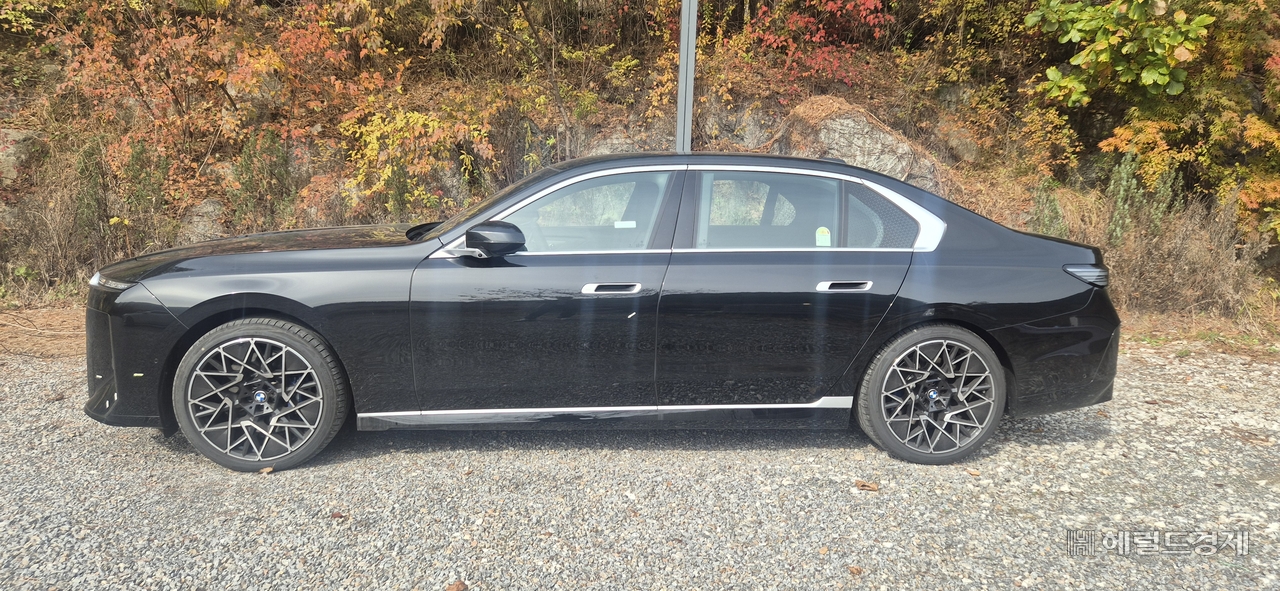
Approaching the car, the first thing that commands attention is the sheer size of the body and the front-end design. At 5,395 millimeters long and 1,950 millimeters wide, the presence is still overwhelming.
This mid-cycle refresh incorporates BMW's next-generation design philosophy, "Neue Klasse," giving the exterior a sharper, more refined look. The large kidney grille from the previous model has been redrawn with cleaner, more athletic lines, and the newly slimmed split headlights feature crystal elements finished with diamond cutting.
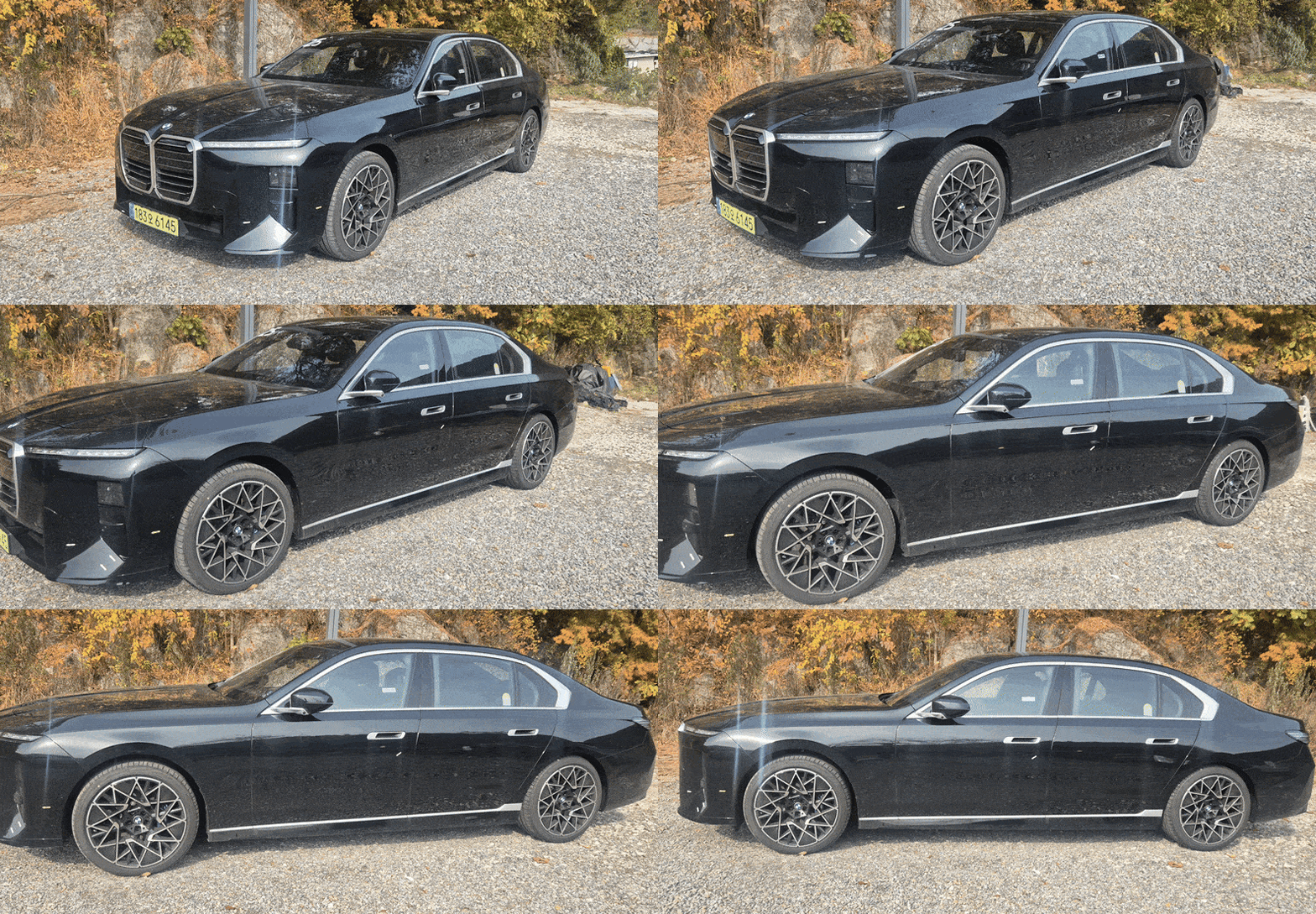
The somewhat bold impression of the previous model has been toned down, giving the car a grand yet polished character. The flagship sedan's commanding presence is intact, while the overall design feels a step more accomplished.
The experience of distinction begins the moment you open the door. A smart key lets the doors open and close automatically, and the powered door function makes even the brief act of getting in and out feel special. It is a demonstration of how a luxury sedan can go beyond simply driving well to treating its occupants with genuine consideration.
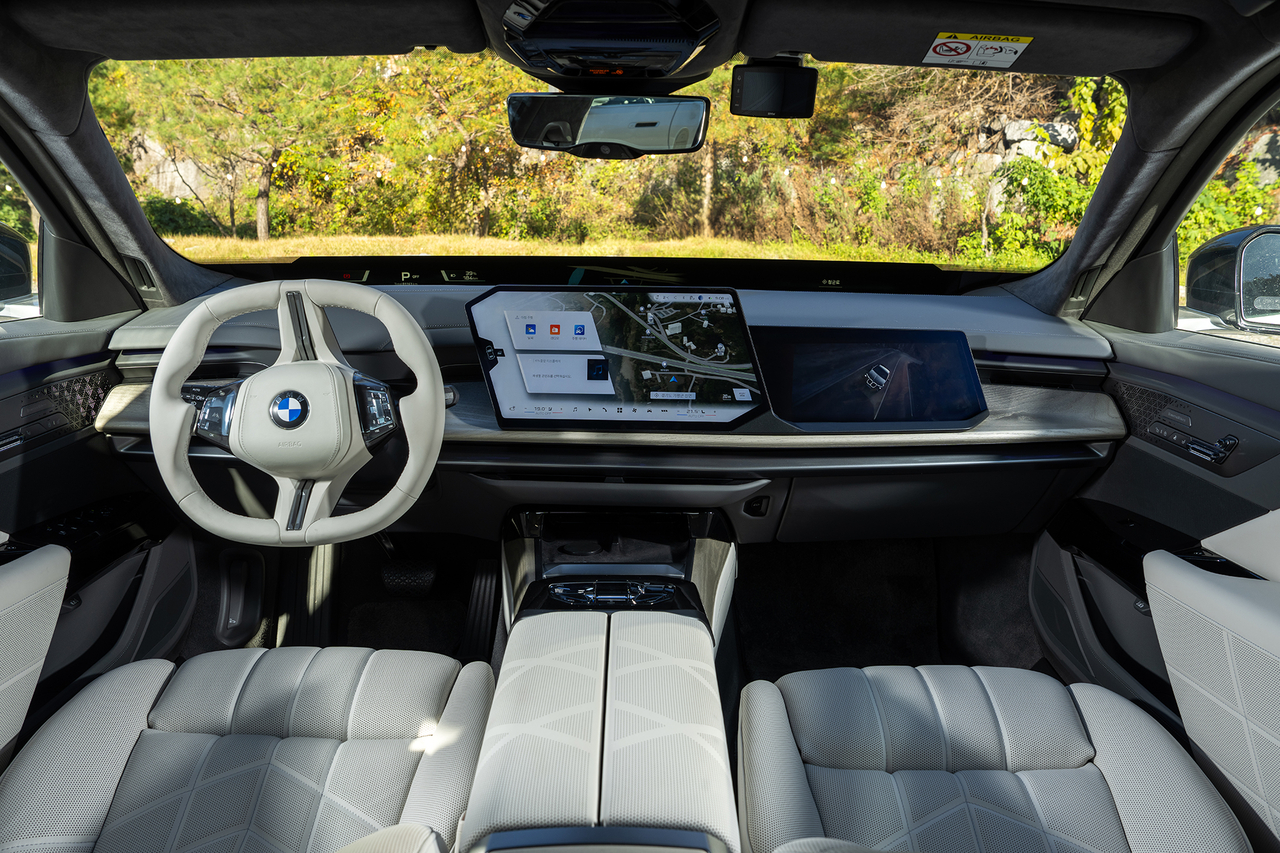
Settling into the driver's seat, the first impression is how spacious it feels. The footwell is particularly generous, the seat cushion supports the body comfortably, and forward visibility is wide and unobstructed. The anxiety of maneuvering such a large body proves far smaller than expected.
Starting the car and pulling away reveals the i7's greatest strength: silence. Even accounting for the inherent quietness of an electric vehicle, the cabin is exceptionally well insulated from noise. Pressing the accelerator, the large body builds speed smoothly, and a composed atmosphere pervades the interior throughout the drive. The outside world feels sealed off.
The ride quality is equally impressive. Rather than an exaggerated sensation of floating, what stands out is a stable, composed filtering of road imperfections. The car seems tuned to control the body calmly rather than dramatically. BMW's characteristic driving pleasure is preserved, yet the comfort expected of a flagship sedan is never sacrificed.
Much of the credit goes to the adaptive two-axle air suspension fitted as standard across the range, which adjusts ride height and damping characteristics to suit road conditions. Integral active steering, which turns the rear wheels by up to 3.5 degrees, also reduces the effort of handling such a large vehicle.
The digital environment at the driver's seat is equally fresh. The BMW Panoramic Vision, which spans the base of the windshield, takes over much of what a conventional instrument cluster would do. Navigation and driving information spread across the driver's line of sight, eliminating the need to shift one's gaze. A Korea-specific BMW navigation system built on T-map adds a layer of familiarity on domestic roads.
Overall, the i7 as experienced from the driver's seat is flawless. Yet the car's true worth shines even more brightly from the rear, where a passenger is chauffeured rather than driving.
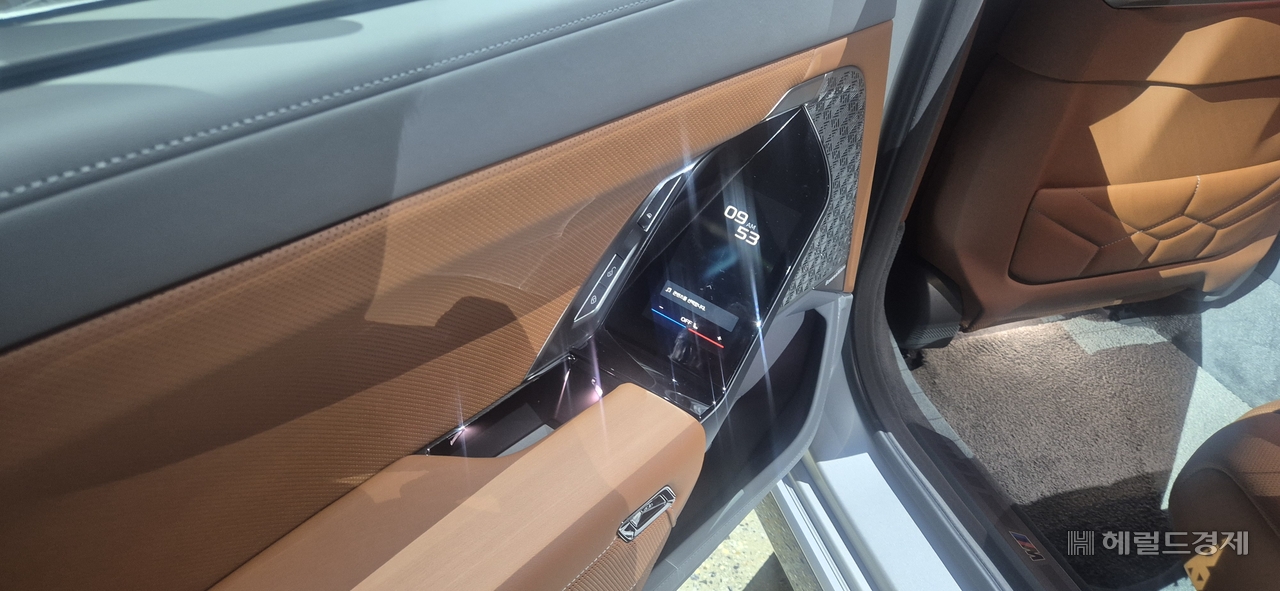
A touch display on the rear door panel puts seat position, climate control, lighting and entertainment functions all within easy reach.
The Executive Lounge function was the first to be tried. Pressing a single button folds the front passenger seat forward, opening up legroom for the rear occupant. The rear seatback reclines up to 43 degrees. Leaning back deeply, the sense of space is something rarely encountered in a car's rear seat — closer to a first-class aircraft cabin than a business-class one.
Activating the massage function prompted another moment of genuine surprise. Surrendering to the plush seat while the massage runs, it is easy to momentarily forget one is inside a car at all. Front-seat occupants can also use the massage function, meaning comfort is available regardless of where one sits.
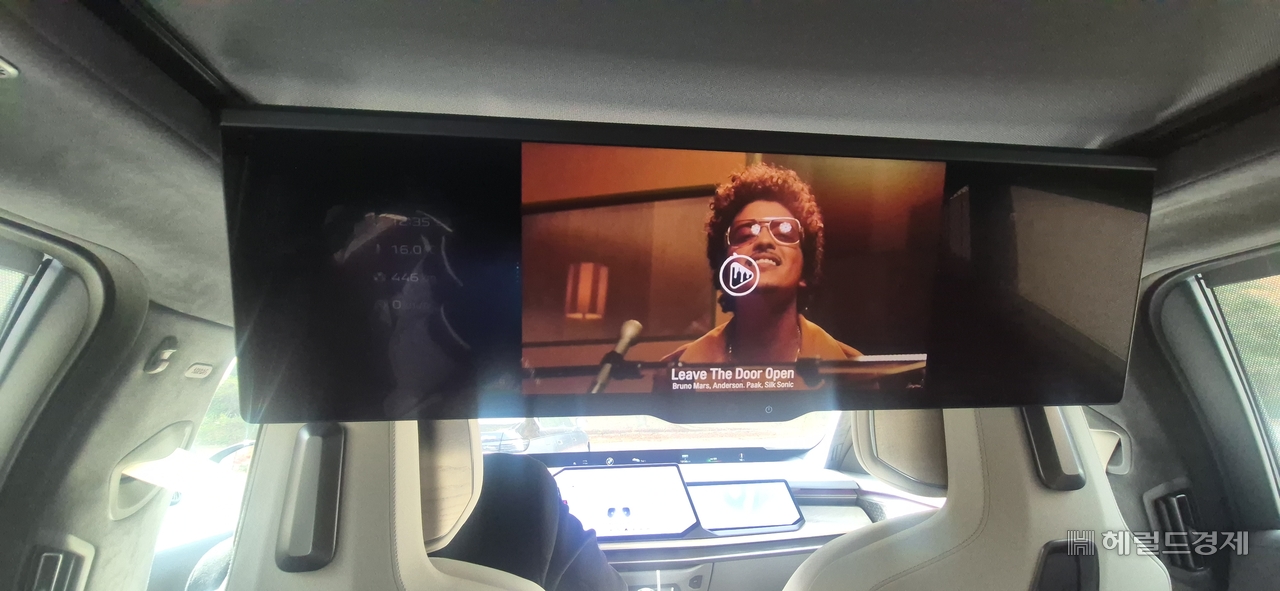
The 31.3-inch BMW Theater Screen descending from the ceiling transforms the rear cabin entirely. As the screen comes down, the electric sunblinds rise automatically, making the interior feel even more intimate. The large display supports 8K resolution and is strikingly sharp, and touch controls allow the screen's position and angle to be adjusted. When not needed, the screen can be pushed back toward the rear.
The ability to stream content from YouTube, Disney+ and other platforms is another draw. Travel time ceases to be time spent simply reaching a destination and becomes leisure time for films and music. A newly added 5-megapixel camera enables video calls, and the screen can also be connected to a laptop for use as a work display.
The audio system exceeds expectations. Playing music, the sound does not merely reach the ears — it seems to fill the entire space. The sense of dimensionality and resonance in the rear seat is particularly striking. Vibrations travel through the seat itself, delivering an experience that feels like sitting in the middle of a concert hall.
The Bowers & Wilkins Diamond Surround Sound System available on higher trim levels supports up to 36 speakers and 1,965 watts of output. Combined with Dolby Atmos and seat-vibration technology, it lets the listener feel sound through the entire body.
A thoughtful detail: even with the large screen deployed, the driver's rear view remains unobstructed. Switching the interior rearview mirror to digital mode brings up a live feed from the rear camera, so the driver can monitor what is behind even while a rear passenger has the theater screen fully extended.
BMW has also strengthened the electrification credentials of this mid-cycle refresh by introducing sixth-generation eDrive technology. Cylindrical battery cells and a silicon carbide (SiC) inverter are among the new components that extend driving range. Under Korea's certification standards, both the i7 50 xDrive and i7 60 xDrive achieve 508 kilometers on a single charge, while the high-performance i7 M70 xDrive covers 492 kilometers. Fast charging is supported at up to 250 kilowatts, taking approximately 28 minutes to charge from 10 percent to 80 percent.
Pricing starts at 169.9 million won ($129,000) for the i7 50 xDrive, rising to 172.9 million won at the top of that trim. The i7 60 xDrive ranges from 214.9 million to 217.9 million won, and the range-topping i7 M70 xDrive is priced at 235 million won. The cost is considerable, and the nearly 5.4-meter body can feel unwieldy on narrow roads or in tight parking structures — factors worth weighing.
Satisfying to drive, yet even more compelling when someone else is at the wheel — the BMW i7 earns the title of moving lounge without a hint of exaggeration.
kwater@heraldcorp.com