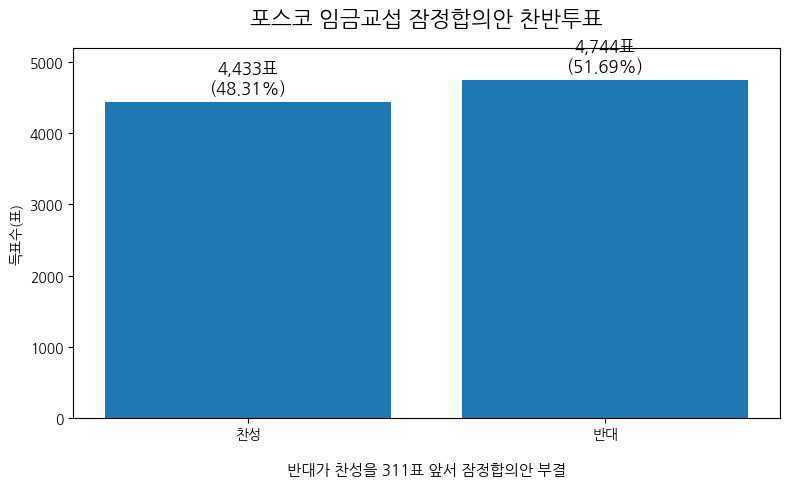
4,433 in favor, 4,744 against
Tentative agreement falls short by 311 votes
Deal collapses after 140-plus days of talks and two partial strikes
Package included 2.6% base pay rise, 6 million won lump sum
Renegotiation now likely; third partial strike back on the table
A tentative wage agreement reached by Posco and its union after more than 140 days of negotiations and two partial strikes has been rejected by union members, sending the long-running labor dispute back to square one.
The Federation of Korean Trade Unions-affiliated Posco union said Saturday that members voted 4,744 against and 4,433 in favor of the tentative deal, defeating the agreement.
The "no" votes accounted for 51.69 percent of the total, against 48.31 percent for "yes" — a margin of 3.38 percentage points, or just 311 votes.
The two sides had reached the tentative agreement on Oct. 30 through a full bargaining session. The package included a 2.6 percent base pay increase, a lump-sum payment of 6 million won ($4,470) and a special promotion of three pay grades.
The 6 million won lump sum comprised a 3.5 million won performance incentive, a 2 million won settlement and labor-harmony bonus, and a 500,000 won local gift certificate. The tentative deal also included higher holiday bonuses, shift-rest and Sangju maintenance allowances, and expanded medical expense coverage to include spouses and children.
The two sides had been in wage talks for roughly 140 days since June. The company's opening offer was a 1.2 percent base pay rise and a 2 million won performance incentive, but it raised its terms multiple times as negotiations dragged on.
The union had held firm with demands for a 7.1 percent base pay increase, a 600 percent incentive bonus, 50 shares of employee stock and a 200 percent holiday bonus. When talks stalled, the union launched its first-ever partial strike targeting production lines in September, followed by a second partial strike lasting 120 hours.
Tensions peaked when the union threatened a third partial strike, but the two sides reached a tentative agreement on Oct. 30 in a last-minute bargaining push. Expectations had grown that the prolonged labor dispute would finally be resolved.
Union members — who hold the final say — rejected the deal. The razor-thin margin suggests opinion within the union was sharply divided over the level of compensation on offer.
The rejection makes it highly likely that both sides will have to return to the bargaining table. The union, however, appears to be weighing its options rather than moving immediately to renegotiate. Internal discussions are expected on whether to put the same tentative agreement to another member vote or to seek improved terms from management before presenting a new deal.
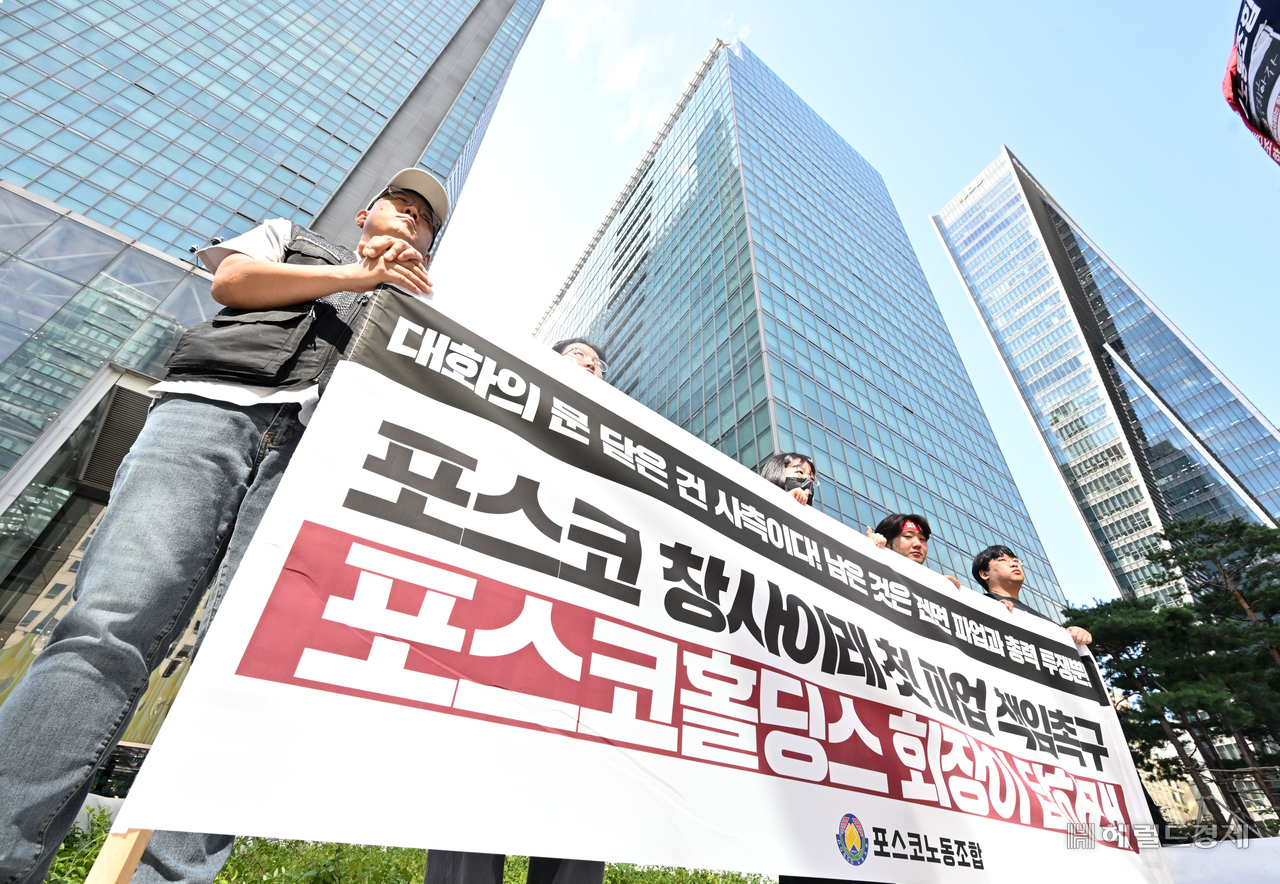
The union had kept the door open to a third partial strike before the tentative agreement was reached, and the possibility of renewed industrial action cannot be ruled out if renegotiations fail to make progress.
In the steel industry, there are concerns that a prolonged labor dispute could weigh on Posco's earnings recovery at a time when external conditions are already difficult — including a global supply glut, a wave of low-cost Chinese exports and rising protectionism.
Posco posted operating profit of 455 billion won on a standalone basis in the third quarter, up 66 percent from the previous quarter and back in the 400 billion won range for the first time in four quarters. Higher sales volume and cost cuts had signaled a rebound in its core steelmaking business, but the unresolved wage dispute has re-emerged as a fresh source of internal uncertainty.
kwater@heraldcorp.com