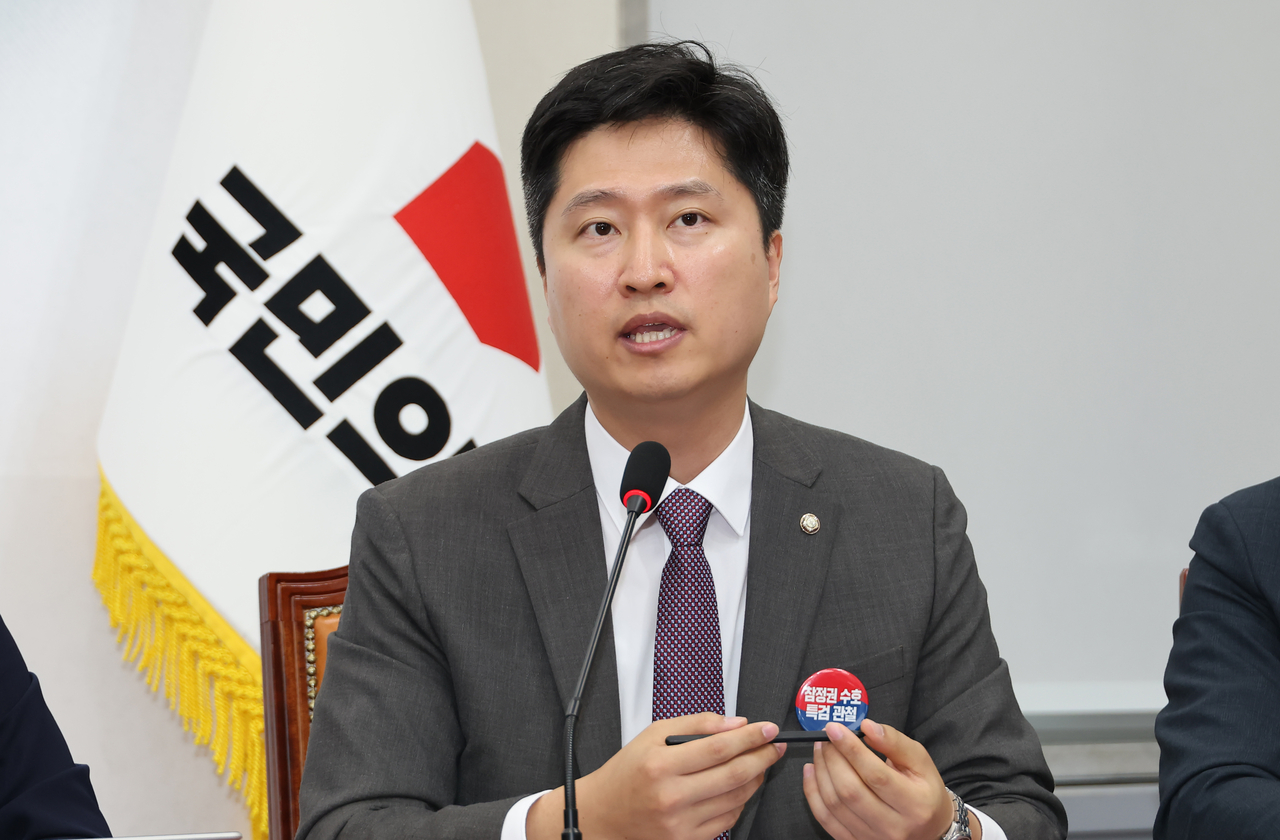
People Power Party Supreme Council member Woo Jae-jun said Friday it was "a shame" that independent lawmaker Han Dong-hoon had effectively been denied a chance to speak during the filibuster on a bill to abolish prosecutors' supplementary investigative powers, arguing that internal power struggles within the party were behind the decision.
Woo, a close ally of Han, made the remarks in an interview on YTN Radio's "Jang Seong-cheol's News Myeongdang." He said Han's participation "would clearly have drawn public attention" from the standpoint of persuading voters, and expressed regret that the opportunity had been lost. "Behind it, I don't think it was simply a matter of scheduling — there seems to be a subtle power struggle at play," he said.
Han had been assigned the 12th speaking slot in the filibuster. Woo said that for Han to have had a realistic chance, each of the preceding speakers would have needed to average under two hours, but many had already spoken for three to four hours each. "I thought he would at least be given a slot somewhere in the middle, or during the early morning hours — but that didn't happen, and it's a shame," he said.
Woo also criticized the Democratic Party of Korea's amendment to the Code of Criminal Procedure, which introduces a new provision for dismissal of indictments. He said the existing grounds for dismissal applied only when there were objective procedural defects — such as the absence or withdrawal of a complaint — but that the new bill would institutionalize broad judicial discretion over whether prosecutors had abused their right to prosecute. "This could increase the likelihood of judges using indictment dismissal against those in power," he said.
He added that even President Lee Jae-myung's inter-Korean remittance case could become subject to claims of prosecutorial abuse on the grounds that "the investigation was excessive." "Once indictment dismissal is codified, the more powerful a person is, the more likely they are to exploit it," he said.
On the controversy surrounding the party's ethics committee, Woo said the body "has come under criticism for having been reduced to a political tool of the party leader," and argued that restoring its neutrality and conducting a full review of its operations should take priority over filling vacancies. "The reality is that it faces criticism for moving with particular swiftness against those in the opposing camp from the party leader," he added.
thanks@heraldcorp.com